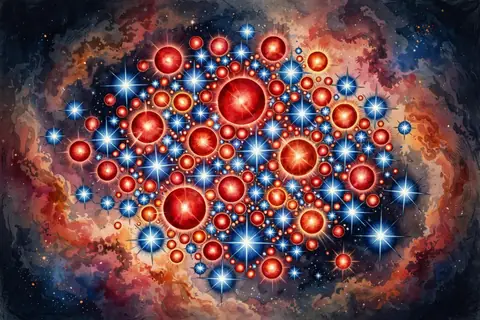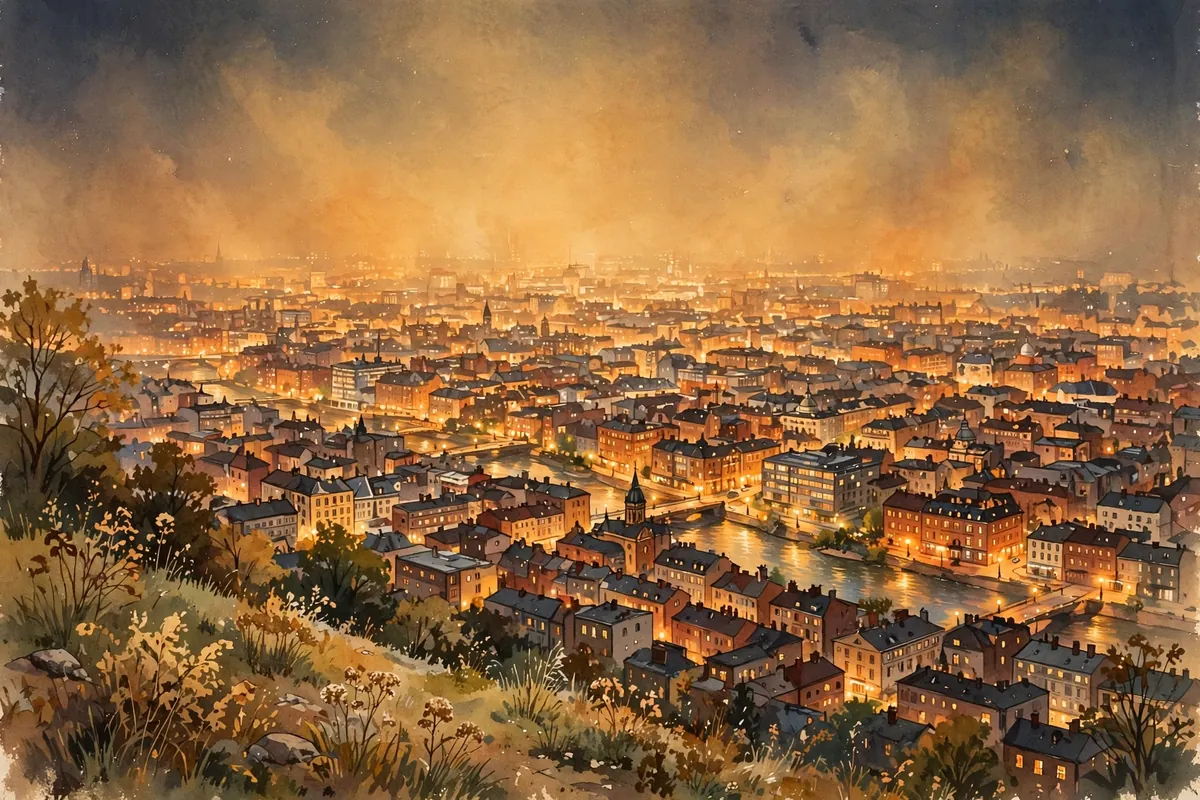
Think about the last time you looked up and saw the Milky Way, that hazy band of countless stars stretching across the night sky. For many people, the honest answer is never, or not since a childhood camping trip far from town.
The reason is light pollution. Artificial light from streetlights, buildings, signs and parking lots spills up into the sky and scatters off particles in the air, creating a bright haze called sky glow. A 2016 estimate found that about one third of the world's population can no longer see the Milky Way, including about 80 percent of Americans.
How Our Lights Hide the Stars
Sky glow is the bright dome you see hanging over a city at night. It forms when light bounces off dust, moisture and other particles in the atmosphere, brightening the whole sky.
Faint, spread-out objects suffer the most. Glowing gas clouds called nebulae and distant galaxies have low surface brightness, so they vanish first, and above major cities most of them become invisible. The Milky Way goes with them. Astronomers use a nine-level system called the Bortle scale to rate sky darkness, and you need a rating of four or lower to see the Milky Way.
Almost Everyone Lives Under a Brighter Sky
The numbers are striking. About 83 percent of people worldwide, including 99 percent of Europeans and Americans, live under skies more than 10 percent brighter than natural darkness.
Light pollution is worst in heavily industrialized, crowded areas of North America, Europe and Asia, but even small amounts of light can make a noticeable difference. In that 2016 study, Singapore ranked as the most light-polluted country in the world.
Here's a lovely test for a truly dark sky. Under the darkest conditions, the Milky Way can be bright enough to cast a shadow.
Wildlife Gets Confused, Too
Stargazers aren't the only ones affected. Newly hatched sea turtles find the ocean by heading away from the dark outline of dunes and plants on the beach. Bright lights can lead them the wrong way. Contrary to popular belief, they aren't actually following the Moon.
Young seabirds can become disoriented by lights as they leave their nests, which can lead to large numbers of deaths. Even spiders are affected. Some avoid lit areas, while others happily build webs on lamp posts, where the light attracts plenty of insects to eat. People noticed these effects early. A Los Angeles Times article raised concerns about electric lights and songbirds as far back as 1897.
The Good News: It's Fixable
Unlike many kinds of pollution, light pollution can disappear the moment a switch is flipped. Turning off unneeded outdoor lights, lighting stadiums only when people are inside and using timers all help. Shielded fixtures that keep light pointed down also cut glare, which can partly blind drivers and pedestrians on the road.
Flagstaff, Arizona, was one of the first places in the world to pass coordinated laws to reduce light pollution, with support from residents and local observatories. Since the 1980s, a global dark-sky movement has grown as well.
So the next time you're far from town on a clear night, turn off the porch light and give your eyes a few minutes to adjust. The Milky Way is still up there, just waiting for a little darkness.