We usually think of rain as something that happens to forests. Clouds roll in, rain falls, trees drink it up. But what if the trees were part of the weather machine too, helping to create the very rain they depend on?
That's essentially what happens. Trees pull water up from the soil through their roots and release most of it into the air as vapor through tiny pores in their leaves. That moisture can help form clouds and rain. Some scientists go further, proposing that forests act like a pump that draws moist ocean air far inland, though that idea is still debated.
Trees Are Water Fountains in Disguise
The process is called transpiration. Water travels from a plant's roots up through its stem to its leaves, where it escapes through tiny openings called stomata. It's completely passive, so the plant doesn't spend any energy doing it. Along the way, it helps cool the plant and carries minerals from the soil up to the leaves.
Here's the astonishing part. Only a small amount of the water a plant takes up is used for growth. The rest, about 97 to 99.5 percent, goes back out into the air. During a growing season, a leaf can give off many times its own weight in water.
The Numbers Add Up Fast
A large oak tree can transpire about 40,000 gallons of water a year. Even an acre of corn gives off around 3,000 to 4,000 gallons every day, which is why the moisture rising off crop fields is sometimes called corn sweat.
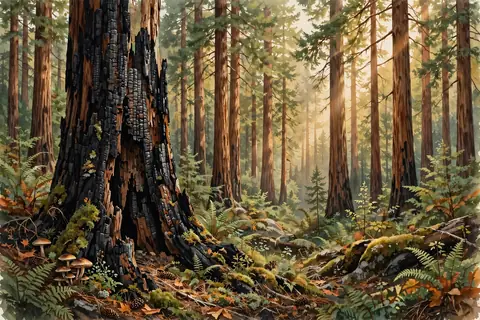
Now multiply that across a forest. Scientists combine transpiration with ordinary evaporation from soil and water into one measure called evapotranspiration. Thick, leafy forests tend to send more water into the air than sparse vegetation, and evergreen forests like conifers can keep at it even in winter and early spring.
The Biotic Pump Idea
One bold theory takes this further. It's called the biotic pump. The idea is that when coastal forests release huge amounts of water vapor, it lowers air pressure above them as clouds form. That low pressure acts like suction, drawing moist air in from the ocean. Forests farther inland then repeat the process, passing moisture deeper and deeper into a continent. Before this theory, trees were generally thought to play only a passive role in the water cycle.
Supporters say this could explain why rainfall stays steady as you move inland across a forested region, while it drops off sharply over cleared land. Critics argue that ordinary differences in heating can explain the pattern and that the pump effect is weak. The scientific debate is still going.
Why It Matters for the Amazon
The Amazon receives about 9 feet of rain a year, and many scientists worry about what happens if too much of the forest disappears. By 2022, about 20 percent of the Amazon rainforest had been cleared, and research suggests that at around 20 to 25 percent, parts of it could reach a tipping point and slowly turn into degraded savanna.
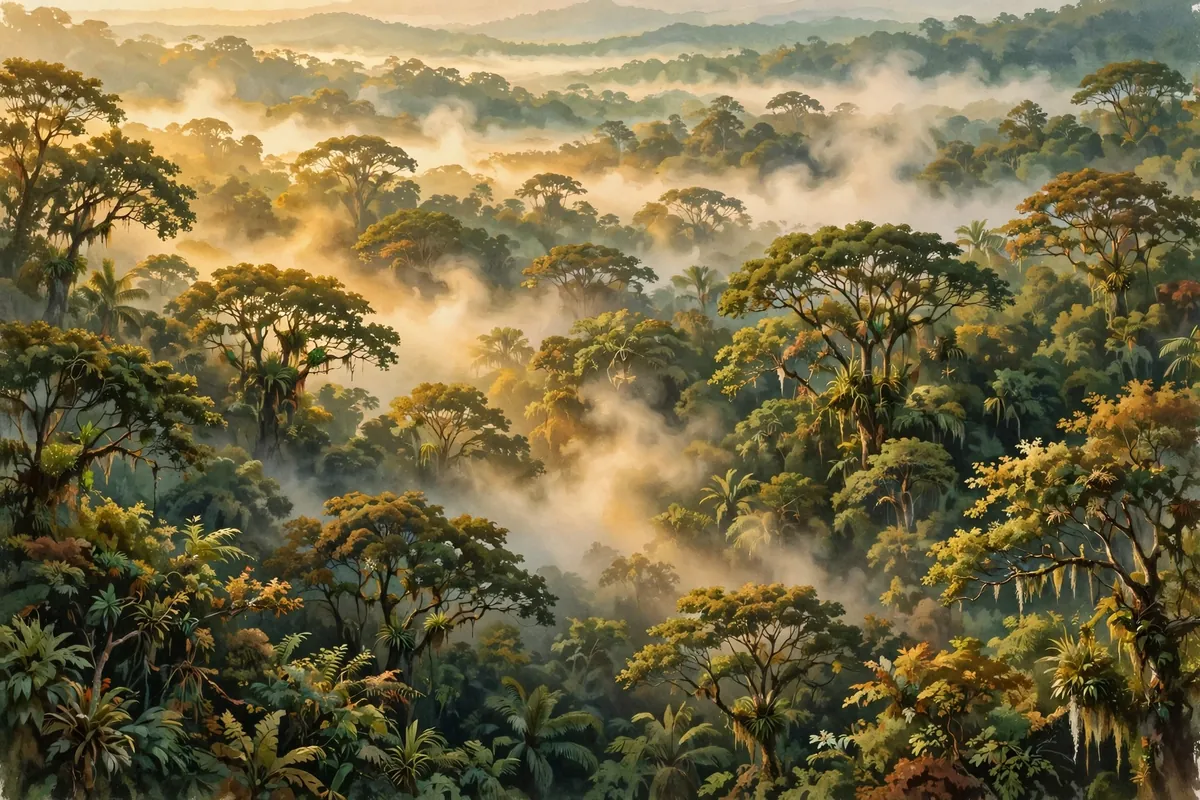
If forests really do help make rain, losing them could mean less rain for the forest that remains, and for farms and cities that rely on it. So the next time you see mist curling up from a wooded hillside, remember you're watching a forest quietly water the sky.