Maybe a coworker announced your idea before you could, or a cousin revealed her engagement at your birthday party. We have a perfect phrase for that: they stole your thunder. It sounds almost poetic, like something out of mythology. But the real story is far more down to earth.
The phrase comes from an English playwright named John Dennis in the early 1700s. He invented a new way to create the sound of thunder for his play. The play flopped, but later, at a performance of Macbeth in the same theater, he heard his thunder effect being used and exploded with anger. His complaint became a saying.
A Playwright With a Bright Idea
John Dennis was a London critic and dramatist, born in 1657. He knew the great writers of his day and was one of the leading coffeehouse wits in London. One of his tragedies was a big success in 1704. He had a fiery streak, too. As a Cambridge student, he was fined and dismissed from his college for wounding a fellow student with a sword, though he went on to earn a master's degree at another college.
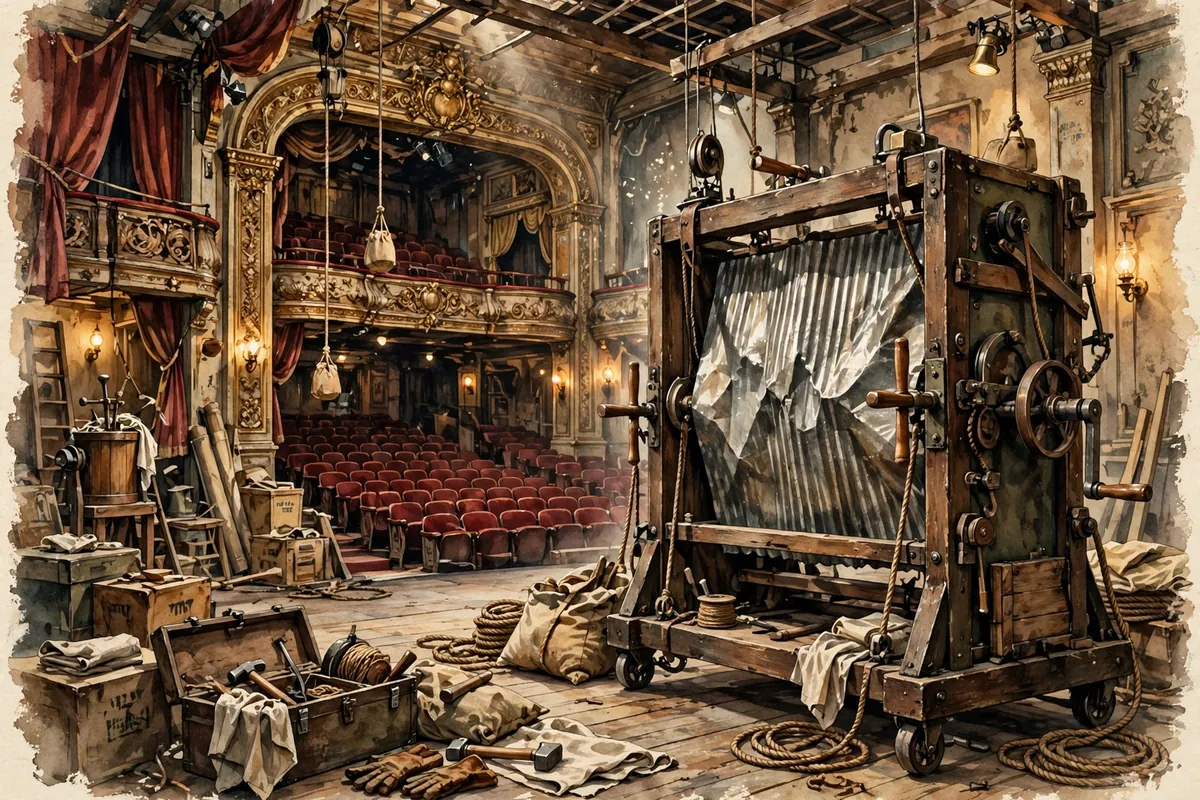
For his 1709 play Appius and Virginia, staged at the Theatre Royal, Drury Lane, Dennis came up with a new technique for imitating thunder. It's associated with what we now call a thunder sheet, a thin sheet of metal that's shaken or struck to make a booming, rumbling sound.
The Night He Heard His Thunder
Unfortunately, Appius and Virginia wasn't a hit, and the theater pulled it. Some time later, Dennis went to see a production of Macbeth at the same theater. When the storm scene came, he recognized the sound right away. It was his thunder.
According to one old account, he cried out, "That is my thunder, by God; the villains will play my thunder, but not my plays." Another popular version has him jumping up in a rage and shouting, "They will not let my play run, but they steal my thunder!"
To be fair to the theater, it still owned the equipment Dennis had built. But that didn't make him feel any better.
Maybe Not the Whole Story
As with many famous sayings, word historians add a note of caution. Some have suggested the phrase might also echo the idea of stealing thunder from Jupiter, the Roman king of the gods, and that it may have been used in theaters even before Dennis. The first known use in print outside the theater, in the meaning we know, dates to the early 1800s.
Still, the John Dennis story is the one most often given as the origin, and it's a delightful one.
Thunder Today
The phrase has even become a strategy. In courtrooms, political debates, and public relations, people sometimes reveal a bit of bad news themselves before an opponent can. By bringing it up first, they take away its power. That's called stealing thunder too.
And thunder sheets are still around. Composers like Richard Wagner, Giuseppe Verdi, and Richard Strauss used them in their works. The bigger and thinner the sheet, the louder the rumble.
So the next time someone beats you to the punch, you can comfort yourself with this little story from old London. At least nobody stole your actual thunder, sound effects and all.