You don't visit your cousin often, so you say you see him once in a blue moon. Everyone knows it means rarely. But the Moon is usually white or gray, so why blue? And is a blue moon really an astronomical event?
The phrase began as a figure of speech in early 1800s England, meaning a very long time. It wasn't originally about the calendar at all. The popular definition, the second full moon in a calendar month, came much later, from a 1946 magazine article that misunderstood an earlier almanac. And on rare occasions, smoke and volcanic dust have actually turned the Moon blue.
Slang From 1820s London
The oldest known use of blue moon to mean a long time comes from Pierce Egan's 1821 book Real Life in London. One character asks about friends he hasn't seen this blue moon.
Egan included it in an 1823 slang dictionary, defining it as a reference to a long time before something happens. Since an 1811 edition of the same dictionary didn't include it, the phrase was likely coined in the 1810s. The full expression once in a blue moon is recorded from 1833.
There's an even older line from a 1528 satire about believing the moon is blue, meaning an absurd idea, much like saying the moon is made of cheese. But nothing connects it to the later meanings.
How the Calendar Meaning Was Born
In 1937, the Maine Farmers' Almanac used blue moon for a specific event: when a season contained four full moons instead of three, the third was called a blue moon. There's no evidence of anyone using it that way before 1937, and it may have been invented by the editor, Henry Porter Trefethen.
Then came the mix-up. In 1946, James Hugh Pruett wrote in Sky & Telescope that a blue moon was the second full moon in a calendar month. That misread the almanac, but it stuck.
The new meaning spread in the 1980s, helped by a radio program, a children's book, and a question in the game Trivial Pursuit in 1986. In 1999, astronomers traced the confusion back to Pruett's article.
Not So Rare After All
A calendar blue moon isn't especially rare. It happens about seven times every 19 years, or once every two or three years. That's because the time between full moons, about 29.5 days, is a little shorter than most months. In fact, these calendar blue moons have no special astronomical or historical significance. They're simply a quirk of how we divide up the year.
When the Moon Truly Turned Blue
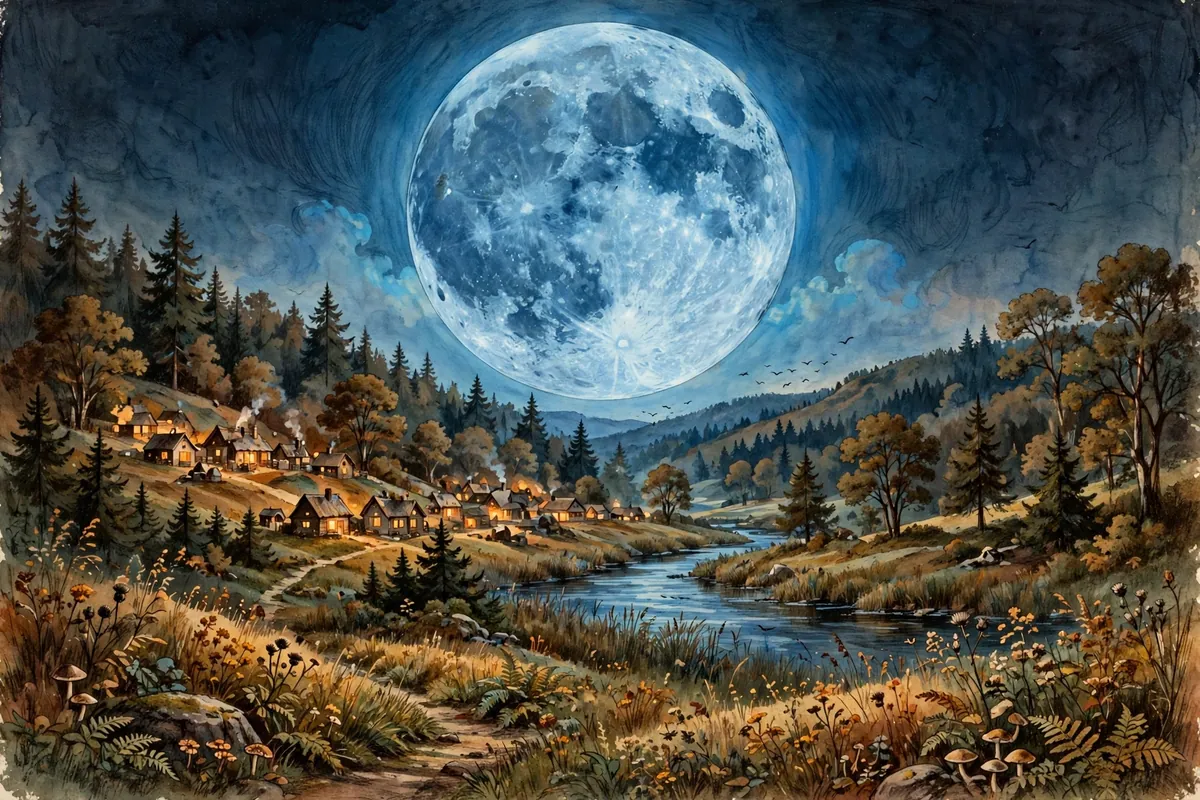
The Moon can actually look blue, but only rarely and unpredictably, when smoke from huge forest fires or ash from volcanoes fills the air.
After the 1883 eruption of Krakatoa, people around the world reported blue, green, and other strangely colored suns and moons for months. In September 1950, giant smoky fires in Alberta, Canada, sent drifting smoke as far as Britain, where observers saw an indigo sun and then a blue moon that evening. The smoke contained droplets just the right size to scatter red and yellow light.
So once in a blue moon really does fit something rare, just not for the reason most people think. Next time a calendar blue moon comes around, you can enjoy it and share the true story with family.