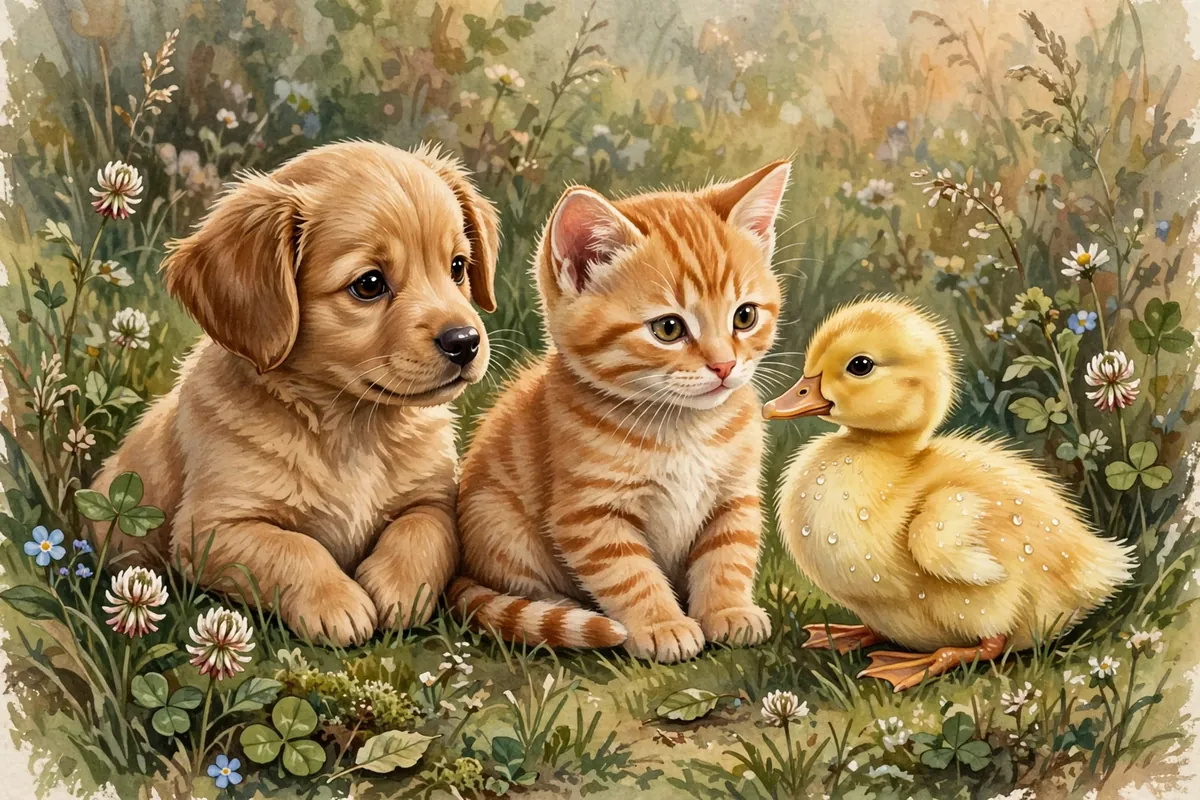
Show almost anyone a photo of a fluffy duckling or a clumsy puppy and you'll hear the same sound: a long, soft “awww.” We don't even have to think about it. So why do baby animals, even ones from completely different species, tug at our hearts so easily?
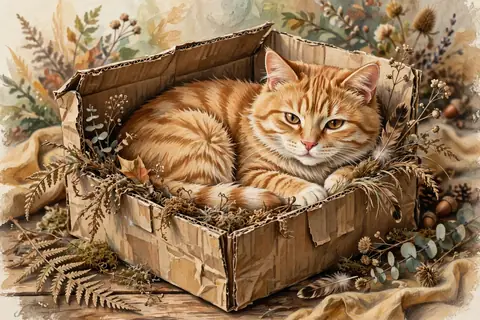
The short answer is that baby animals share a set of features our brains seem wired to respond to. Scientists call it the baby schema: big eyes, a large head, a round face, and a small nose and mouth. The leading idea is that these features help make adults want to care for human babies, and young animals simply set off the same response.
The Scientist Who Named It
The idea comes from Konrad Lorenz, an Austrian scientist who studied animal behavior. Lorenz proposed that a certain set of facial and body features makes a creature look cute and stirs up the urge to look after it. He called it Kindchenschema, German for baby schema.
In 1949, Lorenz argued that these infant features trigger nurturing responses in adults. He saw it as an evolutionary adaptation. If grown-ups feel a strong pull to protect babies, those babies are more likely to survive.
Later studies have backed up parts of his idea. Adults have been shown to react positively to babies who look stereotypically cute. Responses to cuteness also seem to be similar across different cultures.
Why a Puppy Works Like a Baby
Here's the key point: the features that make a baby look cute aren't unique to humans. Young animals tend to have proportionately smaller snouts, higher foreheads, and larger eyes than the adults of their species. That's because the skull grows quickly early on, while the bones of the nose and jaw reach full size later.
So a kitten or a duckling ends up with many of the same proportions as a human infant. Even small children notice. In one 2014 study, kids aged three to six spent more time looking at the eyes of baby-like faces of dogs, cats, and humans than at more grown-up faces of the same species.
Our brains react, too. A researcher at Emory University used brain scans and found that cute pictures increased activity in a region called the orbital frontal cortex.
Cartoonists Figured It Out Early
Artists have used this trick for a long time. Scientist Stephen Jay Gould noticed that Mickey Mouse was gradually redrawn to look younger, with a bigger head, larger eyes, a rounder forehead, and shorter, pudgier legs. Gould suggested the change was meant to make Mickey cuter and more popular.
Psychologist Nancy Etcoff made a similar point, saying cartoonists “capitalize on our innate preferences for juvenile features.” She pointed to Mickey and to Bambi, with his exaggerated high forehead and big doe eyes.
We May Have Shaped Dogs, Too
Our soft spot for cute faces may have changed real animals. Evolutionary biologists suspect that “puppy dog eyes,” a trait wild wolves don't have, were unintentionally selected for by people as dogs were domesticated. The dogs that gazed at us most sweetly may have been the ones we kept.
The trend has a downside. Some breeds, like the French Bulldog, have been bred for such flat, baby-like faces that they can suffer from serious breathing problems.
So if you melt every time a puppy tumbles across the lawn, don't be embarrassed. That reaction is a very old part of being human, one that helped our ancestors care for their own little ones. The puppy is just borrowing it for a moment.