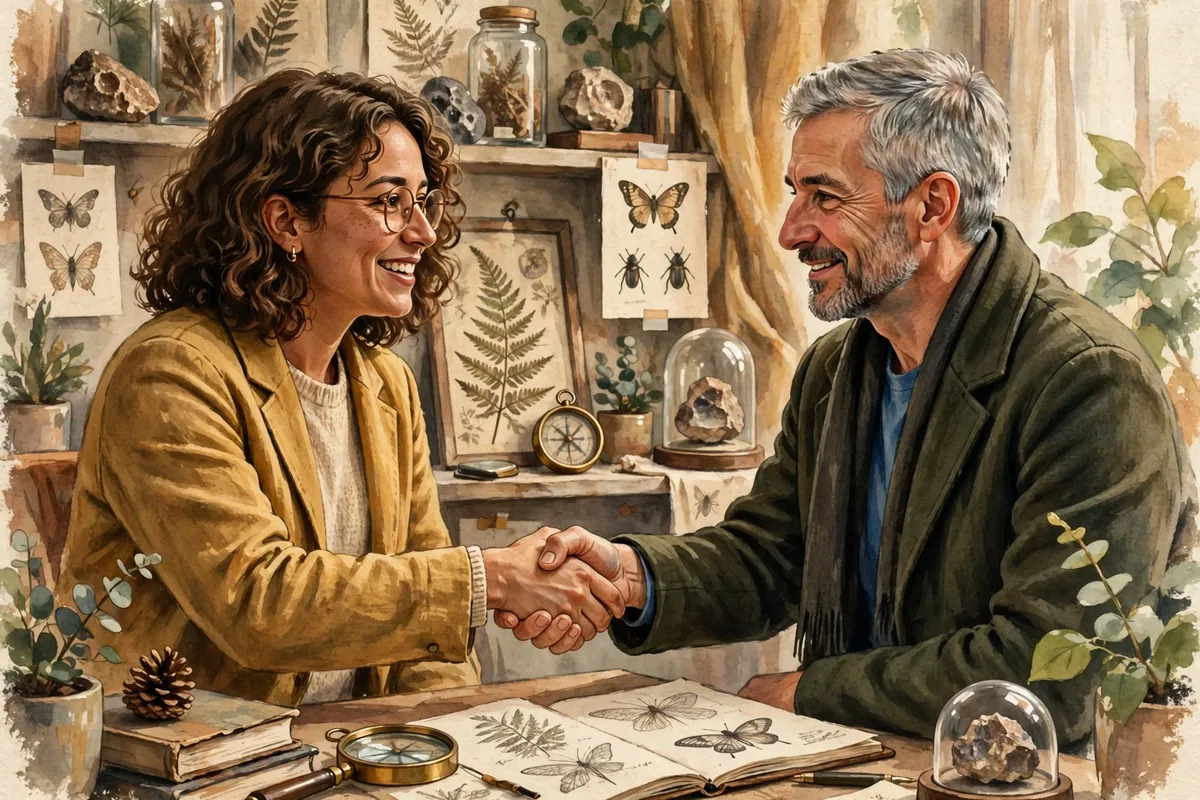
You meet someone new, and almost automatically your right hand goes out. A grip, a couple of pumps, and you let go. It's so routine that we rarely stop to wonder why grabbing a stranger's hand became the standard way to say hello.
The short answer: nobody knows exactly, but historians have two leading ideas. The handshake may have begun long ago as a sign of peaceful intent, proving your hand held no weapon. Or it may have started as a way to seal an oath or promise, with two clasped hands standing for a bond.
Two Kings in Stone
Whatever its beginning, the handshake is very old. One of the earliest known pictures of one is an ancient Assyrian carving from the 9th century BC. It shows the Assyrian king Shalmaneser III clasping hands with the Babylonian king Marduk-zakir-shumi I to seal an alliance.
That fits the promise theory nicely. Nearly 3,000 years ago, a handshake between two rulers carried the same message it does in a business deal today: we have an agreement.
Handshakes in Ancient Greece
The ancient Greeks shook hands too, as early as the 5th century BC. They even had a word for it, dexiosis. Several Greek grave markers show people joining hands.
One 5th-century BC stone carving, now in a Berlin museum, shows two soldiers clasping hands. Another, from the 4th century BC, shows a man named Thraseas and his wife Euandria shaking hands, a touching scene carved in stone.
What a Handshake Says Today
Today we shake hands when we meet, say goodbye, congratulate someone, say thank you, or close a deal. In sports, it's a sign of good sportsmanship. The gesture is meant to convey trust, respect, and equality.
In the United States, Canada, and Britain, the traditional handshake is firm, done with the right hand, with good posture and eye contact. But that's far from universal. In Turkey and much of the Arabic-speaking Middle East, handshakes are gentler, and a grip that's too firm can seem rude.
In China, age matters, and older people should be greeted first. In Japan, there isn't a tradition of shaking hands, and people usually bow instead. In Denmark, a required handshake with a local official is the final step in becoming a citizen, and gloves aren't allowed.
In the Netherlands and Belgium, people shake hands even more often, especially when meeting. In Morocco, a soft handshake between people of the same gender may be followed by lightly touching your heart with your right hand, a lovely touch of warmth.
The Germ Question
There's a downside to all this hand-holding. Handshakes are known to spread germs. One medical study found that fist bumps and high fives spread fewer germs than handshakes.
During the COVID-19 pandemic, several countries and organizations encouraged people to swap handshakes for elbow bumps, fist bumps, foot taps, or no-touch greetings. Even before that, a doctor at UCLA's hospital had tested a handshake-free zone to cut down on the spread of germs.
A Greeting That Endures
Even so, the handshake has proven remarkably hard to replace. It has lasted for thousands of years, through countless changes in fashion and manners.
So the next time you reach out to shake someone's hand, you're joining a tradition that ancient kings carved into stone. Not bad for a simple hello.