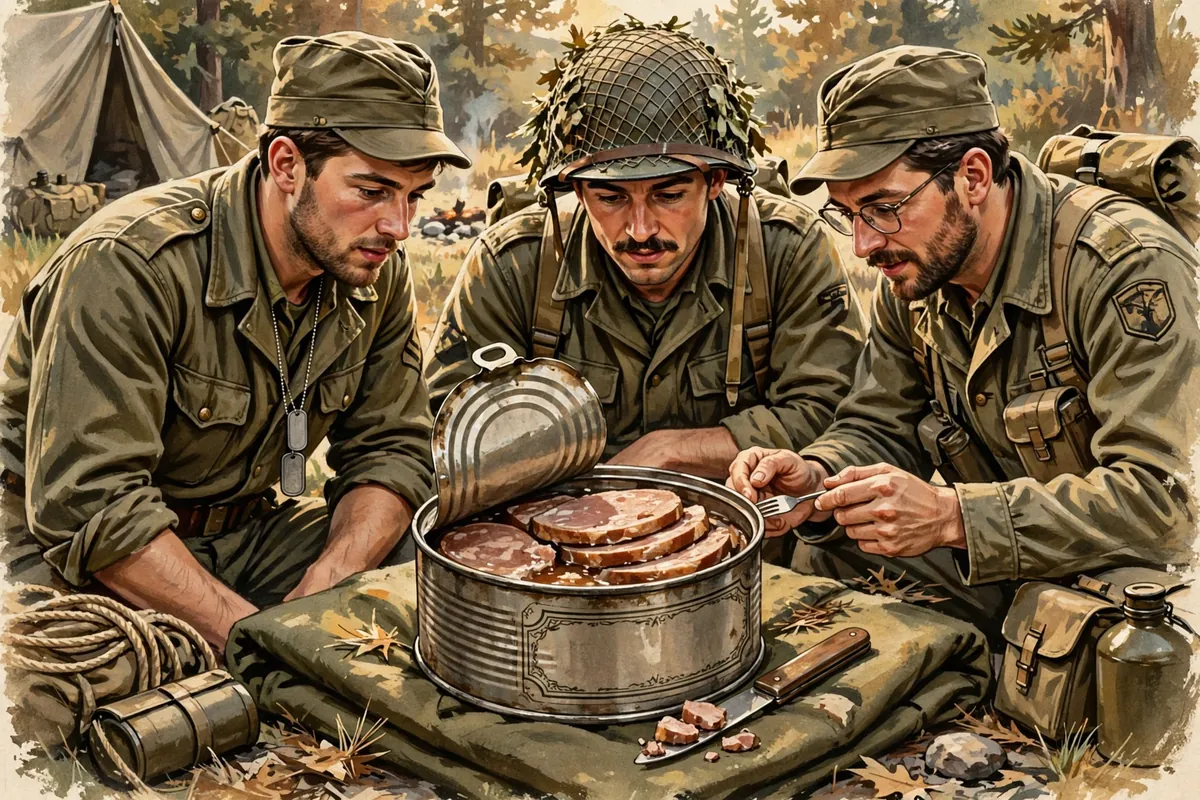
It sits quietly on grocery store shelves, a little blue can that people either love or joke about. But Spam once played a surprisingly big role in world history. During World War II, it fed millions of soldiers and helped keep hungry countries going.
Here's the short version. Fresh meat was very hard to deliver to troops at the front, but canned meat could travel almost anywhere. Spam became a constant part of the American soldier's diet, and more than 150 million pounds of it went to the military before the war ended. It was also shipped to Britain and the Soviet Union as part of Allied aid.
A Can Born to Sell Pork Shoulder
Hormel Foods introduced Spam on July 5, 1937. According to the Oxford Encyclopedia of Food and Drink in America, the goal was to boost sales of pork shoulder, a cut that didn't sell well.
The name came from a contest. Ken Daigneau, the brother of a company executive, won $100 for suggesting it. What does it stand for? Hormel says the real meaning is known only by a small circle of former executives. A popular belief is that it's short for spiced ham, and the company's website jokingly offers sizzle, pork and mmm.
Ham That Didn't Pass Its Physical
Soldiers ate so much Spam that they came up with nicknames for it, like ham that didn't pass its physical, meatloaf without basic training and special army meat. Some troops grew so tired of seeing it at every meal that they wrote complaint letters to Jay Hormel, the company's president.
Spam was everywhere during the war. Its grease was used on guns and its cans were collected as scrap metal. It became so famous that Uncle Sam earned the nickname Uncle Spam, and USO entertainers toured what was called the Spam Circuit. In 1943, a British film even featured a harassed waitress character called Mrs. Spam.
Feeding Allies Overseas
Countries devastated by war and strict food rationing came to appreciate Spam much more than the grumbling GIs did. Thanks to rationing and the Lend-Lease program, Spam was sold in the United Kingdom. Margaret Thatcher, who later became British prime minister, called it a wartime delicacy.
Hormel also ramped up production as part of Allied aid to the Soviet Union. In his memoir, Soviet leader Nikita Khrushchev wrote, "Without Spam, we wouldn't have been able to feed our army." Britain grew attached to it too. After the war, a factory in Liverpool made Spam under license for decades, until production switched to a Danish company in 1998.
A Lasting Legacy in the Pacific
During the war and the occupations that followed, Spam arrived in Guam, Hawaii, Okinawa, the Philippines and other Pacific islands. It quickly became part of local cooking, and it's still beloved there today.
In the Philippines, for example, Spam is a cultural symbol, often eaten for breakfast with garlic fried rice and a sunny-side-up egg. After the war, back in the United States, Spam shifted from being a main source of protein to more of a side dish, sliced into sandwiches or fried alongside eggs.
Today Spam is sold in dozens of countries. Love it or not, that humble can has quite a service record. Not many foods can say they helped win a world war.