A Snow-White Cat Curled Up in the Hay. Her Tail Was Hiding Something.
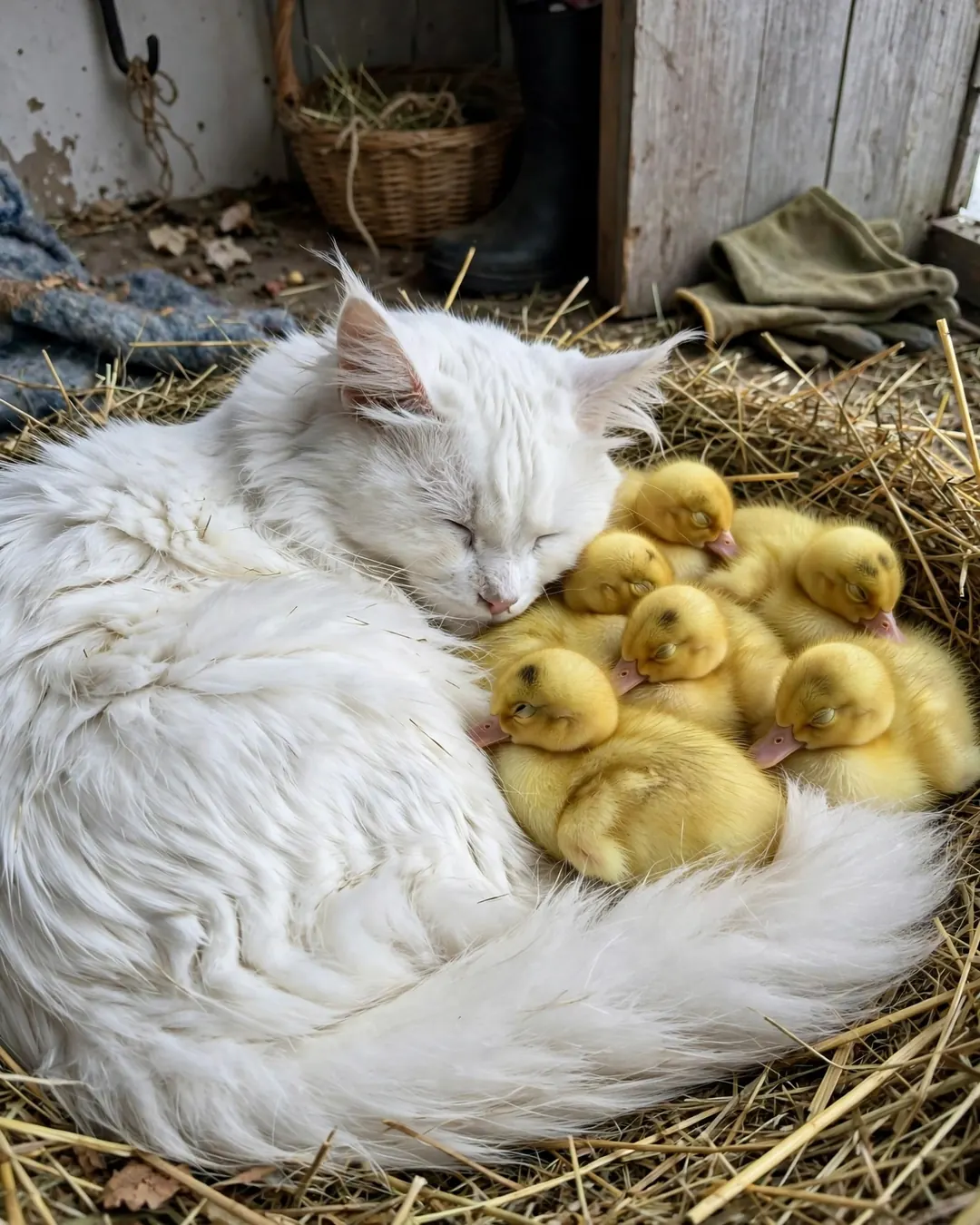
In a quiet corner of the barn, a snow-white longhaired cat has curled into a crescent on a bed of golden hay, her plush tail sweeping around like a protective wall. Nestled inside that curve are six yellow ducklings, a few already asleep, one or two still peeking out with sleepy eyes. The cat's face is pressed gently against the nearest duckling, her eyes closed in deep contentment. Around them sit a wicker basket of dried grass, a tall rubber boot, a folded green cloth, and a weathered wooden wall.
With her thick coat and full, bushy tail, this cat has the look of a Norwegian Forest Cat, a sturdy breed developed in the cold forests of Scandinavia. These cats have a water-resistant double coat, tufted ears and paws, and strong legs made for climbing. They are generally known for being friendly, calm, and independent without being aloof. Their coats shed seasonally, and extra brushing during spring and fall helps manage the fluff. In a barn setting like this, it is also smart to keep cats up to date on parasite prevention, since hay and outdoor spaces can harbor fleas and ticks. Your vet can recommend a schedule.
Right now, of course, nobody is thinking about fleas or brushing. There is warm hay, soft feathers, and a fluffy tail curled just so. It is the kind of nap that feels like a hug from start to finish.