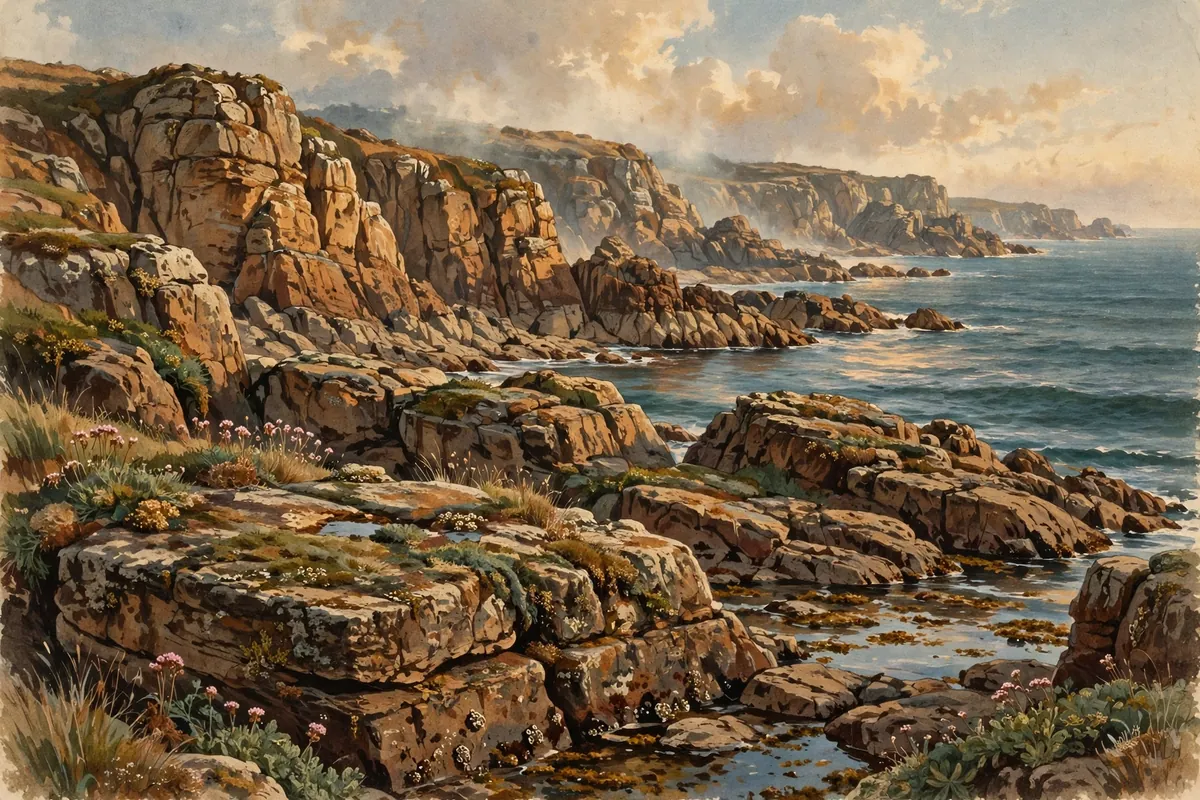
Pick up a stone from your garden and it might feel timeless. But most rocks on Earth's surface are relative youngsters, broken down and remade again and again over the ages. So how old is the oldest rock anyone has ever found?
Just over 4 billion years. In 1999, a rock from the Acasta Gneiss in northwestern Canada was dated to about 4.031 billion years old, making it the oldest known intact rock on Earth. Even older are tiny crystals of a mineral called zircon from Western Australia, dated to about 4.4 billion years. Earth itself is estimated to be about 4.54 billion years old.
Why Old Rocks Are So Rare
To count as an intact rock, a clump of minerals has to stay together without being broken down by erosion or melted. Over billions of years, that's a tall order. Most of Earth's earliest crust simply hasn't survived.
Rocks from the Archean Eon, which began about 4 billion years ago, are exposed at the surface in only a few places, such as the ancient geologic shields of Canada, Australia, and Africa. Most of those rocks are between 2.5 and 3.8 billion years old. Their ages come with a margin of error of millions of years, which is tiny compared with how old they are.
Canada's Ancient Stones
The Acasta Gneiss Complex lies about 190 miles north of Yellowknife in Canada's Northwest Territories, named for the nearby Acasta River. It holds fragments of the oldest known crust and records more than a billion years of molten rock, heat, and pressure.
Another contender sits on the eastern shore of Hudson Bay in northern Quebec. In 2008, researchers announced that rocks from the Nuvvuagittuq greenstone belt had a model age of 4.28 billion years. Other scientists argue the rock actually formed closer to 3.8 billion years ago, and the debate isn't settled.
Tiny Crystals, Huge Ages
Zircon crystals are tougher than the rocks they come from. They can survive erosion, long journeys, and even intense heat and pressure, ending up inside much younger rock. They also contain traces of uranium and thorium, which let scientists date them.
Zircons from the Jack Hills of Western Australia have been dated to 4.404 billion years, the oldest minerals yet dated on Earth. Some researchers think their chemistry hints that liquid water already existed on Earth's surface more than 4.3 billion years ago, though that idea is still debated. In 2015, researchers even reported possible remains of life in 4.1-billion-year-old rocks from the same hills.
A Piece of Earth Found on the Moon
In January 2019, NASA scientists reported a surprising find. Among the rocks Apollo 14 astronauts brought back from the Moon, one nicknamed Big Bertha, picked out by astronaut Alan Shepard, held a fragment containing “a bit of Earth from about 4 billion years ago.”
The fragment contained quartz, feldspar, and zircon, minerals that are common on Earth but highly uncommon on the Moon. It was reported as the oldest known Earth rock, a stowaway that somehow ended up on the Moon and then rode back home with the astronauts.
So the next time you skip a stone across a lake, remember that some rocks have been around for most of Earth's history. A few of them date back to when the planet was still brand new, and one even took a round trip to the Moon.