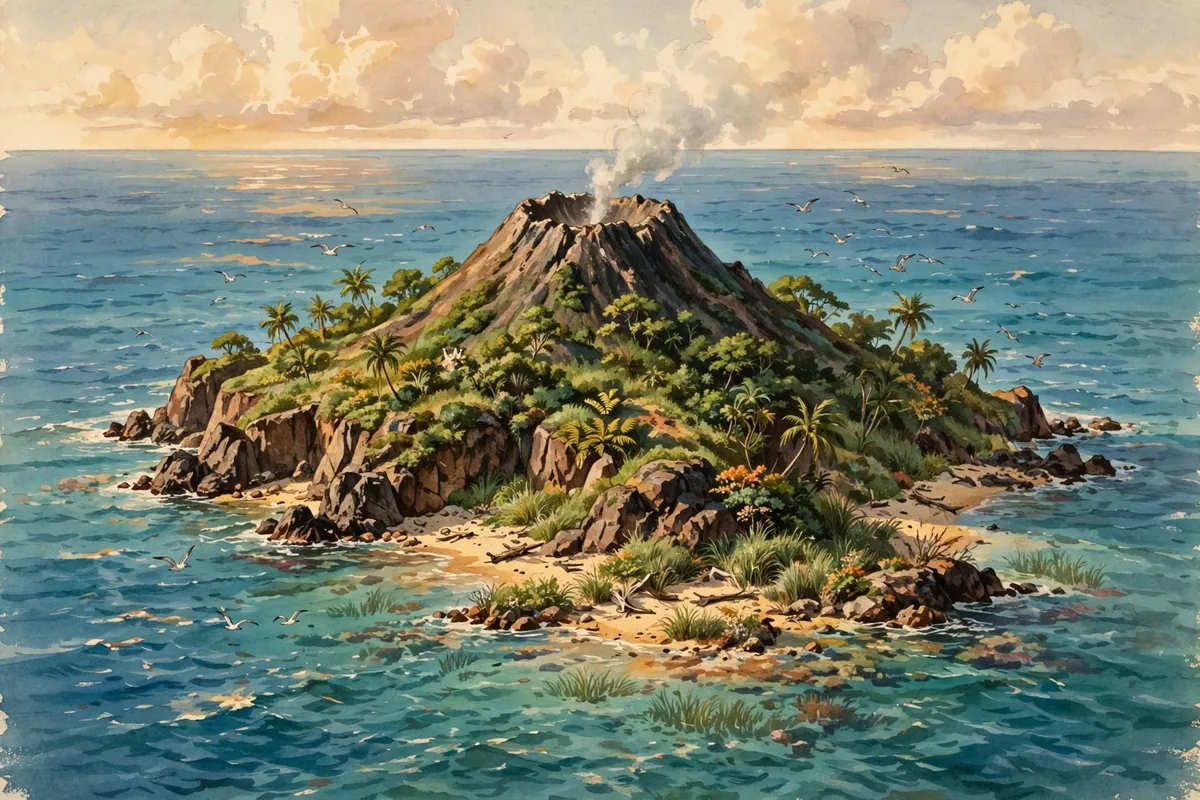
Maps feel permanent. Coastlines move a little, sure, but islands generally stay where we left them. Not this one. About 19 miles off the coast of Sicily, there's an island that has popped up out of the Mediterranean several times in recorded history, only to sink back beneath the waves.
Here's the short answer: Graham Island is the top of an underwater volcano called Empedocles. When the volcano erupts, it can pile up enough loose volcanic rock and ash to poke above the sea. But that material is soft and easily worn away by waves, so once the eruption stops, the island erodes and disappears. Its most famous appearance lasted only about six months, in 1831.
A Strange Summer in 1831
The show began with warnings. In late June 1831, British navy ships near Sicily were shaken by an earthquake. A few days later, the smell of sulfur in the nearby town of Sciacca was reportedly strong enough to blacken silver. Then sailors spotted smoke rising straight out of the sea.
Residents on shore thought it might be a ship on fire. One passing captain saw the water bubbling and wondered if it was a sea monster. Another ship reported dead fish floating on the surface. By July 17, a brand-new island had formed, and a Sicilian customs official landed on it and planted an oar to claim it.
At its peak that summer, the island was nearly three miles around and stood more than 200 feet tall. It even had two small lakes.
Everyone Wanted It
Almost immediately, a tug-of-war began. On August 2, a British captain claimed the island for the Crown, planted the Union Jack, and named it Graham Island after Sir James Graham, head of the Admiralty. The British saw it as a handy spot for watching Mediterranean shipping.
Ferdinand II, ruler of the Kingdom of the Two Sicilies, sent his own ship and named it Ferdinandea. A French geologist named it Julia, because it was born in July. Spain announced its own interest too. Some nobles reportedly even dreamed of building a holiday resort on its beaches.
Gone Before Anyone Won
Nature settled the argument. The island was made of loose volcanic debris, and once the eruption ended, the waves went to work. By December 1831, officials reported no trace of it, and it was gone beneath the waves by January 1832. The ownership dispute was never resolved.
Still Lurking Just Below
Graham Island hasn't really gone anywhere. Its summit sits less than 30 feet below the surface, close enough to be a hazard for many ships, so it's still marked on marine charts. Around 2000 and 2002, new earthquakes and gas emissions made scientists wonder if it might rise again, though it didn't.
Just in case, Italian divers planted a Sicilian flag on the summit in 2000, and a 330-pound marble plaque was lowered into the water declaring the land would always belong to the Sicilian people. Within six months, the plaque had cracked into twelve pieces. Perhaps the island prefers to keep its options open.
Graham Island isn't the only island with this habit. Home Reef in Tonga has been built up and washed away by repeated eruptions, with new activity in 2022 and 2023. The ocean, it turns out, is still drawing and erasing its own maps.