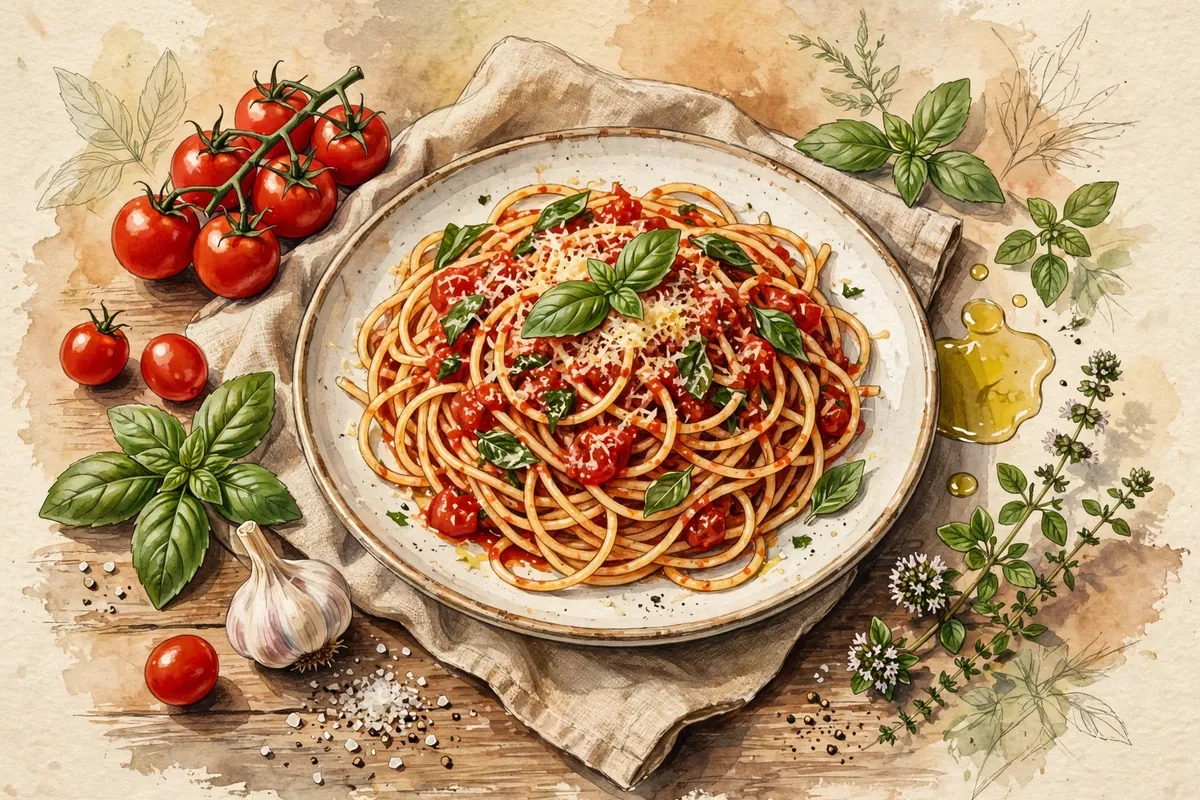
Americans love pasta. Spaghetti night, mac and cheese, a big bowl of fettuccine Alfredo: it's comfort food in millions of homes. But pasta didn't start out as an American staple. So how did it end up on our tables?
The short answer: it arrived in stages. An early, famous moment came in 1802, when President Thomas Jefferson served “a pie called macaroni” at a state dinner. But pasta truly became an everyday American food after waves of Italian immigrants arrived, many through Ellis Island, and brought their cooking with them.
First, the Marco Polo Myth
You may have heard that explorer Marco Polo brought pasta to Italy from China. Many historians consider that a myth. Pasta in a form we'd recognize today probably reached Italy through Sicily in the Middle Ages, thanks to Mediterranean trade.
The Marco Polo tale got a big boost in America. In 1929, an industry newsletter called the Macaroni Journal ran a story crediting a member of Polo's crew, conveniently named Spaghetti, with inventing the noodle. One food writer believed the legend started in an advertisement for a Canadian spaghetti company.
Macaroni at the President's Table
Thomas Jefferson was curious about pasta, especially the kind pressed through a machine into shapes. Much of the credit belongs to James Hemings, an enslaved man Jefferson took with him to Paris, where Hemings trained as a French chef. There he learned a dish of pasta and cheese and later prepared a “macaroni pie” back home. He's widely credited with introducing macaroni and cheese to the United States.
At an 1802 state dinner, Jefferson's guests were served “a pie called macaroni.” One guest, Reverend Manasseh Cutler, wrote about the menu and apparently was not fond of the cheesy casserole. Not every new food is an instant hit. Hemings also brought other French treats to American tables, including crème brûlée and meringues.
How Immigrants Made It Everyday Food
Pasta's real takeover came with Italian immigration. Many newcomers worked long hours in cramped conditions, but for the first time they could afford plenty of meat, cheese, eggs, flour, and even imported dry pasta and olive oil.
That new abundance shaped what we now call Italian-American cooking. It's richer in meat and cheese than the humble peasant cooking many families left behind, but it kept that same simple, practical style. Much of it is based on Southern Italian cooking, especially from Naples and Sicily, where dry pasta and tomato sauce were staples. The result became the classic “red sauce” style so many Americans grew up with.
Families from different parts of Italy also became neighbors in America and swapped recipes, blending regional traditions into something new.
From Newcomer to National Favorite
Today, pasta is everywhere. In 2017, the United States was the world's largest consumer of pasta, eating about 2.7 million tons. It's also one of the world's biggest producers, second only to Italy in a 2015–16 ranking.
Pasta has even become part of American pop culture. The 1955 Disney film Lady and the Tramp includes the famous scene of two dogs sharing a plate of spaghetti and meeting in an accidental kiss.
So the next time you twirl spaghetti onto your fork, you're enjoying a dish with a long journey behind it: across the Mediterranean, through a president's dining room, and into countless immigrant kitchens.