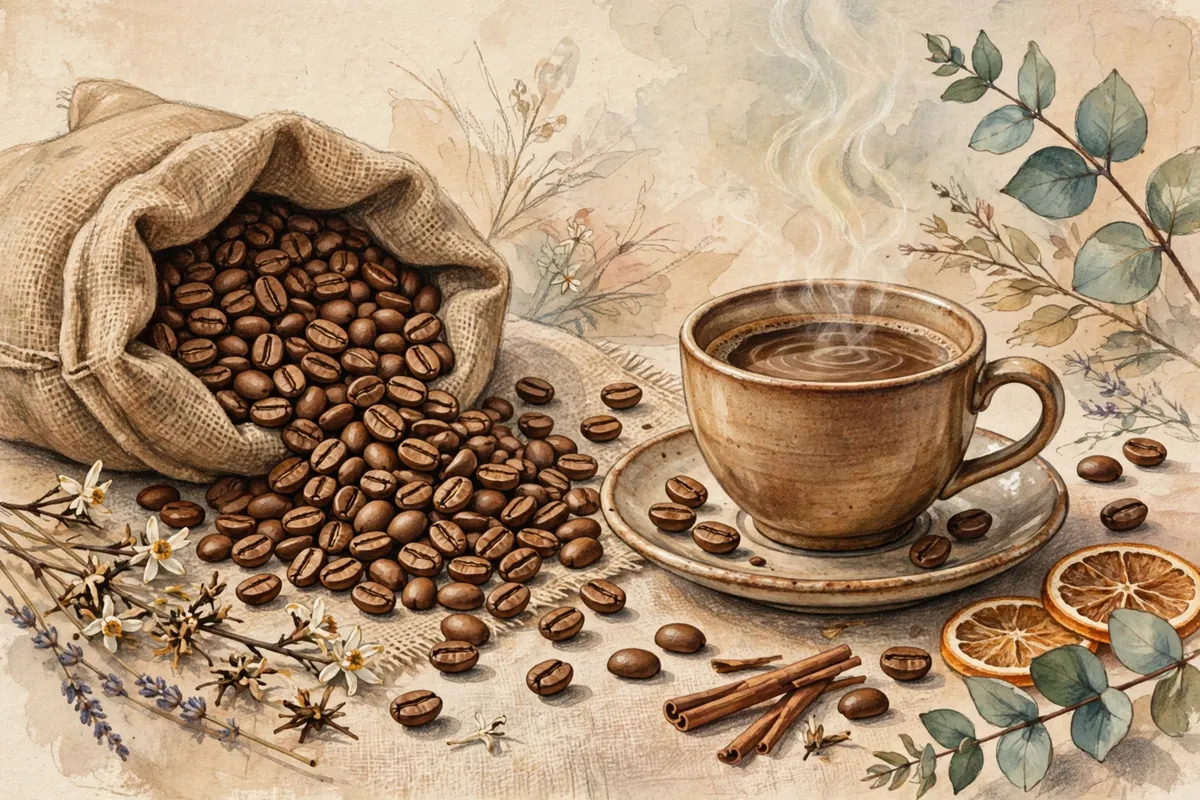
Few smells are as welcoming as coffee brewing first thing in the morning. It fills the kitchen, drifts down the hall, and practically calls your name. Yet plenty of people notice that the first sip never quite lives up to the smell. Even devoted coffee drinkers often reach for the cream and sugar.
There's no single official answer, but science offers good clues. When you smell coffee, your nose picks up its rich aroma without any bitterness, because bitterness is something only your tongue can sense. When you drink it, your tongue adds coffee's bitter taste to the mix, and that changes the experience.
Where That Wonderful Smell Comes From
Raw green coffee beans don't smell or taste like coffee at all. The magic happens in roasting. Heat sets off a series of chemical reactions, including the Maillard reaction, the same kind of browning that gives toast and seared meat their appeal.
At around 392 degrees Fahrenheit, roasting creates an oil called caffeol, which is largely responsible for coffee's aroma and flavor. Roasters even use smell, along with color, sound, and temperature, to judge when beans are done.
Two Ways to Smell
Here's something most of us never think about: you actually smell in two different ways. When you breathe in through your nose, like when you sniff a fresh pot, that's the classic sense of smell. But when you eat or drink, aromas travel up from the back of your mouth into your nose as you breathe out.
That second kind of smelling plays the biggest role in what we call flavor. Your tongue can only tell apart five basic tastes: sweet, sour, salty, bitter, and savory. Your nose, by contrast, can tell apart hundreds of different substances, even in tiny amounts. So most of what we think of as flavor really comes from smell. Smell is wired a little differently from our other senses, too. It's the only human sense that skips a relay station in the brain called the thalamus and connects directly to the forebrain.
Enter the Bitterness
When you take a sip, your taste buds join in, and coffee is naturally bitter. Caffeine itself is a bitter substance. Roasting also burns off the sugar in the beans, and darker roasts may lose it entirely. So that rich, toasty smell arrives without the sweetness our brains might expect to go with it.
Our sense of bitterness has an important job. Scientists believe it helps warn us about possible poisons, which is why many of us are a little wary of bitter tastes, especially at first. Many coffee lovers learn to enjoy it over time, but that instinct is still there.
The type of bean matters, too. Arabica coffee is generally considered smoother. Robusta tends to be more bitter with less flavor, and it contains about 40 to 50 percent more caffeine.
Making Peace With Your Cup
There's a reason cream and sugar have been coffee's sidekicks for so long. They soften the bitterness and let more of that lovely aroma shine through. Choosing a lighter roast or an arabica bean can make a difference as well.
And there's no shame in simply enjoying the smell. Brew a pot, take a deep breath, and savor the moment, whether or not you finish the cup. Your nose has been looking forward to it all morning.