Hard to imagine an American dinner table without potatoes. They show up mashed at Thanksgiving, fried next to burgers, and baked with butter and sour cream. You'd think a food this beloved would have a simple story. Instead, the potato took one of the strangest routes of any crop to reach the United States.
Here's the short answer: potatoes were first domesticated in South America, in what is now southern Peru and northwestern Bolivia, thousands of years ago. Spanish explorers carried them to Europe. The earliest certain potato crop in North America then came across the Atlantic from Ireland in 1719, which is why Americans long called it the "Irish potato."
Born in the Andes
Potatoes were domesticated somewhere between 8000 and 5000 BC. Cultivation in South America may even go back 10,000 years. The oldest confirmed potato remains, found on the coast of Peru, date to about 2500 BC.
For the Inca Empire, potatoes were the main source of energy. Andean people boiled, mashed, baked, and stewed them much like we do today. They also made chuño, potatoes repeatedly frozen overnight and thawed in the morning, then pressed dry. Chuño could be stored for years without refrigeration and helped feed Inca armies.
A Trip to Europe
In 1537, Spanish conquistadors became the first Europeans to encounter the potato, during a raid on an Inca village in Peru. From there the crop spread through Europe, though it took a while to catch on.
In France, a physician named Antoine Parmentier published a study in 1774 showing how nutritious potatoes were. King Louis XVI and his court promoted the crop, and Queen Marie Antoinette even wore potato flowers in her hair at a costume ball.
The Irish Potato Arrives
Early colonists in Virginia and the Carolinas may have grown potatoes from Spanish ships. But the first certain potato crop in North America was planted in New Hampshire in 1719, by settlers from Derry in Ireland. Because the plants came from Ireland, they became known as Irish potatoes. Out west, an 1820 expedition report from what is now Minnesota described crops the Ojibwe called waub-es-see-pin, a word indicating a type of potato.
Even Thomas Jefferson weighed in. When someone suggested the potato was native to the U.S., he replied that he had looked into it and was confident it was not. Potatoes weren't widely planted in eastern North America until after 1750.
Blight, Breeding, and Idaho
Because so few potato varieties were grown, the crop was vulnerable to disease. In the early 1800s, a potato blight spread through the Americas. It reached Europe in the 1840s and devastated Ireland beginning in 1845, a tragedy that sent many Irish families looking for a new life overseas.
To build stronger potatoes, American growers imported new varieties from South America. In 1873, plant breeder Luther Burbank selected a potato that led to the Russet Burbank, now the most widely grown potato in North America. Its white, mealy flesh is ideal for baking, mashing, and french fries.
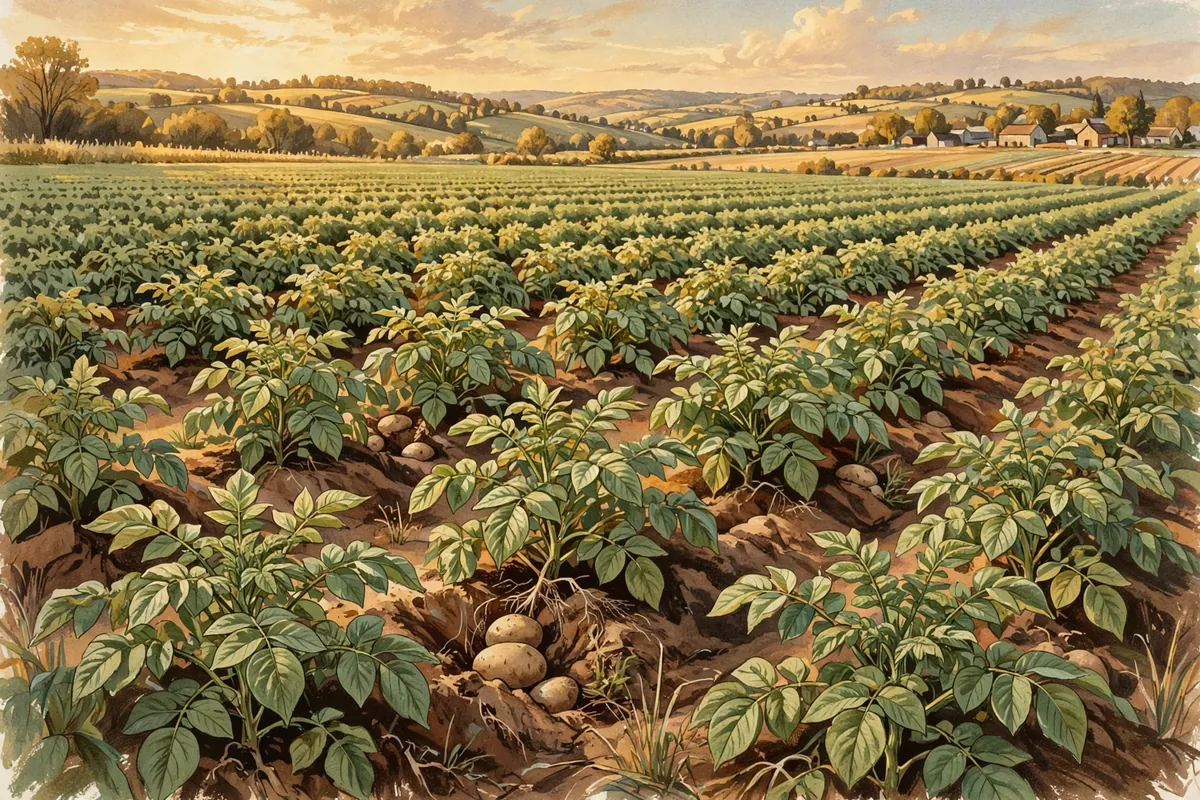
Potatoes were planted in Idaho as early as 1838, and by 1900 the state was producing more than a million bushels a year. Today, two-thirds of the U.S. crop comes from Idaho, Washington, Oregon, Colorado, and Maine. So the next time you dig into a baked potato, remember it's a world traveler that finally found a home here.