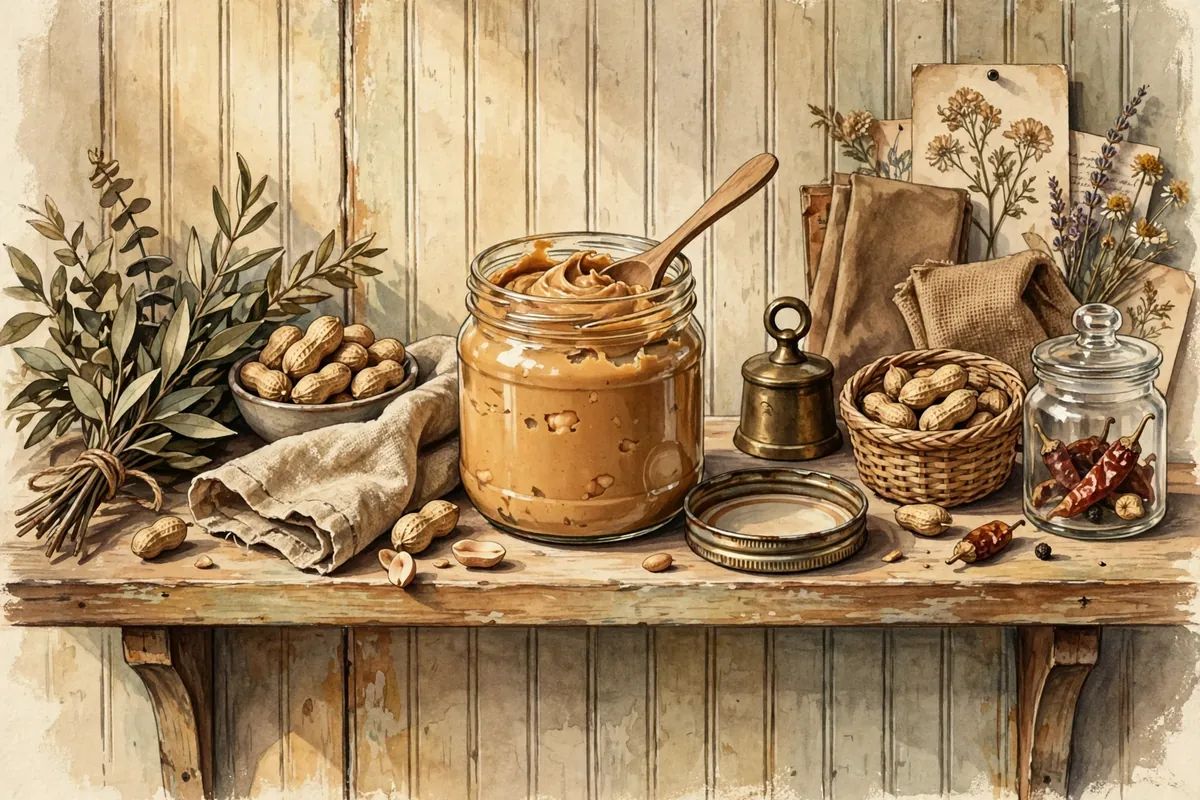
Peanut butter seems like the most ordinary food in America: cheap, sticky, and tucked into millions of lunchboxes. It's hard to imagine it as anything fancy. But when it first caught on, it was served to patients at a health resort and enjoyed mainly by the well-to-do.
That's because peanut butter's early popularity came through health institutions. John Harvey Kellogg, the doctor famous for breakfast cereals, promoted plant foods as a healthier choice than meat. His institute in Battle Creek, Michigan, served peanut butter to patients who needed plenty of protein in a form they could eat without chewing.
The Doctor and His Sanitarium
Kellogg became medical superintendent of the Western Health Reform Institute in Battle Creek in 1876, and it grew into the famous Battle Creek Sanitarium. Kellogg even claimed credit for the word sanitarium, saying that changing two letters of sanatorium had added a new word to English.
The place was huge. Kellogg said the number of patients grew from 106 in 1866 to 7,006 in 1906, with never fewer than 800 people on staff.
On May 24, 1898, Kellogg received a patent for a “Process of Producing Alimentary Products” that used peanuts. Unlike today's peanut butter, his version started with boiled peanuts rather than roasted ones.
A Food for the Wealthy
At first, peanut butter was mostly for people with money. It became popular as something served at expensive health institutes, and through the 1900s it was considered a delicacy.
Even the peanut butter and jelly sandwich started out upscale. Its first published mention came in 1901, when Julia Davis Chandler suggested it in the Boston Cooking School Magazine as a tea sandwich, made with “peanut paste” and currant or crab-apple jelly. That was five years after the first published mention of spreading peanut butter on bread. By 1913, The New York Times was recommending peanut and jelly sandwiches for children's school lunches.
Who Really Invented It?
Kellogg wasn't the only pioneer. Marcellus Gilmore Edson of Montreal got the first patent for making peanut butter from roasted peanuts in 1884. A St. Louis businessman named George Bayle was selling peanut butter as a snack food in 1894, and Dr. Ambrose Straub patented a peanut-butter-making machine in 1903. Joseph Lambert, who had worked at Kellogg's sanitarium, also built some of the earliest peanut butter machines.
One popular belief is wrong, though. George Washington Carver is often credited with inventing peanut butter, but he didn't. By the time he published his famous 1916 bulletin on peanuts, many ways of making it had already been developed. And the basic idea is far older: the Aztecs and Incas ground roasted peanuts into a paste.
From Delicacy to Everyday Staple
Mass production changed everything. By 1917, Americans were turning to peanut products during meat rationing, and peanut butter was a favorite on “meatless Mondays.” In 1922, chemist Joseph Rosefield found a way to keep the oil from separating, and he later launched Skippy, which introduced the first chunky-style peanut butter.
During the Great Depression, the PB&J's long shelf life and nutrition made it a common meal for families with little money, and American soldiers ate it during World War II.
So the next time you spread peanut butter on your toast, you're enjoying what was once a health-resort specialty for the well-off. It just took a few decades, and a lot of grinding machines, to reach everyone's kitchen.