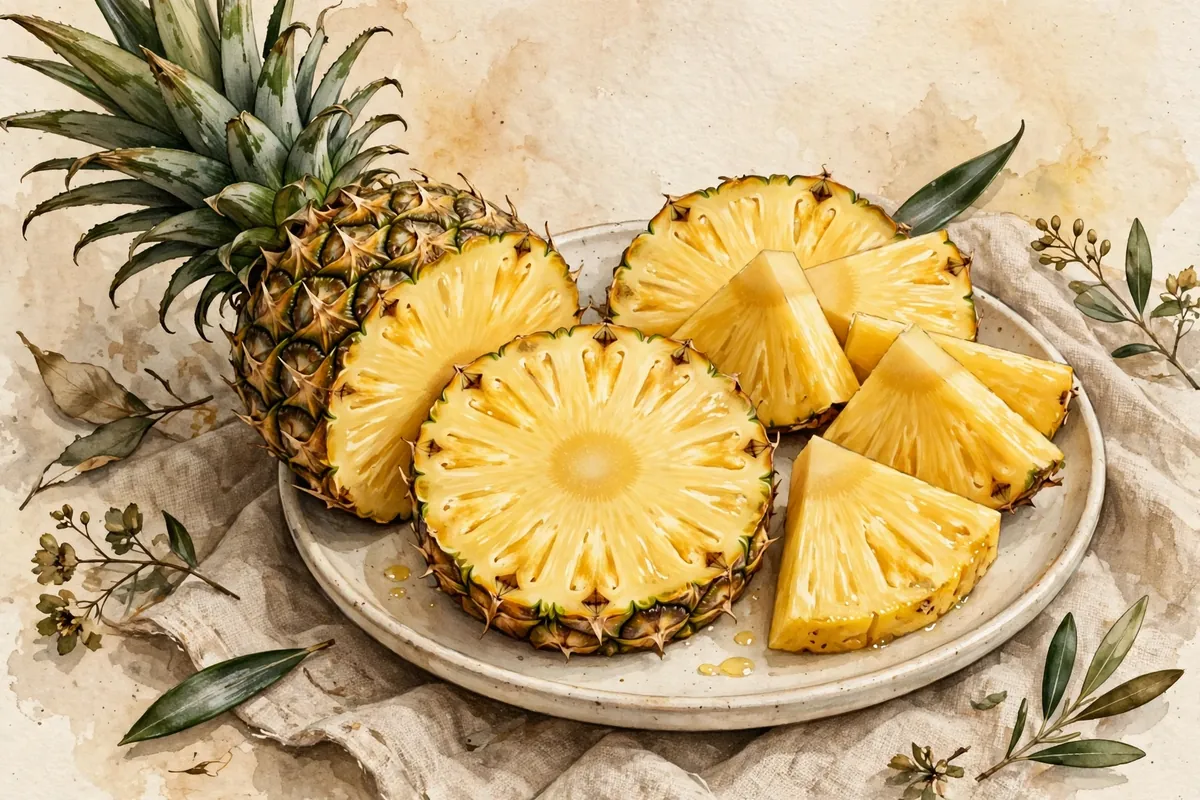
Fresh pineapple is sweet, juicy, and hard to stop eating. But after a bowlful, many people notice their tongue feels raw, tingly, or even a little sore. It's as if the fruit is fighting back. So what's going on?
The usual explanation is bromelain. That's a group of enzymes in pineapple that break down proteins, and it's found in every part of the plant, including the fruit. Proteins are a basic building block of the soft tissue in your mouth, so a long pineapple snack is often blamed for that tender, prickly feeling. Heat destroys these enzymes, which is why cooked and canned pineapple behave differently.
An Enzyme That Breaks Down Protein
Enzymes like bromelain are called proteases, and they're found in nearly every living thing, from bacteria to people. They cut proteins into smaller pieces by breaking the bonds that hold them together. Your own stomach uses similar enzymes to digest the protein in your dinner.
Bromelain was first isolated in 1891 by Venezuelan chemist Vicente Marcano, who fermented pineapple fruit. A year later, American scientist Russell Henry Chittenden studied it in more detail.
Pineapple, the Meat Tenderizer
The same protein-busting power makes pineapple useful in the kitchen. Raw pineapple juice can work as a marinade that tenderizes meat. Some meatballs and store-bought marinades include pineapple ingredients for this reason.
There's a famous kitchen catch, too. Pineapple enzymes can interfere with gelatin desserts, because gelatin is made from protein. Cooking and canning break down the enzymes' activity, so cooked or canned pineapple doesn't tenderize meat the same way.
Commercial bromelain mostly comes from pineapple stems, which are left over after the fruit is harvested. It's used in baking, to keep cut fruit from browning, and in making textiles and cosmetics.
Bromelain is also sold as a dietary supplement, but research on what it does in the human body is still preliminary. It may be unsafe for some people, including those who are pregnant, have allergies, or take blood thinners. If you're thinking about trying it, talk to your doctor first.
A Fruit Made of Many Fruits
Pineapple has a few other surprises. Each one is actually many small berries that grow together into a single large fruit. The bumps on the outside are usually arranged in two interlocking spirals, often 8 one way and 13 the other. Both are Fibonacci numbers, part of a famous math pattern found throughout nature.
In the wild, pineapples are mostly pollinated by hummingbirds, and some by bats at night. Growers actually avoid pollination, because seeds lower the quality of the fruit. Hawaii, where pineapples were grown and canned on a huge scale, even banned importing hummingbirds.
From Columbus to the Canning Factory
The wild pineapple comes from South America, and people in Peru were using it as far back as 1200 BC. The first European to encounter one was Christopher Columbus, on the island of Guadeloupe in November 1493.
Hawaii became famous for pineapples after James Dole started a plantation there in 1900. In 1911, one of his employees, Henry Ginaca, invented a machine that could peel and core pineapples automatically.
So if your tongue tingles after a pineapple feast, you're in good company. Enjoy it in moderation, or try it grilled. A little heat takes the bite out of the fruit while keeping all that sunny sweetness.