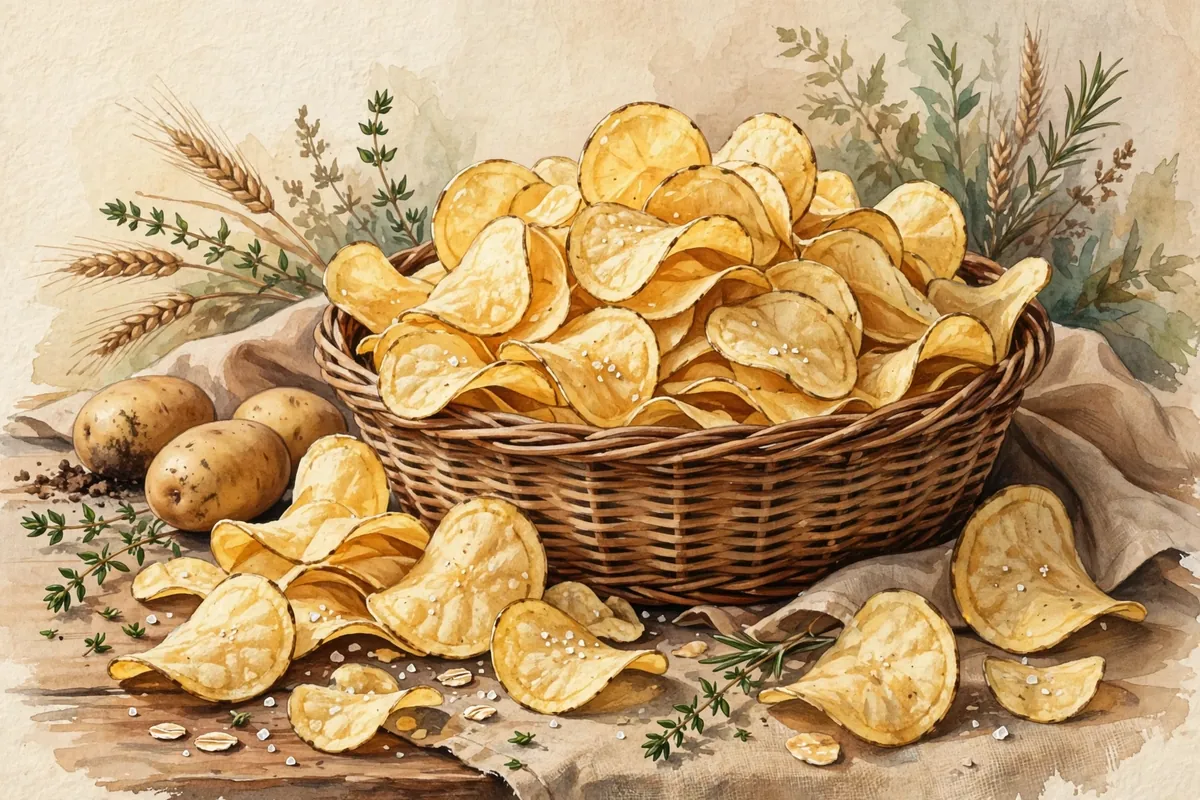
It's one of America's favorite food origin stories. In 1853, at a fancy lakeside restaurant near Saratoga Springs, New York, a customer kept sending back his fried potatoes. Too thick, he said. Too soggy. Not salty enough. So the frustrated cook sliced the potatoes as thin as he could, fried them to a crisp, and loaded them with salt. To everyone's surprise, the customer loved them.
It's a fun story, but it isn't true. Recipes for thin, crispy fried potato slices were published decades before 1853. The earliest known one appeared in an English cookbook in 1817. The famous Saratoga tale grew up much later, and historians have found several holes in it.
The Real First Recipe
English cook William Kitchiner's book The Cook's Oracle was published in London in 1817 and became a bestseller in both Britain and the United States. Its recipe for "Potatoes fried in Slices or Shavings" told cooks to peel large potatoes, cut them in shavings round and round, as you would peel a lemon, dry them in a cloth, and fry them in lard or dripping.
American cookbooks soon followed. Mary Randolph's The Virginia House-Wife, published in 1824, included a recipe for potato chips, as did another cookbook in 1832. Both openly credited Kitchiner.
Holes in the Saratoga Story
The legend gives credit to a cook named George Crum at Moon's Lake House, and in 1973 a packaging company's national ad campaign added a famous name: the fussy customer was supposedly railroad and shipping tycoon Cornelius Vanderbilt.
Historians have pointed out the problems. Vanderbilt was in Europe at the time of the supposed encounter. The Moons didn't even buy the Lake House until 1854. And crispy fried potatoes weren't new to Saratoga in 1853. Still, the story keeps popping up in popular media, probably because it's simply too good not to repeat.
The Real George Crum
The chef behind the legend was a real and remarkable man. His name was George Speck, born in 1824 in Saratoga County. He was of African American heritage and identified with the St. Regis Mohawk tribe. He worked as a hunter, guide, and cook in the Adirondacks, and became known for his cooking, especially venison and duck.
According to one account, he got the name Crum when a regular customer, Vanderbilt himself, kept forgetting his name. Speck took it in stride, reasoning that a crumb is bigger than a speck. By 1860, he had opened his own restaurant, Crum's, in nearby Malta, New York, which became popular with wealthy tourists.
Speck did serve thinly sliced fried potatoes, which became known as Saratoga chips. He died in 1914, and it was only after his death that newspapers and local histories began calling him the inventor of the potato chip.
How Chips Took Over
Chips really became a household snack in the twentieth century. In the 1920s, California businesswoman Laura Scudder had workers iron wax paper into bags, which kept chips fresher and less crumbly. That idea, along with cellophane, helped chips become a mass-market product.
Flavors came later still. Cheese and onion chips arrived in Ireland in 1954, and barbecue chips in the U.S. trace back to the same year. So the next time you open a bag, you can thank a long line of cooks and inventors, and maybe skip the part about the grumpy customer.