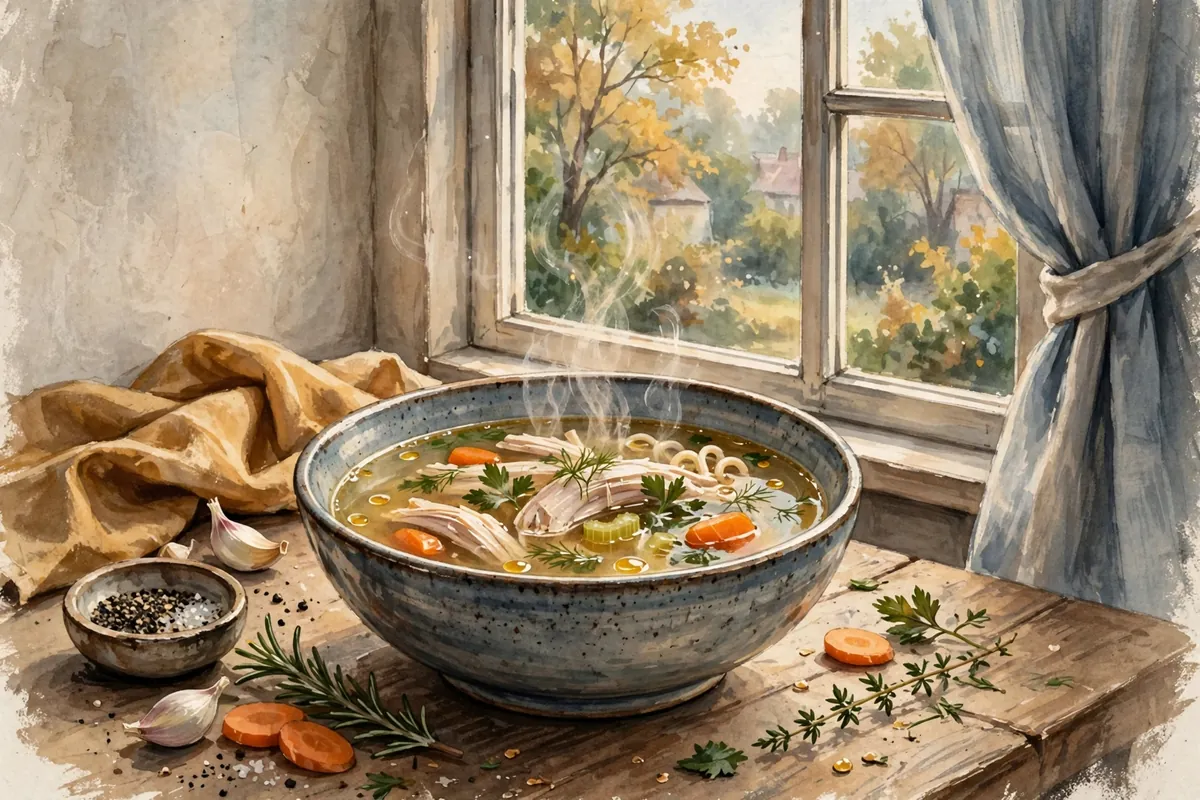
It's cold outside, you're tired, maybe you're coming down with something. What sounds good? For millions of people, the answer is a steaming bowl of soup. Few foods have such a reputation for making us feel better. But why does soup, of all things, feel so comforting?
The short answer is that soup is a classic comfort food, and comfort foods work largely through memory and emotion. They're dishes tied to childhood, home cooking, and feeling cared for. Soup also has a very long history as a "restorative" meal served to people who needed their strength back. The idea is so old that it gave us the word "restaurant."
What Makes Something Comfort Food?
Comfort food is food with nostalgic or sentimental value. It's often hearty and satisfying, and it reminds us of home or childhood. The nostalgia can be personal, like your grandmother's recipe, or shared across a whole culture.
Chicken soup has been at the center of the idea from the start. In 1966, a story in the Palm Beach Post noted that adults under severe stress turn to "what could be called 'comfort food'," the kind associated with the security of childhood, "like mother's poached egg or famous chicken soup." In the 1970s, potato dishes and chicken soup were the most popular comfort foods in the United States.
Researchers have also found that tastes vary. In one study of Americans, men tended to prefer warm, hearty, meal-type comfort foods like steak, casseroles, and soup, while women more often chose snack foods like chocolate and ice cream. People over 55 leaned toward meal-type comfort foods more than younger people did.
A Bowl of Restoration
Soup has been on the table for a very long time. One food writer observed that it's hard to find any recorded menu, ancient or modern, without soup or bread on it. Even the word soup comes from an old idea of "soaking," originally bread soaked in broth.
In Paris in the 1760s, a new kind of eating place opened, serving bouillon, a meat broth said to restore health and vigor. These spots were called restaurants, from the French word restaurer, meaning "to restore." The first one is thought to have been the first eatery to offer customers a menu of choices. So every time you go out to eat, you're using a word that started with soup.
Later, Paris's great central market became famous for onion soup topped with melted cheese. It was breakfast for the market workers and a pick-me-up for late-night partygoers heading home.
Does Chicken Soup Help a Cold?
Chicken soup has long been a folk remedy for colds and flu, from Greek egg-lemon soup to Korean ginseng chicken soup. In 2000, scientists in Nebraska found that some ingredients in chicken soup affected certain immune cells in a lab dish in a way that might ease symptoms. But a 2007 review in The New York Times concluded that none of the research was conclusive. If you're sick, talk to your doctor, and enjoy the soup as a bonus.
Maybe the real magic isn't in any single ingredient. It's the warmth in your hands, the smell from the kitchen, and the memory of someone who once made it just for you. That's a recipe science hasn't fully figured out, and it doesn't need to.