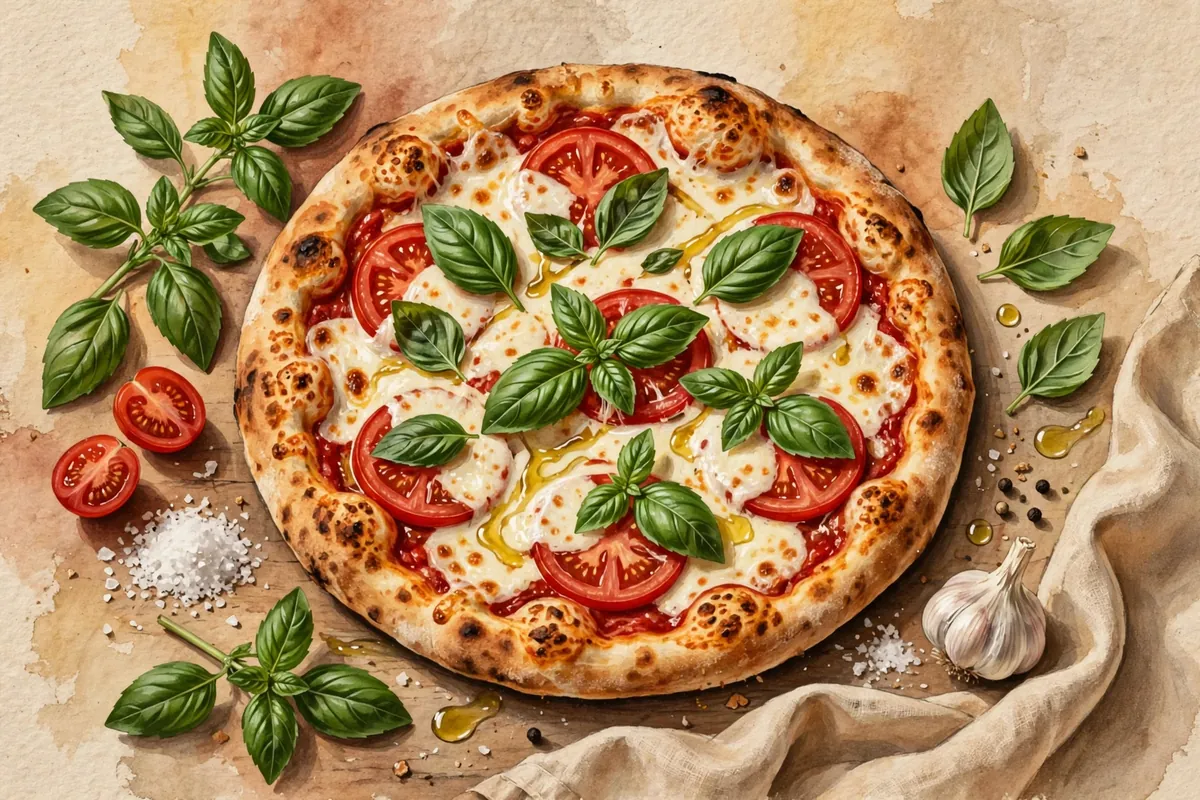
It's one of the most charming stories in food history. In 1889, the tale goes, Queen Margherita of Italy visited Naples, and a local pizza maker created a special pie in her honor, topped with tomato, mozzarella, and basil to match the red, white, and green of the Italian flag. The queen loved it, and the Margherita was born.
It's a lovely legend, but it wasn't the first pizza, and it may not even be true. Pizza is centuries older than that royal visit. The word pizza was first recorded in AD 997, and modern pizza grew out of flatbread dishes in Naples in the 18th or early 19th century. Later research has also cast doubt on the queen's story itself.
The Legend of Queen Margherita
According to the popular account, on June 10, 1889, the Royal Palace of Capodimonte asked Neapolitan pizza maker Raffaele Esposito to make a pizza for the visiting queen. He made three different pizzas, and she strongly preferred the one in the flag's colors.
The pizza was supposedly named after her, and a letter of recognition from the queen's head of service is still on display in Esposito's old shop, now called Pizzeria Brandi.
Why Historians Have Doubts
Researchers have questioned whether that letter is authentic. They also point out that no media of the period reported the supposed royal visit. And both the story and the name Margherita seem to have been promoted first in the 1930s and 1940s, decades later.
The ingredients weren't new, either. Similar toppings were already being used in Naples between 1796 and 1810. In 1849, a writer named Emanuele Rocco recorded pizza toppings that included basil, tomatoes, and thin slices of mozzarella.
Pizza's Much Longer History
The oldest known use of the word pizza comes from a Latin document written in May 997 in the town of Gaeta, in southern Italy. It says a tenant must give the local bishop twelve pizzas, a pork shoulder, and a kidney every Christmas, plus twelve pizzas and a couple of chickens every Easter.
Where the word came from is still debated. One theory traces it to Byzantine Greek and Late Latin pitta, a relative of today's pita bread. Another links it to a Lombardic word meaning mouthful, related to the English word bite.
Before tomatoes caught on, flatbreads in Naples were often topped with garlic, salt, lard, and cheese. Tomatoes couldn't have been added before the 16th century, when they arrived from the Americas. Another classic, pizza marinara, is often said to date from around 1735, though that claim rests mostly on tradition.
Pizza was sold from open-air stands and bakeries until about 1830, when pizzerias in Naples began adding rooms with tables where customers could sit and eat.
From Naples to New York
Italian immigrants brought pizza to the United States in the late 19th century. The country's first pizzeria, Lombardi's, opened in New York City in 1905. Today, about 13 percent of Americans eat pizza on any given day.
Naples still guards its tradition. In 2017, UNESCO added the art of making Neapolitan pizza to its list of intangible cultural heritage.
So the queen may never have tasted that famous pie, and pizza was around long before her. But the Margherita's simple red, white, and green still makes a fine tribute, whether or not royalty ever ordered one.