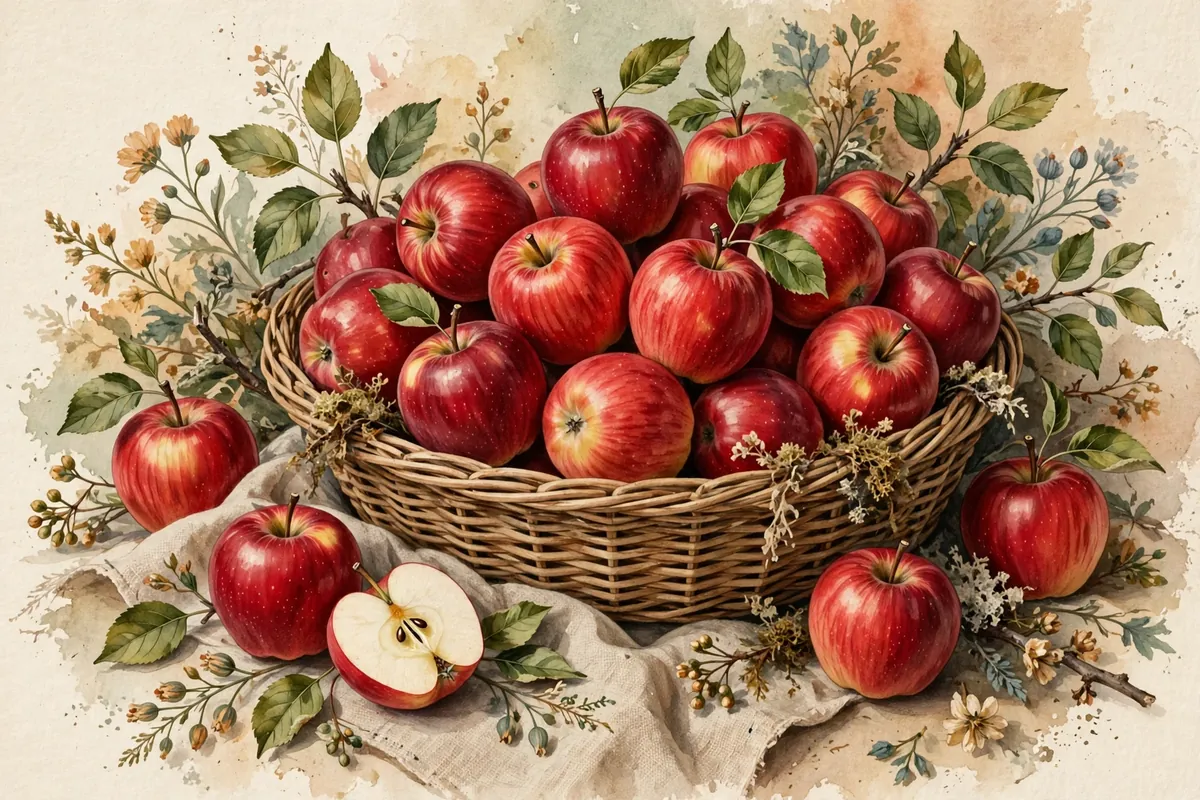
It's one of the first health tips many of us ever heard. An apple a day keeps the doctor away. Parents said it, teachers said it, and lunchboxes everywhere got an apple because of it. But where did the saying actually come from, and is there any truth to it?
The proverb dates back to the 1800s. The earliest recorded version, noted as a saying from Pembrokeshire in Wales in 1866, went: Eat an apple on going to bed, and you'll keep the doctor from earning his bread. The modern wording appeared near the end of the century, with early printed examples from 1887.
A Saying With a Wink
The original version had a little humor in it. Instead of simply keeping the doctor away, the apple would keep the doctor from earning a living. Over the years, the rhyme was trimmed down to the snappy version we know today.
The broader message is easy to see. Eat healthful foods, stay well, and you won't need to see the doctor so often. The apple just became the symbol for that simple idea.
So Does It Work?
Researchers have actually tested the saying. A 2015 study found that people who ate an apple a day were, at first glance, more likely to keep the doctor and prescription medicines away. But once the researchers accounted for differences in people's backgrounds and health, the link was no longer statistically significant. Apple eaters did use somewhat fewer prescription medications, though.
A 2013 study used computer modeling to compare eating an apple a day with taking a common cholesterol drug, for people over 50. The model estimated the two were roughly comparable for preventing heart disease. That was a computer estimate, not a real-world trial, so it's best taken lightly. Apples are a fine snack, but talk to your doctor before changing any medicine.
As for the apple itself, a medium raw apple is about 86 percent water, has around 52 calories per 100 grams, and contains a moderate amount of fiber.
Apples Through History
Apples have been on people's minds for a very long time. Their wild ancestor still grows in the mountains of Central Asia, in places like Kazakhstan and Kyrgyzstan. Today there are more than 7,500 named varieties.
The Bible never says the forbidden fruit in the Garden of Eden was an apple. The idea likely grew from a Latin wordplay: malum can mean apple, and a nearly identical word means evil. That tradition is also why the bump in a man's throat is called an Adam's apple.
Johnny Appleseed's Secret
America's most famous apple fan was John Chapman, better known as Johnny Appleseed, born in Massachusetts in 1774. He planted apple trees from seed across Pennsylvania, Ohio, Indiana, Illinois, and beyond.
Here's the twist. Apples grown from seed are usually sour. Only about one seedling in 100 produces fruit that's good to eat fresh. But sour apples make perfectly good hard cider, which was hugely popular on the frontier. In the early 1800s, Ohioans aged 15 and older drank an average of about 30 gallons of hard cider a year, so Chapman's trees were very welcome.
So go ahead and enjoy your daily apple. It may not guarantee perfect health, but it's crunchy, sweet, and comes with more than 150 years of good advice attached.