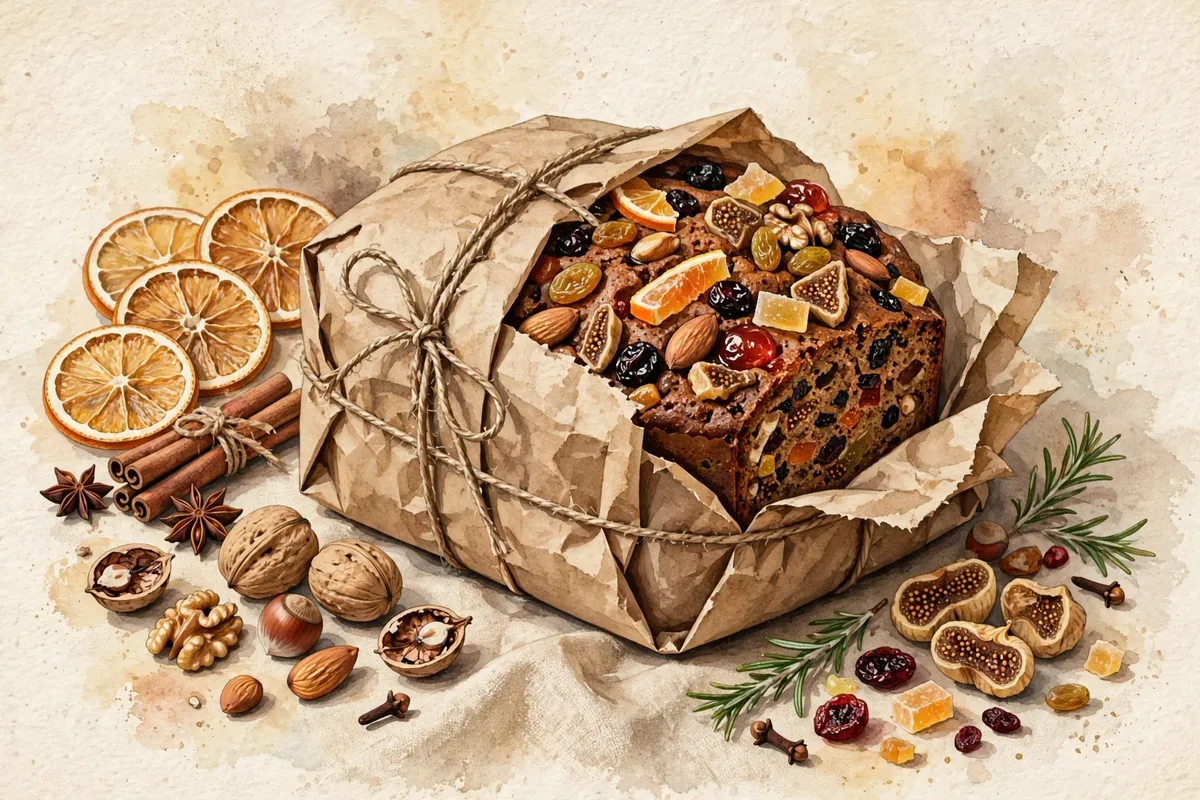
Fruitcake might be the most joked-about dessert in America. People say there's only one in the world, passed from family to family each Christmas. But behind the jokes is a real and impressive fact: a well-made fruitcake can last for an astonishingly long time.
The secret is what goes into it. Fruitcake is packed with candied or dried fruit, which is loaded with sugar, and many recipes soak the cake in spirits like rum or brandy. When a fruitcake contains a good deal of alcohol, it can be preserved for many years. Sugar and alcohol both make life very hard for the microbes that cause food to spoil.
Why Sugar Keeps Food Safe
Germs need water to grow. Sugar holds on tightly to water, leaving little of it available for microbes to use. Food scientists measure this with something called water activity. Foods with low water activity tend to support fewer microorganisms, because the microbes get dried out.
That's the same idea behind jam. To make preserves, fruit is boiled to reduce its moisture and kill bacteria, then sugared to prevent new growth, and sealed in a jar. Candied fruit in a fruitcake works the same way.
Alcohol adds another layer of protection, since it creates an environment that's toxic to many microorganisms. One traditional method for making fruitcake last even longer is to wrap it in linen soaked in alcohol before storing it.
Cakes That Outlived Their Bakers
Some fruitcakes have lasted for generations. A fruitcake baked in 1878 has been kept as a family heirloom in Tecumseh, Michigan. As of 2019, the baker's great-great-granddaughter was its keeper.
Then there's the Antarctic fruitcake. In 2017, the Antarctic Heritage Trust discovered a 106-year-old fruitcake and described it as being in "excellent condition" and "almost" edible. Just to be safe, nobody is recommending you snack on a century-old cake.
A Very Old Recipe
Fruitcake itself is ancient. The earliest recipe, from ancient Rome, mixed pomegranate seeds, pine nuts, and raisins into barley mash. The Romans called it satura. In the Middle Ages, bakers added honey, spices, and preserved fruits.
Starting in the 1500s, sugar from the American colonies, and the discovery that lots of sugar could preserve fruit, created a surplus of candied fruit. That made fruitcakes cheaper and more popular. The 17th-century English fruitcake used rum and dried fruit to help extend its shelf life.
Fruitcakes are still usually served at weddings and at Christmas. In Canada, they're often baked from mid-November to early December and wrapped in marzipan.
From Joke to Flying Object
Fruitcake has been the butt of jokes for a long time, from early Warner Bros. cartoons to Johnny Carson on The Tonight Show. Some of that reputation comes from cheap, mass-produced cakes of questionable age.
The teasing started earlier than many people realize. Fruitcake jokes turned up on TV shows like Father Knows Best and The Donna Reed Show before The Tonight Show even began, and the cake seems to have picked up its bad reputation back in the early 20th century.
Some people have even turned the jokes into a sport. Since 1995, Manitou Springs, Colorado, has hosted the Great Fruitcake Toss every January. The record throw, set in 2007 by a team of eight Boeing engineers with an air-powered launcher, flew 1,420 feet.
So whether you love it or launch it, fruitcake deserves a little respect. Few desserts can claim to survive a polar expedition and still look good enough for a holiday table.