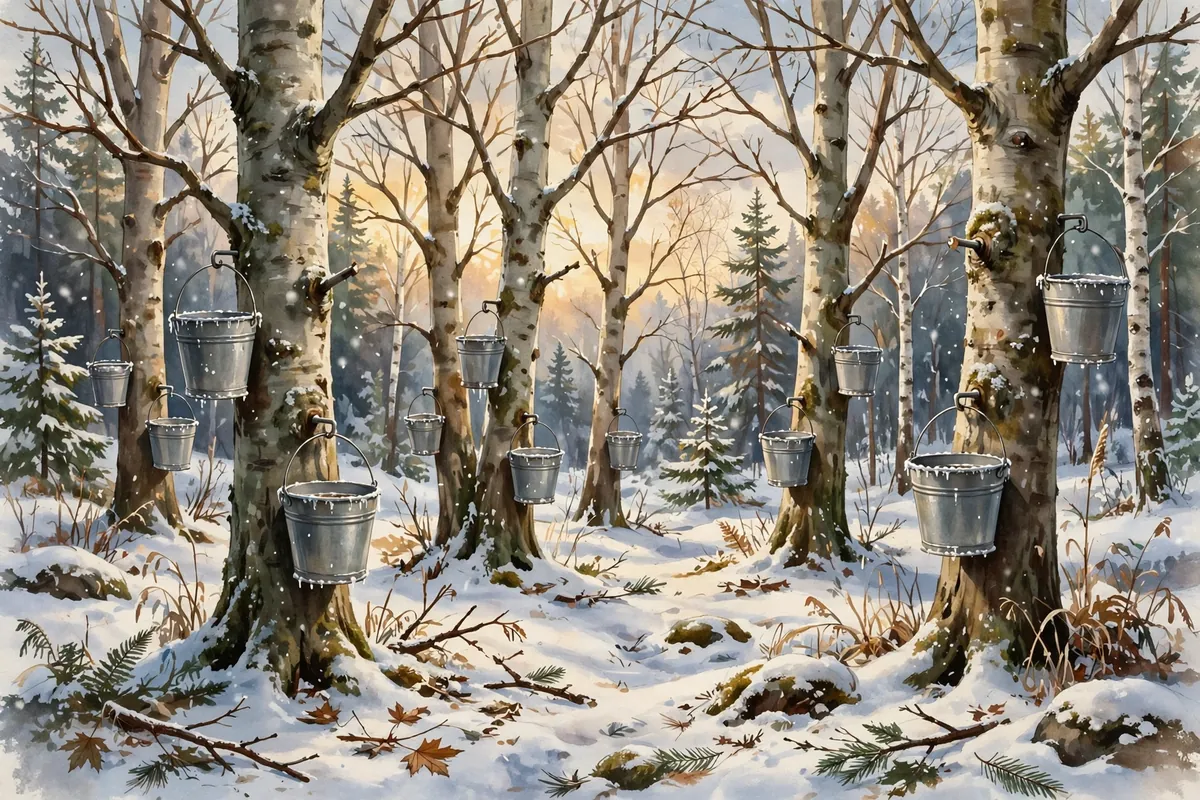
If you've ever wondered why real maple syrup costs so much more than the pancake syrup next to it on the shelf, the answer starts in the woods. In late winter, farmers tap maple trees and collect sap one drip at a time. Then most of it disappears into a cloud of steam.
The reason is that maple sap is mostly water. Sap from the best syrup maples is only about 2 to 5 percent sugar, while finished syrup is about two-thirds sugar. To get there, makers boil away almost all the water. Depending on how sweet the sap is, one gallon of syrup can take anywhere from about 25 to more than 50 gallons of sap. Around 40 is a common rule of thumb.
The Sweet Math
The sweeter the sap, the less of it you need. Sap that's 3.5 percent sugar needs about 25 gallons to make one gallon of syrup. Sap that's only 1.5 percent sugar needs about 57. And sugar levels can change from tree to tree, and even within the same tree during a season.
That's why only a few kinds of maple are favorites. The sugar maple, black maple, and red maple are the main sources because their sap is unusually sweet. The red maple has a shorter season because it buds earlier, which changes the flavor of its sap.
Why Late Winter Is Sugaring Season
Maple trees store sugar in their roots over the winter. When the weather starts to warm, sugary sap rises up through the trunk. It flows during the day when temperatures climb above freezing, and the freeze-and-thaw swings of late winter and early spring are what get it moving.
Farmers drill a small hole and tap in a spout called a spile. An average tree gives about 9 to 13 gallons of sap per season, which is only about 7 percent of its total sap, so the tree keeps plenty for itself. Maples are usually first tapped at 30 to 40 years old and can keep producing past 100. The season lasts just four to eight weeks.
Boiling It Down
Turning sap into syrup is a careful job. Boil it too long and it crystallizes. Boil it too little and it turns out watery and spoils quickly. The finished syrup is filtered to remove gritty crystals called sugar sand.
Technology has helped over time. The first sap evaporator was patented in 1858, and later designs with flat pans and extra heated surfaces cut boiling time dramatically. Many large producers today use reverse osmosis, a filtering method that removes much of the water before boiling and saves fuel.
A Very Old American Sweet
Maple syrup was first made by Indigenous peoples of northeastern North America, long before Europeans arrived. The Algonquians cut V-shaped notches in the trees, collected sap in clay pots or birch-bark baskets, and let it freeze overnight so they could toss away the ice and keep the sweeter liquid. They then boiled it in clay pots over large fires, and they later showed arriving colonists how to tap the trees.
Today, Canada makes more than 75 percent of the world's maple syrup, most of it in Quebec. So the next time you pour some over your pancakes, remember all those gallons of sap, and savor every drop.