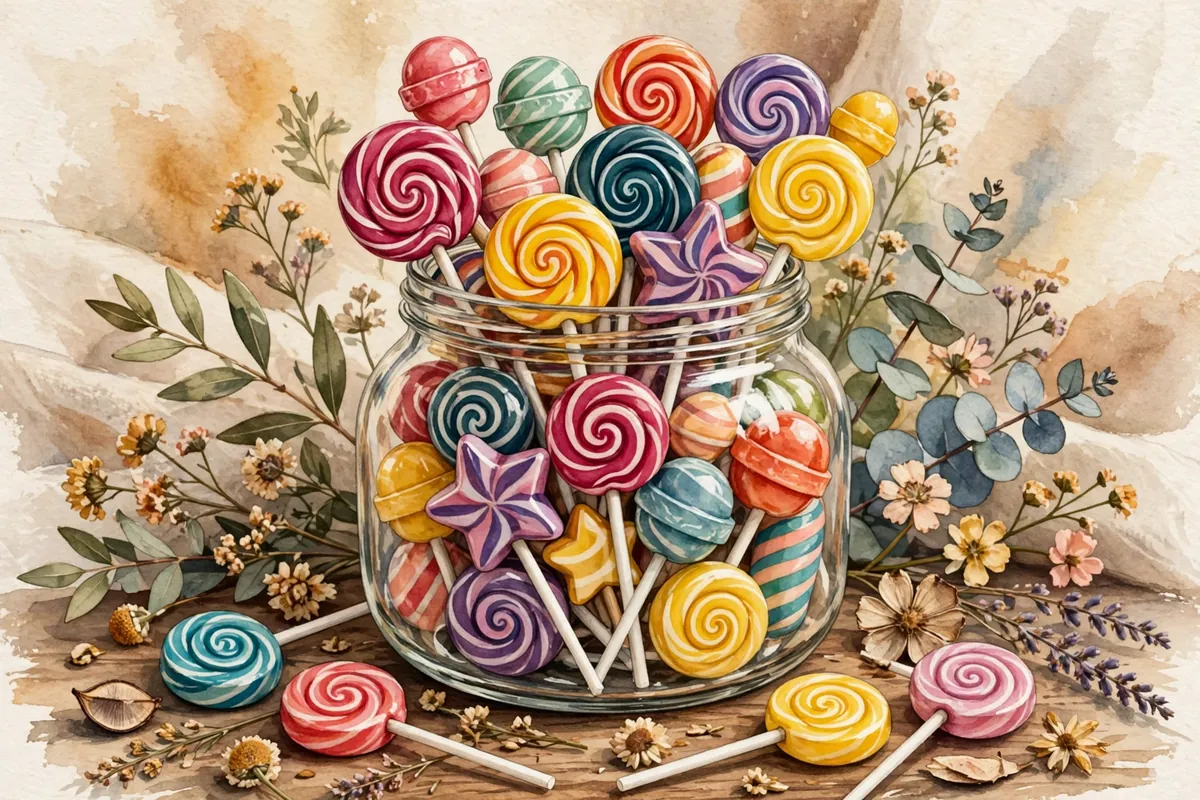
It's one of the happiest words in the English language. Lollipop. Just saying it sounds like a treat. Generations of kids have been handed one at the bank or the barbershop. But where did such a silly, cheerful name come from?
The short answer: nobody knows for certain. A popular story says a Connecticut candy maker named George Smith named his candies after a racehorse called Lolly Pop in the early 1900s. But the word lollipop was already recorded in England in 1796, so the name is much older than his candy. Its real origin is still debated.
The Racehorse Story
According to one book of food history, George Smith of New Haven, Connecticut, started making large hard candies on sticks in 1908. He reportedly named them after a racehorse of the day, Lolly Pop. He later trademarked the name lollipop in 1931.
It's a fun tale. But Smith was just one of many early 20th-century American companies that claimed to have invented the modern lollipop. The full story remains a mystery.
A Word From the 1700s
Long before Smith's candies, the word lollipop had already been written down. It appears in 1796 in the work of English dictionary maker Francis Grose. Grose was known for collecting colorful everyday words that more scholarly dictionaries of his time ignored.
So where did the word come from? One idea is that it combines two old English words: lolly, meaning tongue, and pop, meaning a slap. Picture a tongue smacking against a sweet, and the name almost makes sense.
Another theory traces it to the Romani people, who had a tradition of selling candy apples on a stick. In the Romani language, a red apple is loli phaba. It's an intriguing link, but like the other theories, it hasn't been proven.
Candy on a Stick Is Ancient
The idea of candy on a stick is so simple that it was probably invented and reinvented many times. The first treats that closely resembled lollipops go back to the Middle Ages, when nobles would eat boiled sugar with the help of sticks or handles.
Different places use different words, too. Some people say lolly, others say sucker. In Britain, a frozen treat on a stick is often called an ice lolly, the same idea as an American popsicle.
What Makes a Lollipop Hard and Clear
A standard lollipop is made mainly of sugar and corn syrup. When the sugar mixture is heated to high temperatures, almost all the water cooks away, leaving only about 1 to 2 percent moisture. The result is a glassy candy rather than a grainy one.
Ingredients like corn syrup, cream of tartar, honey, or butter keep sugar crystals from forming as the candy cools. Without them, the sugar would crystallize quickly, and your lollipop would turn out crumbly instead of smooth and shiny.
A Sweet Little Mystery
Lollipops come in endless flavors and shapes today, from tiny freebies to giant swirls. In parts of northern Europe, some are even flavored with salty licorice called salmiak. Some hide bubble gum or soft candy in the center. Others have flashing lights inside, or sticks attached to a tiny motor that spins the candy in your mouth.
So whether it came from a racehorse, a tongue, or a candy apple, the lollipop's name has kept its sweet mystery. Maybe that's part of its charm.