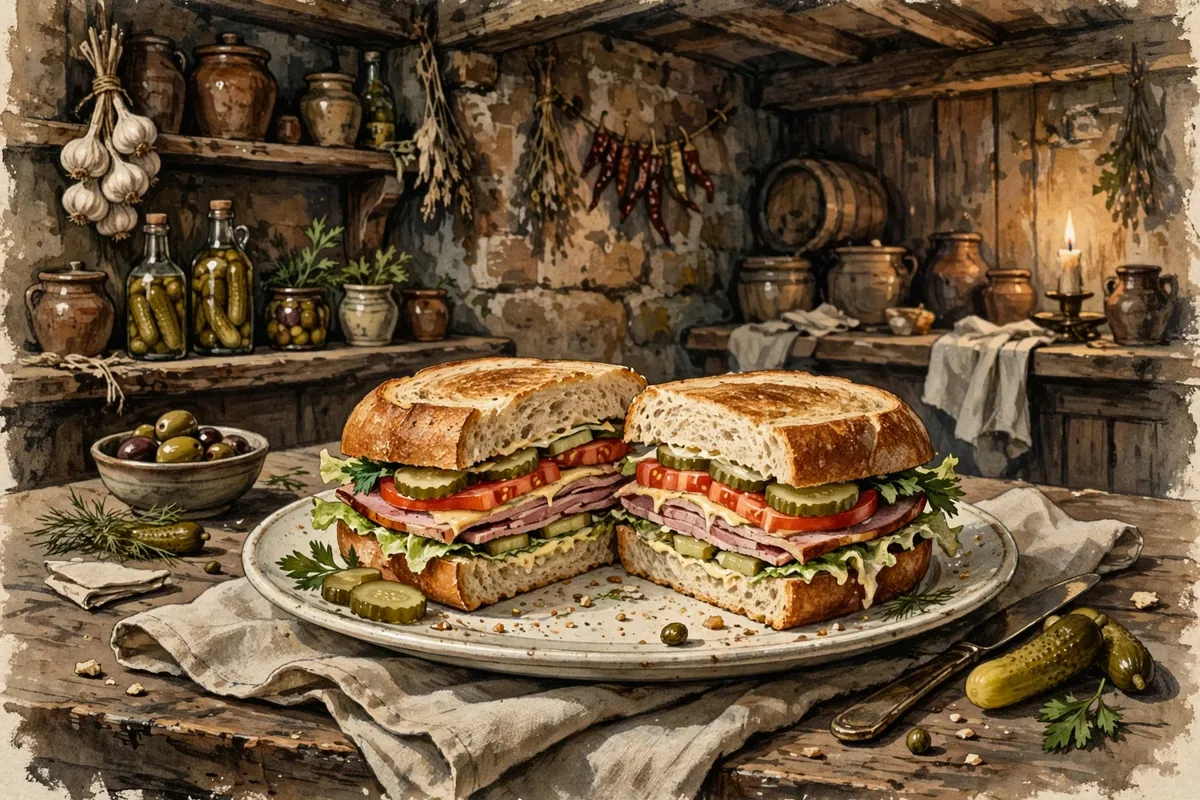
It's one of the most ordinary foods there is. Two slices of bread, something tasty in between, and lunch is served. Plenty of us eat one regularly without ever wondering why it's called a sandwich in the first place.
The answer is a person, and a place. The sandwich is named after John Montagu, the 4th Earl of Sandwich, an English aristocrat who lived in the 1700s. His title came from Sandwich, a small town in Kent, England. Through him, the town's name became the name of the food, and today the word sandwich is used in several languages.
The Famous Card-Table Story
The most popular version of the tale goes like this. Lord Sandwich loved long sessions of cribbage and other card games at public gambling houses. Rather than stop for a proper meal, he would order his valet to bring him roast beef between two pieces of toasted bread.
That way, he could keep playing while he ate, without needing a fork and without getting grease from the meat all over his cards. The dish grew popular in London, and Sandwich's name became attached to it.
This story first appeared in print in a book by a French writer, Pierre-Jean Grosley, published in 1770. Grosley had spent a year in London in 1765, and his book passed the tale along as a rumor of the day.
A Desk, Not a Card Table?
Not everyone buys the gambling story. Sandwich's biographer, Nicholas A. M. Rodger, has suggested a more ordinary explanation. The Earl was a very busy man, with responsibilities in the Royal Navy, politics, and the arts. Rodger thinks the first sandwich was more likely eaten at his desk while he worked.
Either way, the idea of a quick meal you could eat with one hand clearly caught on. At first, the sandwich was seen as food that men shared while gaming and drinking late at night. Slowly, it worked its way into polite society as a late-night meal among the upper classes.
A Busy Life Beyond Lunch
John Montagu wasn't just a man with a snack named after him. He became Earl of Sandwich at just ten years old, in 1729, when he succeeded his grandfather. He later held important posts, including Postmaster General and First Lord of the Admiralty.
In that Navy role, he was a strong supporter of Captain James Cook and approved funds for ships used on Cook's later voyages of exploration. Cook returned the favor by naming the Sandwich Islands after him. Today we know those islands as Hawaii.
Bread and Fillings Long Before the Earl
Of course, people were putting food in or on bread long before the 1700s. In the first century BC, the Jewish sage Hillel the Elder is said to have wrapped Passover lamb and bitter herbs in soft matzah, much like a modern wrap.
In the United States, the sandwich was first promoted as a fancy supper dish. By the early 1900s, as bread became a staple of the American diet, it turned into the quick, everyday meal we know today.
So the next time you pack a sandwich for lunch, you can tip your hat to a busy English lord, whether he was at the card table or the office desk. Either way, he gave his name to one of the world's favorite meals.