You may have heard about a long war fought between America and Britain over a single pig. It sounds like a tall tale, and parts of the popular version are exaggerated. But the core of the story is true, and it's one of the oddest standoffs in American history.
Here are the facts. The Pig War was a 1859 confrontation over who owned the San Juan Islands, between Vancouver Island and what is now Washington State. It wasn't a 30-year war, and no people died at all. The only casualty was the pig. The two sides held the island jointly for years and settled the matter peacefully in 1872.
A Border Nobody Could Agree On
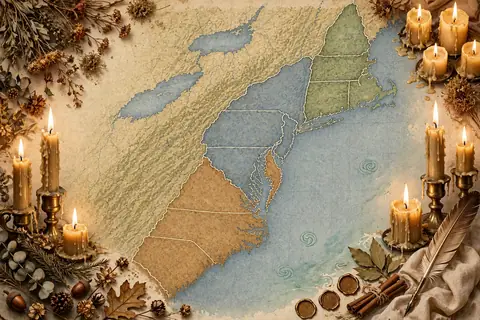
The trouble started with a treaty. In 1846, the Oregon Treaty split the region between the United States and Britain along the 49th parallel, then through the middle of the channel separating the mainland from Vancouver Island.
The problem was that two channels could fit that description: Haro Strait to the west of the San Juan Islands and Rosario Strait to the east. The Americans favored Haro. The British favored Rosario. Whichever one won would decide who got the islands in between.
The Potato Patch Incident
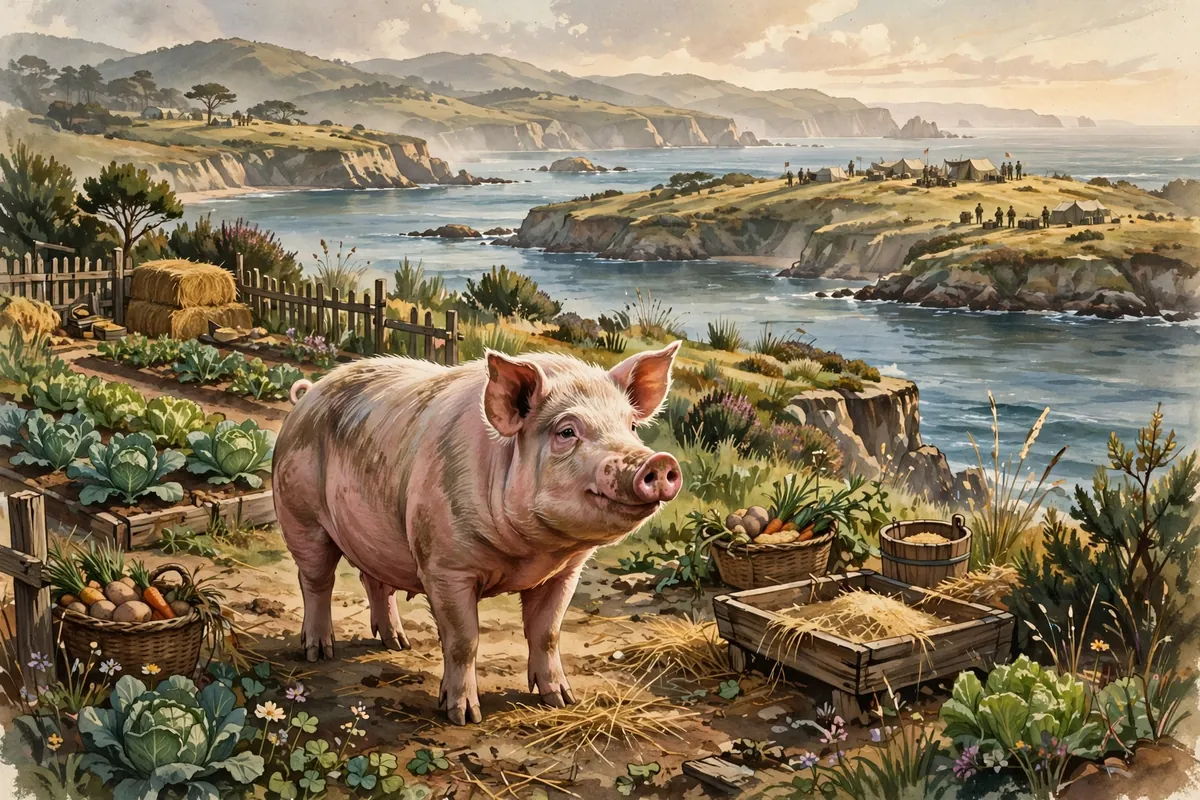
On June 15, 1859, an American farmer named Lyman Cutlar found a pig rooting in his garden and eating his potatoes. It wasn't the first time, and he shot it. The pig belonged to Charles Griffin, an Irishman who ran a sheep ranch on the island for the Hudson's Bay Company.
Cutlar offered $10 for the pig. Griffin wanted $100. One account, probably made up, has Cutlar complaining the pig was eating his potatoes, and Griffin replying that it was up to him to keep his potatoes out of the pig.
When British officials threatened to arrest Cutlar, American settlers asked the U.S. Army for protection. Captain George Pickett, who would later lead Pickett's Charge at Gettysburg, landed with 66 soldiers. Britain sent warships.
Cannons, Warships, and Cooler Heads
Things escalated quickly. By August 10, 1859, 461 Americans with 14 cannons faced five British warships carrying 70 guns and 2,140 men.
Then a British admiral stepped in. Rear Admiral Robert Baynes refused to start a war between two great nations over what he called a squabble about a pig. President James Buchanan sent General Winfield Scott to calm things down, and both sides agreed to share the island, each keeping no more than 100 men there.
Neighbors, Not Enemies
The joint occupation turned out to be surprisingly friendly. The British camp sat at the north end of the island, the American camp at the south. Soldiers visited each other's camps to celebrate national holidays and held athletic contests. Park rangers today joke that the biggest threat to peace was the large amount of alcohol available.
In 1871, the two nations agreed to let German Emperor Wilhelm I settle the dispute. He handed it to a three-man commission, which ruled on October 21, 1872, in favor of the American choice, Haro Strait. The British Royal Marines left that November, and the Americans followed by July 1874.
It's a rare war story with a happy ending. Two powerful nations came close to fighting, then decided a pig wasn't worth it. That's a lesson worth remembering, even if the pig didn't get to enjoy it.