Today you can mail almost anything, from shoes to sourdough starter. But for a short time, early in the 1900s, Americans tried mailing something truly surprising: their own children. It sounds like a tall tale from the funny pages. So did kids really travel by mail?
The short answer is yes, a few times. When the United States launched domestic parcel post in 1913, the rules didn't clearly forbid sending a person who weighed less than 50 pounds. Some families took advantage of the loophole. The children rode along with mail carriers rather than in boxes, and the practice was restricted by 1914. The most famous case is a five-year-old Idaho girl named Charlotte May Pierstorff.
A Ticket Made of Stamps
On February 19, 1914, little May Pierstorff needed to get from Grangeville, Idaho, to Lewiston, Idaho, to visit her grandmother. Mailing her turned out to be cheaper than buying a train ticket. She weighed 48.5 pounds, just under the limit.
So May rode in the mail car with 32 cents in postage attached to her coat. That's about ten dollars in today's money. She wasn't alone, either. Her mother's cousin, Leonard Mochel, worked as a railway postal clerk, and he went along on the trip and delivered her to her grandmother's house.
Why the Rules Changed
May's journey made news, and the Post Office wasn't amused. The incident led the Post Office to bar all humans from the mail, along with live animals. There were a few exceptions for creatures that could safely make the trip, such as bees and day-old chicks. In other words, one small girl's visit to Grandma helped rewrite the rules for the whole country's mail service.
May grew up and lived until 1987. Her story found a new audience in 1997, when author Michael O. Tunnell wrote a children's book about her called Mailing May.
Other People Who Went by Mail
May wasn't the only person to travel through the postal system, though most of the others went in boxes. The most famous is Henry Brown, an enslaved man from Virginia. In 1849 he escaped to freedom by having himself shipped north in a box to Pennsylvania. He was known for the rest of his life as Henry "Box" Brown.
Some cases were stunts or protests. An Englishman named W. Reginald Bray mailed himself by ordinary mail in 1900 and by registered mail in 1903. In 1909, two British suffragettes mailed themselves to the prime minister at 10 Downing Street, but his office refused to accept the parcels.
Not every attempt was safe. People who later tried shipping themselves in sealed boxes risked dehydration and running out of air, and some had to be rescued. It's one reason the post office takes its rules about living cargo so seriously.
A Different Time
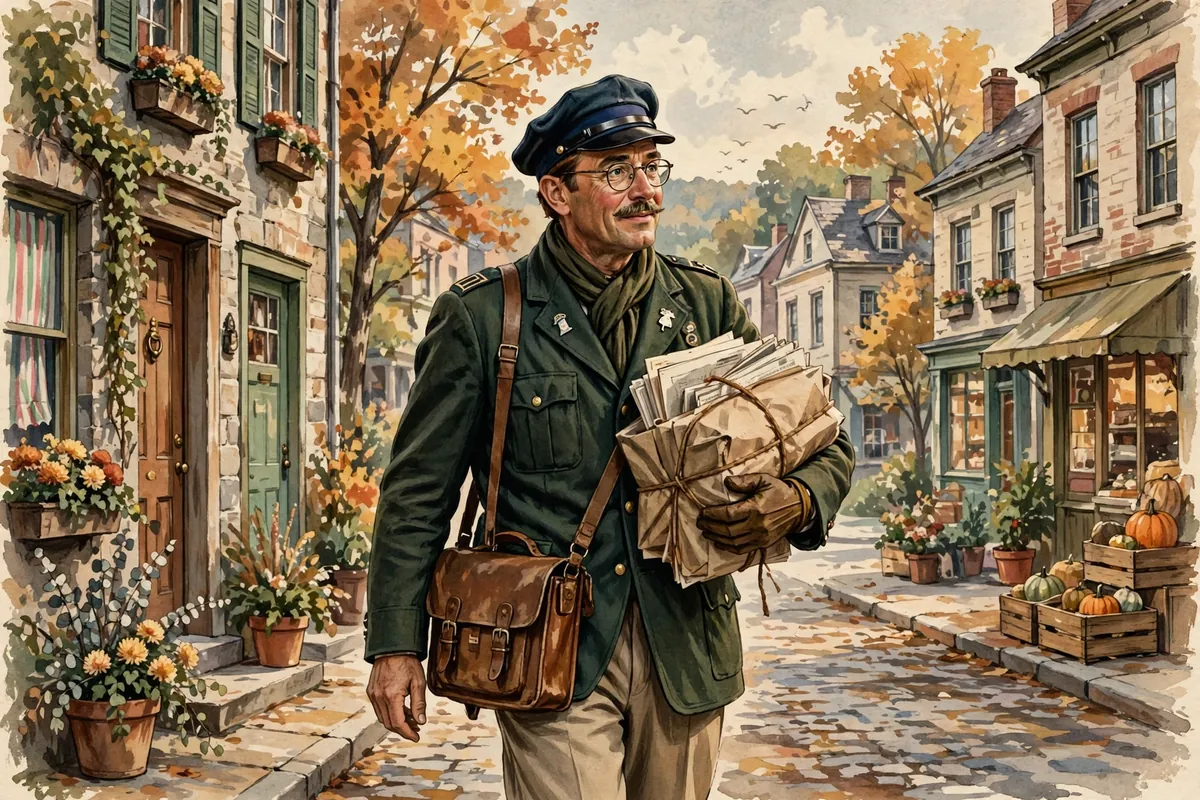
To modern ears, mailing a child sounds shocking. But in small towns of that era, the local mail carrier was often a familiar, trusted face, and May traveled with a relative who worked for the postal service. For her family, it was simply a practical way to get a little girl to Grandma's house.
So the next time you drop a package at the post office, picture a five-year-old in a winter coat covered in stamps, heading down the line to visit her grandmother. It's one delivery the mail service will never forget.