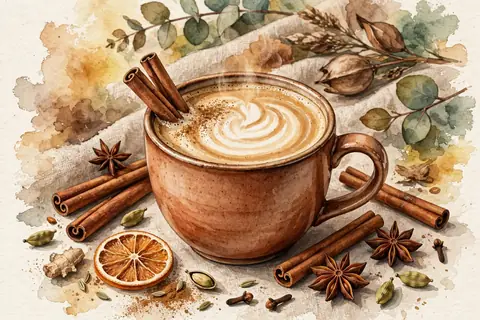
Sprinkle it on oatmeal, stir it into cider, or bake it into a cinnamon roll. Cinnamon is one of the coziest flavors in the kitchen. But have you ever looked closely at a cinnamon stick and wondered what it actually is? It's not a seed, a root, or a dried berry.
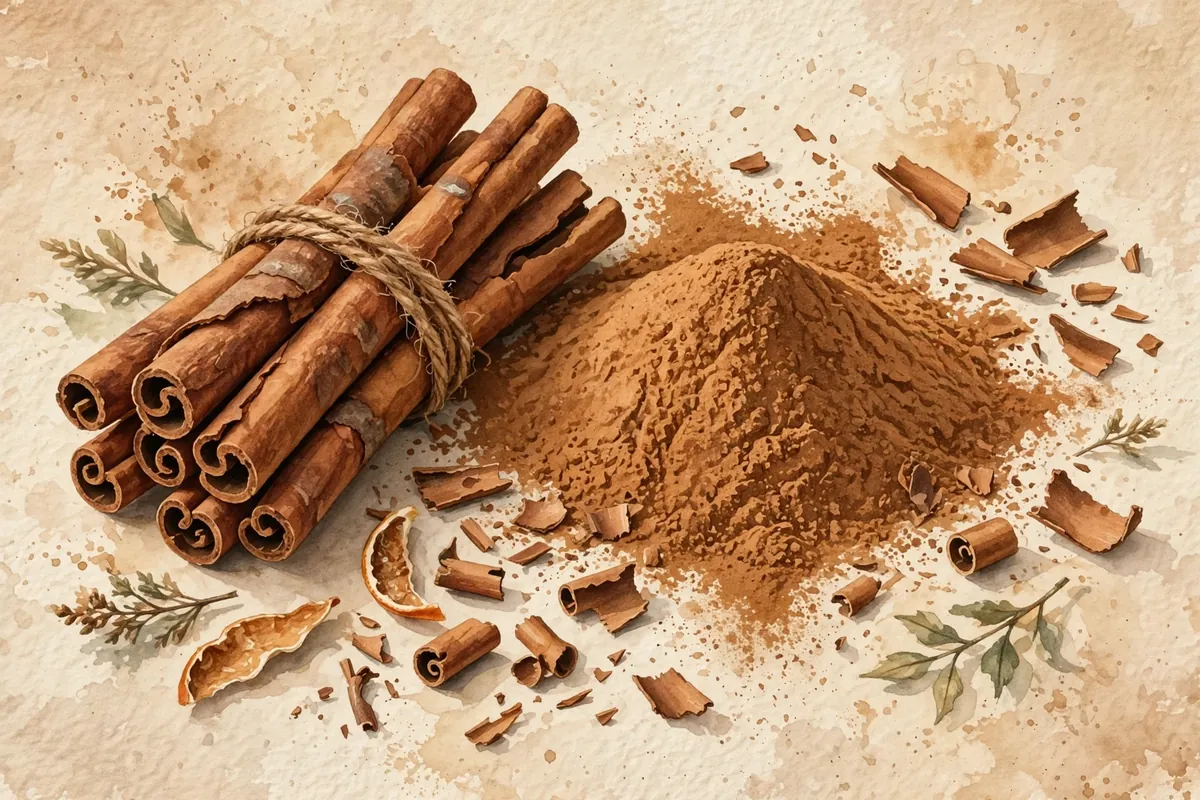
Cinnamon is bark. The spice comes from the inner bark of several kinds of trees in a group called Cinnamomum. Its warm aroma and flavor come from an oil in the bark, mainly a compound called cinnamaldehyde. Workers peel thin strips of that inner bark, and as the strips dry, they curl up into the rolled sticks we buy at the store.
From Tree to Stick
Cinnamon trees are evergreens with oval leaves and thick bark. Farmers grow a tree for about two years, then cut the stems off at ground level. The following year, about a dozen new shoots sprout from the roots to replace them, ready for the next harvest.
The work has to happen fast, while the inner bark is still wet. Workers scrape away the outer bark, then beat the branch evenly with a hammer to loosen the inner layer, which they pry off in long rolls.
Only a sliver of the inner bark is used, about 0.02 inches thick. The woody outer part is thrown away. The remaining strips, which can be about three feet long, curl into rolls called quills as they dry. Drying takes just four to six hours in a warm, airy spot. Then the quills are cut into pieces 2 to 4 inches long for sale.
True Cinnamon vs. Cassia
Here's something many shoppers don't know. Ceylon cinnamon, named after Sri Lanka's old name, is considered "true cinnamon." But most cinnamon sold around the world actually comes from related trees and is more correctly called cassia.
You can tell them apart. Cassia sticks are thicker, harder, and woodier because all layers of bark are used. Cassia has a strong, spicy flavor that holds up well in baking, which is why it's linked with cinnamon rolls. Ceylon cinnamon uses only the thin inner bark, so it's lighter in color, more crumbly, and more delicate in flavor.
Cassia also contains more of a natural compound called coumarin, which can harm the liver and kidneys in high amounts. European food authorities have set limits on how much coumarin can be in baked goods. If you take cinnamon supplements or use a lot of cinnamon every day, talk to your doctor.
A Spice Fit for Kings
Cinnamon has been treasured since ancient times. It reached Egypt as early as 2000 BC, where it was even used to embalm mummies. It was considered a gift fit for monarchs.
Traders guarded its source as a secret for centuries to protect their business, and wild stories filled the gap. The Greek historian Herodotus and others wrote that giant "cinnamon birds" gathered cinnamon sticks from an unknown land to build their nests. In 1248, a French nobleman traveling on a crusade reported he'd been told cinnamon was fished up in nets at the source of the Nile.
The name itself hints at the truth. Early English speakers sometimes called cinnamon canel, from a Latin word meaning "little tube," because of the way the bark curls as it dries. So the next time you drop a cinnamon stick into a mug of cider, you'll know you're stirring with a tiny curl of tree.