Buttermilk might be the most misleading name in the dairy aisle. It sounds like melted butter stirred into cream. Yet anyone who has tasted it knows it's tangy, a little sour, and not especially rich. So where's the butter?
Here's the short answer. Buttermilk got its name because it was what remained after making butter. Farmers churned cream until the fat clumped together into butter, and the thin liquid left behind was buttermilk. Since the fat went into the butter, traditional buttermilk has only trace amounts of fat, less than 0.5 percent.
A Byproduct of the Butter Churn
Before refrigerators, fresh milk was left to stand so the cream could rise to the top. While it waited, natural bacteria in the milk began fermenting it, turning some of its sugar into lactic acid.
That slight souring was actually helpful. Cream with more acid churns into butter more easily, because the fat clumps together more readily. The acid also helped keep harmful germs from growing, so the leftover liquid didn't spoil as quickly. The result was a thin, tangy drink that farm families could enjoy instead of wasting.
Today's Buttermilk Is Made Differently
Once refrigeration became common, butter makers mostly switched to fresh, unsoured cream. That meant the old-fashioned tangy byproduct largely disappeared from stores in many Western countries.
So most buttermilk sold today, called cultured buttermilk, is made much like yogurt. Fresh pasteurized milk is mixed with friendly bacteria that produce lactic acid. As the milk becomes more acidic, its main protein, casein, thickens it. Another added bacterium helps give it a buttery flavor, mimicking the old-fashioned kind.
Interestingly, cultured buttermilk is thicker than the traditional version. And because it can be made from whole milk, store-bought buttermilk may contain about 3 percent fat, more than the original ever did.
Much of it never reaches a glass. Food companies use condensed and dried buttermilk widely. Liquid buttermilk goes mainly into commercial baked goods and cheese, and buttermilk solids are added to pancake mixes to make buttermilk pancakes.
Why Bakers Love It
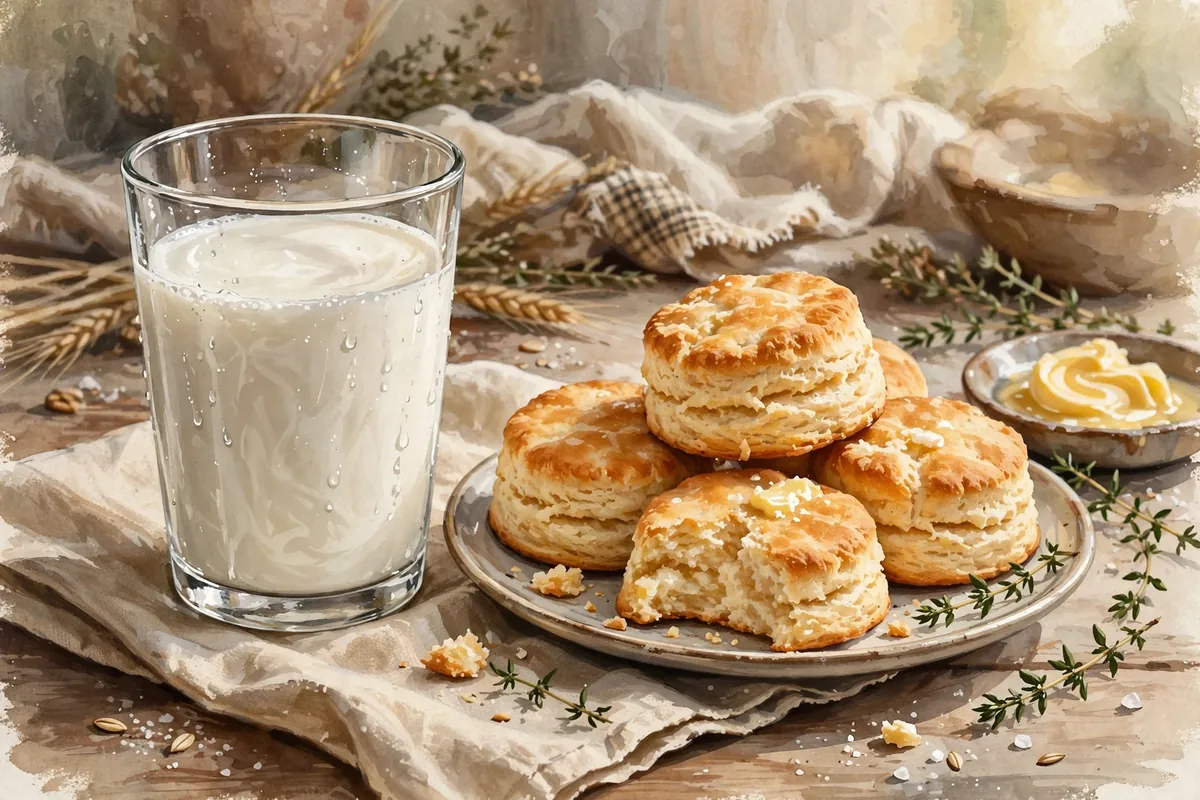
Buttermilk's acid is a baker's secret weapon. In recipes like soda bread, the acid reacts with baking soda to produce carbon dioxide bubbles, helping the dough rise. It's also a favorite for buttermilk pancakes, and powdered buttermilk can give baked goods a higher rise.
Cooks use it as a marinade too, especially for chicken and pork. Out of buttermilk? A common kitchen substitute is to stir a little vinegar or lemon juice into milk and let it sit for about 10 minutes until it curdles.
A Drink With a History
Cultured buttermilk arrived in American stores in the 1920s. It became popular for baking and as a drink, especially among immigrants from Eastern Europe. U.S. sales peaked in 1960 at more than a billion pounds, then slowly declined.
Elsewhere, traditional buttermilk is still common in households across South Asia, the Middle East, and parts of Europe. In Arab countries it's often enjoyed ice cold during Ramadan, and in the Indian subcontinent it may be served with roasted corn.
So buttermilk isn't buttery at all. It's the humble leftover from a farmhouse chore that turned out to be delicious in its own right. Next time you're mixing up a batch of biscuits or pancakes, give a little nod to all those old butter churns.