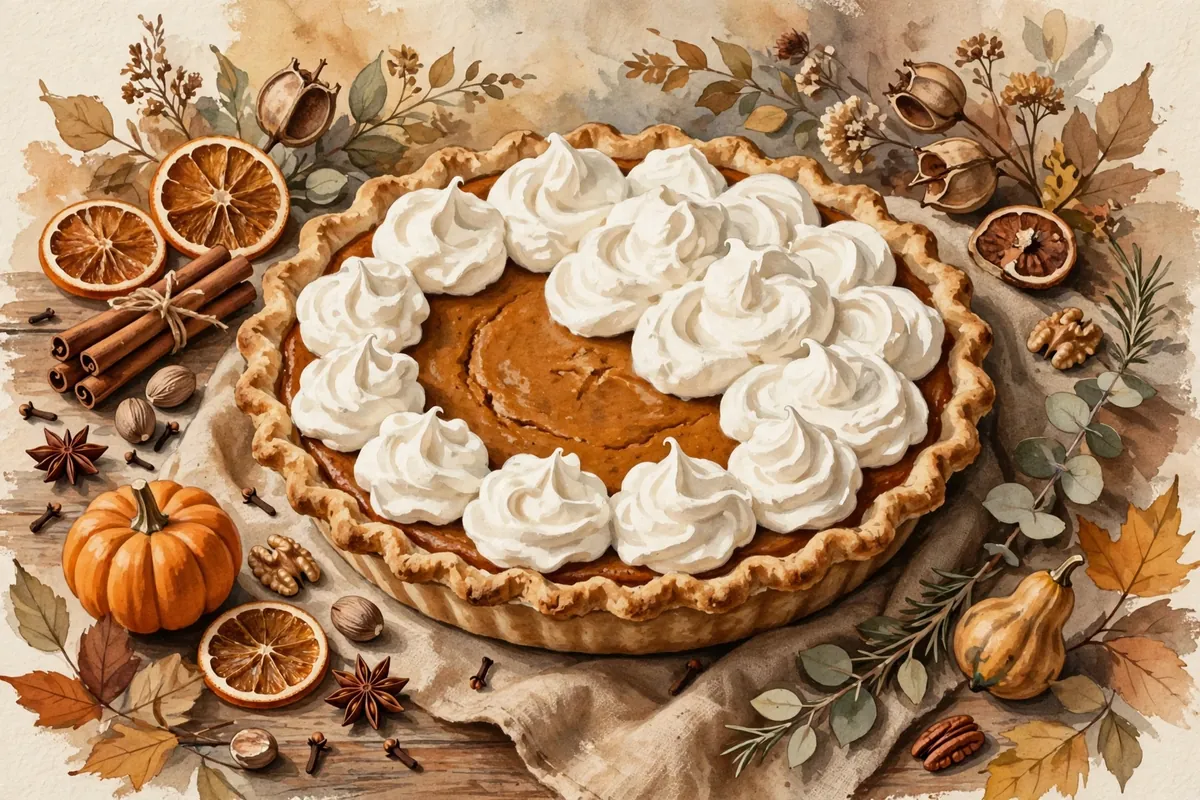
For millions of American families, Thanksgiving dinner isn't over until the pumpkin pie comes out. It feels like it's been part of the holiday forever, maybe even since the Pilgrims. The real history is a bit more surprising.
Pumpkin pie became a Thanksgiving tradition mostly because pumpkins are a harvest food, ready in October just in time for the holiday. But the sweet custard pie we know didn't show up in an American cookbook until 1796, and it only became a common part of Thanksgiving dinner in the early 1800s. A New England writer named Sarah Josepha Hale helped make it famous.
A Native Plant With a European Recipe
Pumpkins are native to North America. Early on, they were shipped to France and then to England, where cooks quickly started using pumpkin flesh as a pie filling. In the 1600s, English cookbooks described pumpkin pies with the pumpkin sliced, fried, and baked in a crust with butter, sugar, and raisins.
The pie really needed ingredients from several continents: American pumpkins, European wheat for the crust, and sugar from the Canary Islands. That mix only became possible after Columbus's voyages connected the Old World and the New.
What the Colonists Actually Ate
Early American colonists did cook with pumpkins, but their pumpkin pies were probably more like a savory soup cooked and served inside the pumpkin itself than a sweet custard in a crust. Colonists also stewed pumpkins and even brewed them into ale.
A more modern version appeared in American Cookery, published in 1796. It used a sweet custard filling in a pie crust, flavored with spices much like the ones we use today.
The Mother of Thanksgiving
Much of the credit goes to Sarah Josepha Hale, the writer who also gave us Mary Had a Little Lamb. In her 1827 novel Northwood, she spent an entire chapter describing a Thanksgiving feast, including roast turkey, stuffing, chicken pie, and pumpkin pie.
Back then, Thanksgiving was mostly a New England custom, and each state picked its own date. Starting in 1846, Hale spent 17 years writing to presidents asking for a national holiday. In 1863, her letter persuaded Abraham Lincoln. Historians credit her with popularizing the holiday and its classic menu.
Not everyone embraced the pie right away. After the Civil War, some Southerners resisted it as a symbol of Yankee culture. Many Southern cooks made sweet potato pie instead, or gave pumpkin pie a Southern touch with bourbon and pecans.
The Year the White House Skipped It
In 1947, the Truman administration asked Americans to cut back on eggs to help send food to Europe after World War II. The campaign included egg-less Thursdays, and Thanksgiving always falls on a Thursday. Pumpkin pie, which needs eggs, was discouraged. Despite public grumbling, no pumpkin pie was served at the White House that Thanksgiving.
Today, most pumpkin pies are made with canned pumpkin. Libby's, the most popular brand, uses a single variety called the Dickinson pumpkin. And the pie keeps getting bigger: a record pie baked in New Bremen, Ohio, in 2010 weighed 3,699 pounds and measured 20 feet across.
So when you pass the whipped cream this year, you're carrying on a tradition shaped by explorers, cookbook writers, a determined editor, and a few centuries of harvest suppers. Not bad for one humble slice.