Some people say they can smell fall coming before they see it. One crisp morning, the air outside carries a rich, earthy, slightly sweet scent that wasn't there in August. It's comforting, nostalgic, and hard to describe. So what exactly are we smelling?
The short answer is that much of autumn's signature smell comes from fallen leaves breaking down. As leaves pile up on damp ground, fungi, bacteria, and other tiny decomposers get to work, and some of these microbes give off strong earthy-smelling chemicals. Add a little wood smoke from fireplaces, and you've got the classic scent of fall.
A Feast on the Forest Floor
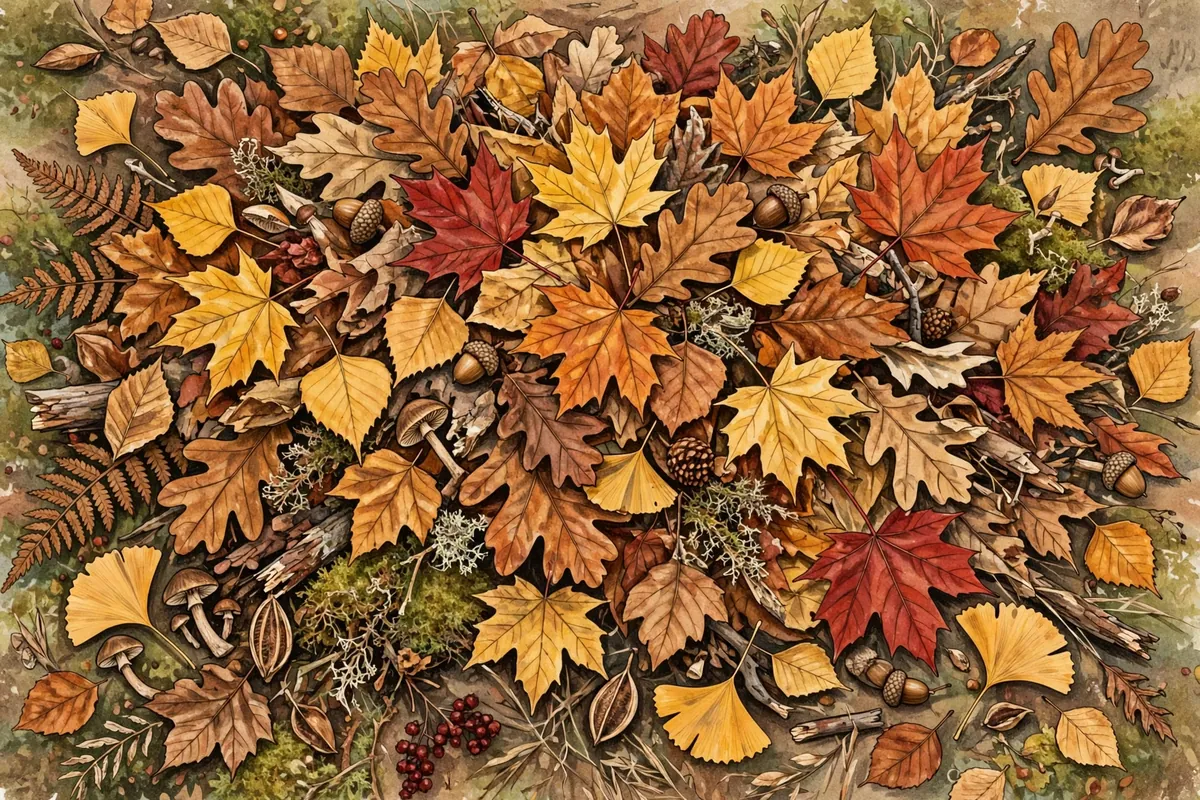
The layer of fallen leaves, bark, and twigs on the ground is called plant litter, or leaf litter. In autumn, deciduous trees add a huge fresh layer of it all at once. It also works like a blanket, holding moisture in the soil and protecting it from erosion.
That layer is teeming with life. Many of the organisms living there are decomposers, such as fungi and bacteria. They share the space with earthworms, millipedes, woodlice, mites, springtails, and insect larvae. Together, they slowly break the leaves down into carbon dioxide, water, nutrients, and a rich dark material called humus that feeds the soil.
The Earthy Smell Has a Name
Some of the busiest workers in that leaf pile are bacteria called Streptomyces. They live mainly in soil and decaying plants, and they're known for a distinct earthy odor. That smell comes from a chemical they produce called geosmin, a name that comes from Greek words meaning "earth smell."
Our noses are remarkably tuned in to geosmin. People can detect it at incredibly tiny concentrations. It's the same compound that gives beets their earthy taste and helps create the familiar smell of rain falling on dry ground, which is called petrichor.
So when you kick through a damp pile of leaves and catch that musty, woodsy scent, you're likely smelling the work of these microbes. The wetter and warmer the pile, the busier they tend to be.
Smoke, Spice, and Everything Nice
Fall's aroma is a blend, not a single note. As evenings grow cooler, more people light fireplaces and wood stoves, sending a smoky edge into the air. Smoke has been used for flavor and fragrance for ages, from cooking to burning incense.
Kitchen smells play their part too. Cinnamon, apples, and pumpkin pie are so tied to the season that many of us link them to autumn without thinking.
Why Fall Smells Feel So Nostalgic
There's a reason that whiff of leaves can send you straight back to childhood. Smell is closely wired to the parts of the brain involved in emotion and memory. The almond-shaped amygdala, which helps form emotional memories, sits just beneath the main smell-processing area of the brain.
Memories triggered by smell even have a name: the Proust phenomenon. It's named after the French writer Marcel Proust, who described how the taste and smell of a madeleine cake dipped in tea brought back vivid memories. Researchers describe these smell memories as unusually vivid and emotional, and they can lift your mood.
So the next time you step outside on a crisp fall day and take a deep breath, enjoy it. You're smelling an ancient recycling project in action, and maybe a few happy memories along with it.