Most of us know Johnny Appleseed from picture books and cartoons: a cheerful wanderer in rags, scattering apple seeds across the American wilderness. It sounds like a tall tale, the kind of character made up to entertain children. But Johnny Appleseed was a real person, and the truth about him is even more interesting.
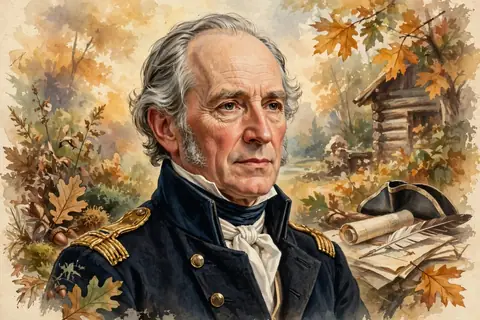
His real name was John Chapman, born in Leominster, Massachusetts, in 1774. He was a pioneer nurseryman who brought apple trees grown from seed to large parts of Pennsylvania, Ohio, Indiana, Illinois, northern West Virginia, and Ontario. He didn't scatter seeds at random, though. He planted carefully fenced nurseries, and many of his apples were better suited for cider than for eating.
Not Random, but Planned
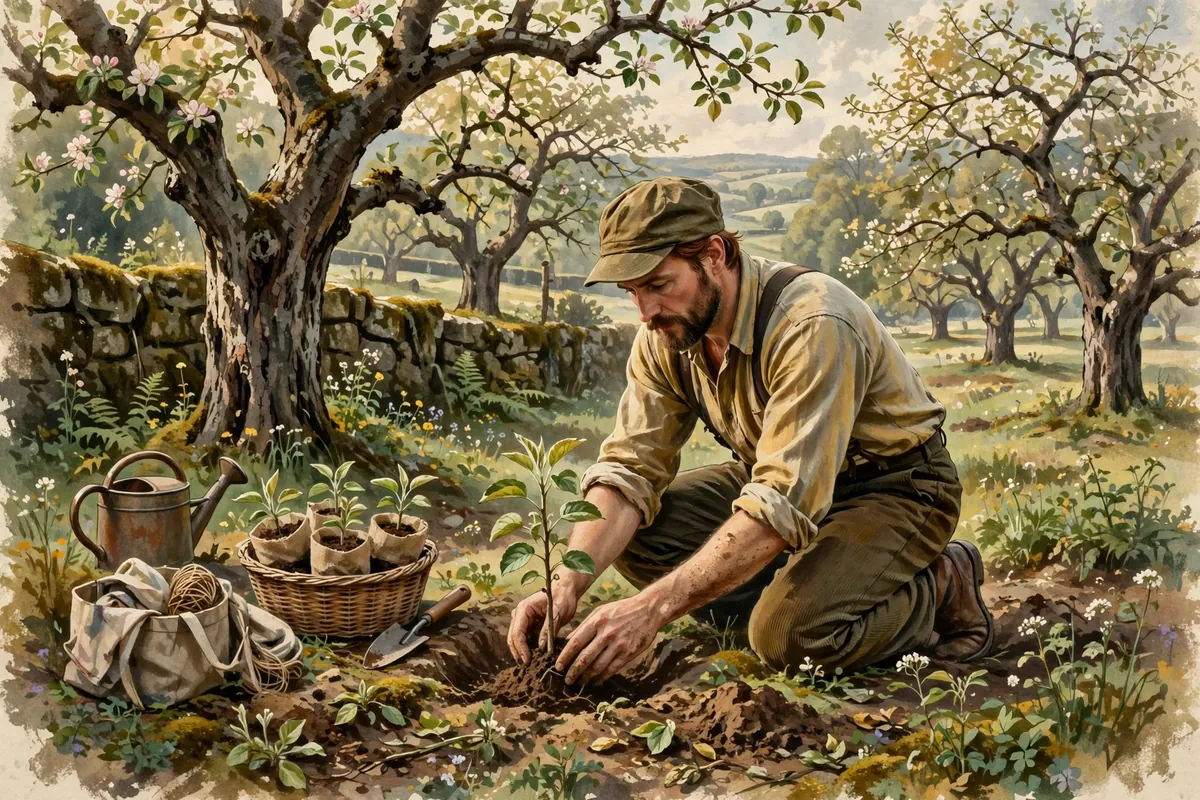
The popular image of Chapman tossing seeds everywhere he walked isn't accurate. He planted nurseries, built fences to keep out livestock and wild animals, and left each one in the care of a neighbor who sold the trees. Then he returned every year or two to tend it.
His first nursery was on the bank of Brokenstraw Creek in Pennsylvania, and many more followed in north-central Ohio. In 1806, he traveled down the Ohio and other rivers in two canoes lashed together, carrying his seeds with him.
Apples for Cider
Here's the twist. Chapman grew his trees from seed rather than by grafting, and apples grown from seed are unpredictable. Without grafting, only about one seedling in 100 produces an apple that's good to eat. Henry David Thoreau once wrote that a seedling apple could taste "sour enough to set a squirrel's teeth on edge and make a jay scream."
Those sour apples, however, were fine for making hard cider, and cider was in high demand on the frontier. In the early 1800s, Ohioans age 15 and older drank an average of 30 gallons of it a year. Author Michael Pollan has argued that this is a big part of why Chapman was so welcome in frontier cabins.
A Shrewd Businessman in Rags
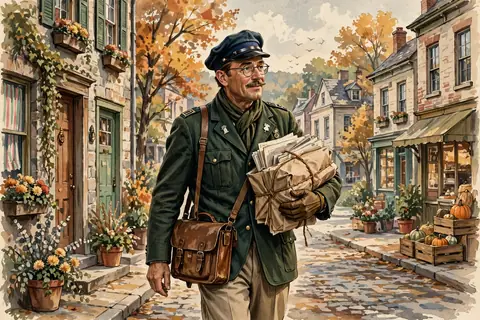
Chapman looked like a poor wanderer. A woman who met him described a small, quick man with long dark hair and sparkling black eyes, who often slept in the woods and walked barefoot through snow. She said he wore a tin utensil on his head that served as both a cap and a mush pot.
But appearances were deceiving. Historian Paul Aron called him a successful businessman who bought many of the parcels where he planted and eventually gathered about 1,200 acres across three states. By that account, he wore pauper's clothing by choice, not out of need.
A Gentle, Unusual Soul
Chapman was a devoted follower of the Swedish religious thinker Emanuel Swedenborg and handed out religious books on his travels. In his later life, he was a vegetarian. He never married, believing that if he didn't meet his soulmate on Earth, he would find her in Heaven.
Stories of his kindness were told for generations. In one, he heard that a horse was going to be put down, so he bought it, bought a few grassy acres nearby, and let it recover before giving it to someone in need.
He also had a close call. In 1819, he fell while picking from a tree and caught his neck in the fork of a branch. An eight-year-old boy found him struggling and cut the tree down, saving his life.
Chapman died in 1845 in Fort Wayne, Indiana. He had already become an American icon in his own lifetime, and he's still remembered as a folk hero. The legend may be simpler than the man, but the real Johnny Appleseed left a living legacy that grew, quite literally, across a young nation.