It's one of those questions that sounds simple until you think about it. What does space smell like? Astronauts can't exactly pop open their helmets on a spacewalk to find out, and the rest of us aren't getting up there anytime soon.
The short answer is that you can't smell space itself. Smell works when tiny molecules drift through the air into your nose, and space is a near-perfect vacuum with almost no air at all. But there are some fascinating clues. Moon dust is reported to smell like spent gunpowder, and some writers have joked that one giant cloud of gas in our galaxy might smell like raspberry rum.
Why You Can't Just Take a Sniff
On Earth, the smell of fresh coffee or cut grass reaches you because molecules float off the source and travel through the air. Your nose catches them and your brain recognizes the pattern.
Space doesn't work that way. With almost nothing for those molecules to travel through, and no air for a person to breathe, sniffing the vacuum just isn't possible. Any smell has to be brought back inside a spacecraft first, where there's air to carry it.
The Moon Smells Like Gunpowder
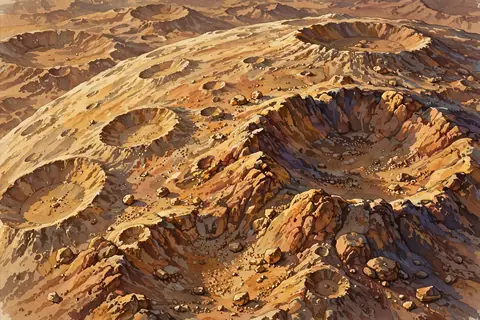
That's exactly what happened on the Moon. The Moon is covered in a layer of loose material called regolith. Its finest part, lunar dust, is made of tiny, sharp, very sticky particles that cling to just about anything.
Once that dust came inside, it could finally be smelled. Lunar regolith reportedly tastes and smells like spent gunpowder. It's an odd match, since the dust formed very differently from soil on Earth. Over billions of years, constant meteorite impacts and a steady bombardment of charged particles from the Sun ground the Moon's rocks into finer and finer powder.
Dust That Causes Real Headaches
The sticky dust is more than a curiosity. It's easily stirred up and can damage equipment. Lunar dust is more chemically reactive than Earth dust and has sharper, more jagged edges, so experts worry that breathing it in over time could harm the lungs.
For future Moon missions, engineers have proposed solutions like removing spacesuits in a three-stage airlock, using a magnet to vacuum off the suits, and filtering the air inside the spacecraft. Keeping that gunpowder smell outside is part of the plan.
A Cloud With a Raspberry Ingredient
Now let's travel much farther. About 390 light-years from the center of the Milky Way sits Sagittarius B2, a gigantic cloud of gas and dust about 150 light-years across. It's one of the largest clouds of its kind in the galaxy, and parts of it are busy forming new stars. Using a large radio telescope, astronomers have identified dozens of different molecules in it.
Among them is alcohol, including ethanol, along with a compound called ethyl formate. Here on Earth, ethyl formate is partly responsible for the flavor of raspberries. That combination led some articles to suggest the cloud might smell a bit like raspberry rum. It's a playful idea, not a measurement, since no one has been there to sniff.
So, what does space smell like? Nobody can say for sure. But somewhere between gunpowder on the Moon and a hint of raspberries near the galaxy's heart, the universe turns out to be a lot more interesting to the nose than you might expect.