Think about the biggest dinosaur you can imagine, one of those long-necked giants that made the ground shake. It's easy to assume nothing alive today could compete. After all, dinosaurs ruled the planet for millions of years.
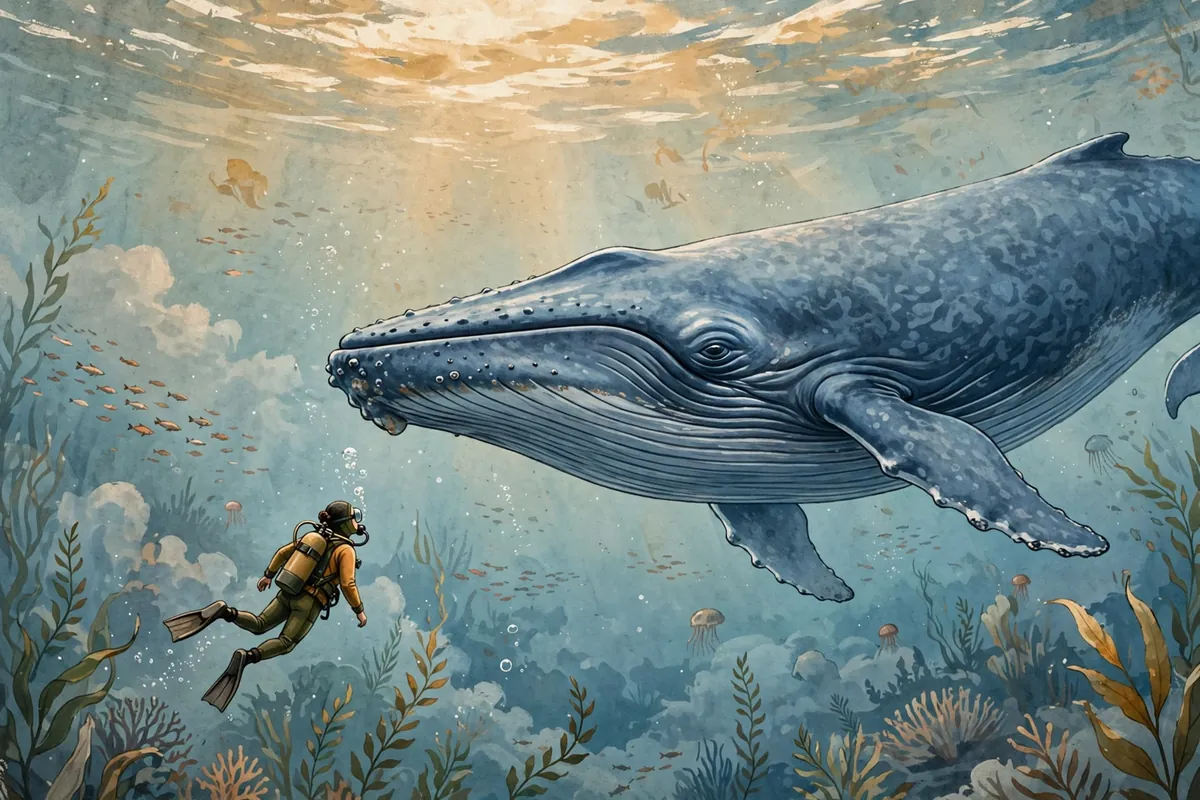
But the largest animal known to have ever existed is alive right now: the blue whale. The biggest blue whales reach about 98 to 100 feet long and weigh up to around 200 metric tons. Even the largest dinosaur known from solid evidence, Argentinosaurus, is estimated at only 70 to 80 tons, less than half that weight.
How the Giants Compare
Dinosaurs can win one contest: length. Argentinosaurus is estimated to have been about 118 feet long, and some sauropods with long, whip-like tails stretched even farther. But much of that length was neck and tail. In sheer bulk, the blue whale is in a class of its own.
Scientists are careful here, because fossils of the biggest dinosaurs are often just a few bones. A few very generous estimates for some fragmentary giants come close to the blue whale, and one even exceeds it. But those are based on incomplete remains, so the blue whale keeps its title as the biggest animal we know of for sure.
The heaviest blue whale on record was a female caught in the Southern Ocean in 1947. She measured about 91 feet long and weighed roughly 190 tons.
Everything About It Is Huge
A blue whale's heart is the largest known in any animal. One from a whale stranded in the North Atlantic weighed about 400 pounds. Deep underwater, that heart can slow to just 2 beats per minute, then speed up to around 37 when the whale comes back to the surface.
The babies are giants, too. A newborn calf is about 20 to 23 feet long and weighs 2 to 3 tons. It then gains roughly 200 pounds a day while nursing, growing to about 53 feet by the time it's weaned at 6 to 8 months old.
They're loud as well. Blue whales make some of the loudest and lowest sounds in the animal kingdom, reaching 188 decibels. Many of their calls are so deep they're below what human ears can easily hear.
The Biggest Animal Eats Some of the Smallest
You might expect the world's largest animal to hunt big prey. Instead, it eats almost nothing but krill, tiny shrimp-like creatures. A blue whale lunges into a swarm with its mouth open and can gulp around 220 tons of water at once.
Then it squeezes the water out through baleen plates, a kind of natural strainer in its mouth, and swallows the krill left behind. A single big mouthful can deliver up to 240 times more energy than the whale spent making the lunge.
Living in the ocean helps, too. Water holds up the whale's enormous body, so it never has to carry all that weight on legs the way a dinosaur did.
A Giant Worth Protecting
Blue whales once swam in nearly all of the world's oceans, but whalers hunted them almost to extinction. All blue whale hunting was banned in 1966, and today the species is listed as endangered, still facing threats like ship strikes, pollution, and ocean noise.
So the next time you stand under a dinosaur skeleton at a museum, remember that the true heavyweight champion of all time doesn't live in the past. It's out there in the deep blue right now, quietly eating shrimp.