Surviving the Titanic would be enough of a story for one lifetime. For Violet Jessop, it was only the middle chapter. Before and after that famous April night, she found herself aboard two more ships in serious trouble, and all three were sisters.
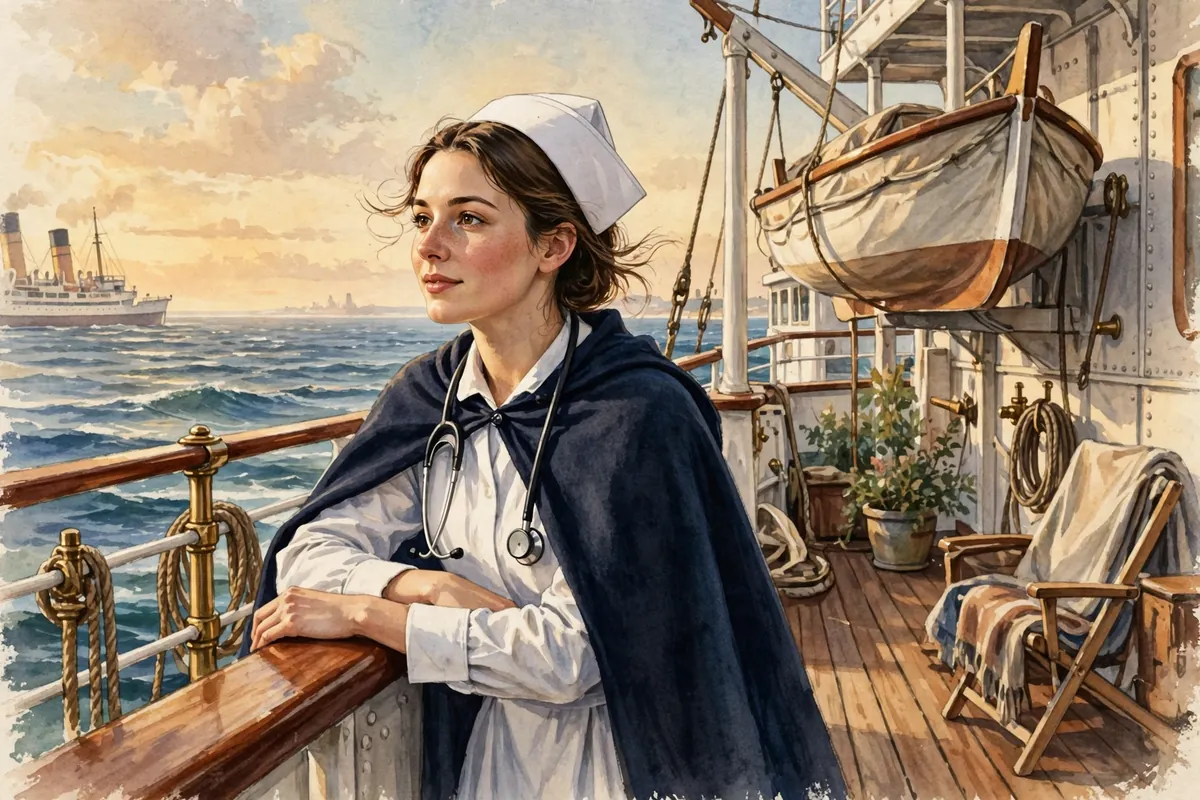
Violet Jessop, later nicknamed Miss Unsinkable, was a stewardess and wartime nurse who survived the sinking of RMS Titanic in 1912 and its sister ship, HMHS Britannic, in 1916. She had also been aboard the oldest of the three sisters, RMS Olympic, when it collided with a British warship in 1911.
A Tough Start
Jessop was born in 1887 near Bahía Blanca, Argentina, the eldest daughter of Irish immigrants. As a child she became very ill, with what is presumed to have been tuberculosis, and doctors predicted she wouldn't survive. She did.
After her father died, the family moved to England. Her mother worked at sea as a stewardess, and when her mother fell ill, Violet left school to follow in her footsteps. She reportedly had to dress down to look less attractive to get hired. Her first job at sea came in 1908, at age 21.
Close Call One: The Olympic
In 1911, Jessop joined the White Star liner RMS Olympic, then the largest civilian liner in the world. On September 20, 1911, Olympic left Southampton and collided with the British warship HMS Hawke.
No one died, and despite the damage, the ship made it back to port on its own. Jessop never discussed the collision in her memoirs. She kept working aboard Olympic until April 1912, when she was transferred to its brand-new sister ship.
Close Call Two: The Titanic
Jessop boarded Titanic as a stewardess on April 10, 1912, at age 24. Four days later, the ship struck an iceberg in the North Atlantic and sank about two hours and forty minutes after the collision.
In her memoirs, she recalled being ordered up on deck to set an example for passengers who didn't speak English and couldn't follow the instructions. She watched the crew load the lifeboats before she was ordered into lifeboat 16. As it was lowered, Sixth Officer James Moody handed her a baby to look after.
The next morning, the survivors were rescued by the RMS Carpathia. According to Jessop, a woman, presumably the baby's mother, grabbed the child from her and ran off crying without saying a word.
Close Call Three: The Britannic
During World War I, Jessop became a nurse with the Voluntary Aid Detachment. On the morning of November 21, 1916, she was aboard the hospital ship Britannic, the youngest of the three sisters, when it struck a German naval mine in the Aegean Sea. The ship sank within 55 minutes, and 30 of the 1,066 people aboard were killed.
This time, the danger came from the ship itself. Lifeboats were being shredded by Britannic's still-turning propellers, and Jessop had to jump out of hers. She suffered a serious head injury but survived. Two other Titanic survivors, Arthur Priest and Archie Jewell, were also aboard and lived through it, too.
Remarkably, she went back to sea. She returned to White Star Line in 1920, later sailed twice around the world on cruises, and finally retired in 1950 to the village of Great Ashfield in Suffolk, England. She died in 1971 at age 83.
Violet Jessop's life is a reminder that some people meet bad luck with plain, stubborn courage. Three sister ships, three close calls, and she still kept answering the call of the sea. Unsinkable, indeed.