As soon as the leaves start to turn, pumpkin spice takes over. It's in coffee drinks, donuts, cookies, and just about anything a store can put on a shelf. But here's a question that stumps a lot of people: where's the pumpkin?
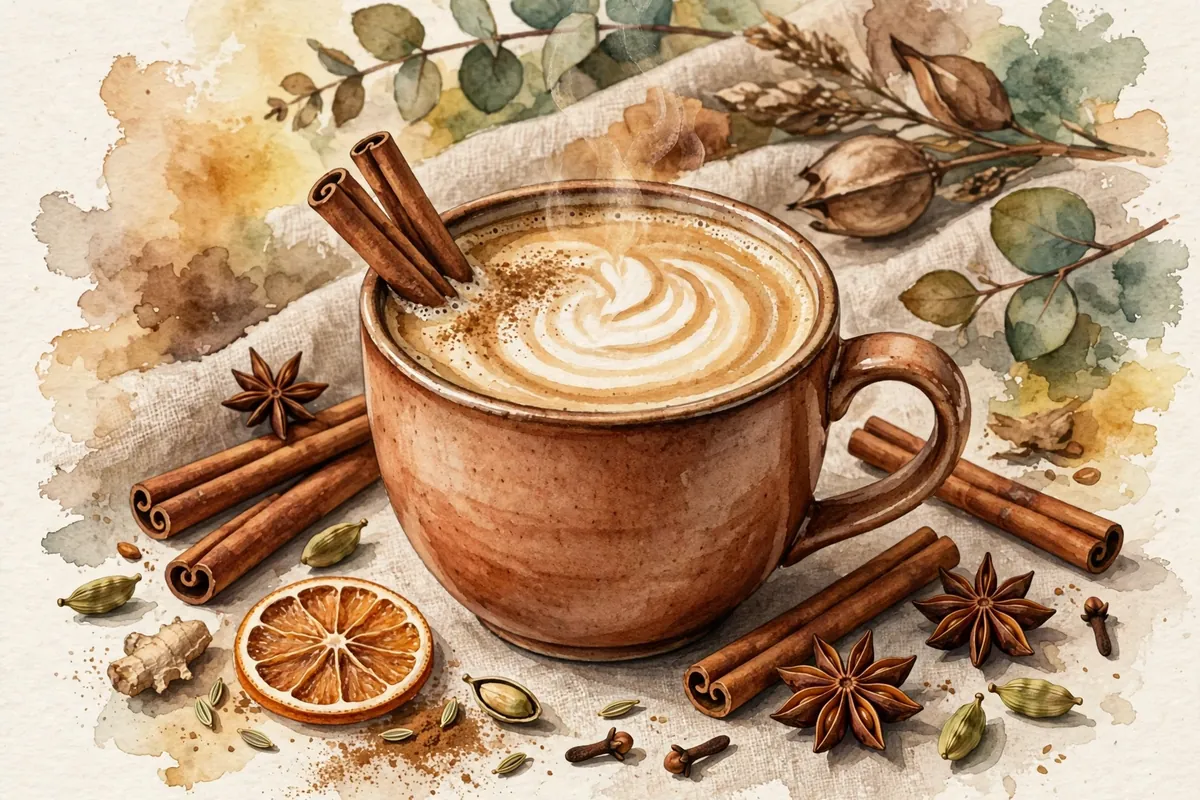
The short answer: pumpkin spice was never meant to contain pumpkin. It's an American spice mix created to flavor the filling of pumpkin pie, so it's named after the pie, not the vegetable. The blend is usually ground cinnamon, nutmeg, ginger, cloves, and sometimes allspice.
A Spice Blend for a Pie
The idea is simple. A good pumpkin pie calls for a handful of warm spices, and pumpkin pie spice packs them into one convenient jar. It can also season other dishes in general cooking.
Pumpkin pie spice has been mentioned in cookbooks dating back to the 1890s. A ready-made blend was introduced commercially by McCormick & Company in 1934, saving bakers from measuring out each spice.
Older Than You Might Think
Spice mixes like this go back centuries. A Paris household book from the 1390s, Le Ménagier de Paris, includes a blend of ginger, cinnamon, sugar, cloves, and a spice called grains of paradise. In medieval Europe, mixes like it were often called poudre-douce, or sweet powder.
Pumpkin pie spice is also similar to the mixed spice used in Britain and Commonwealth countries.
America's first known published cookbook, American Cookery by Amelia Simmons, printed in 1796, included a "Pompkin" recipe seasoned with mace, nutmeg, and ginger. Another version called for allspice and ginger.
The Pie Behind the Name
The pie itself is a symbol of harvest time. In the United States and Canada, it's usually served at Thanksgiving and Christmas, when pumpkins are in season, generally from mid-October through November. Pumpkin pie didn't become a common part of Thanksgiving dinner until the early 1800s.
It hasn't always been welcome everywhere. After the Civil War, some Southern states resisted pumpkin pie as a symbol of Yankee culture, and many Southern cooks made sweet potato pie instead. In 1947, Americans were even urged to skip pumpkin pie at Thanksgiving as part of a voluntary egg-saving campaign promoted by the Truman administration.
The Latte That Started a Craze
Pumpkin spice went from pie seasoning to cultural phenomenon thanks largely to Starbucks. The company began developing a pumpkin spice latte in January 2003, after success with winter drinks like the peppermint mocha. The team tested four seasonal ideas: a chocolate drink, a caramel drink, a cinnamon drink, and a pumpkin latte.
The pumpkin idea got mixed reviews at first. The team even sampled pumpkin pie mixed with espresso as they worked on the recipe. Late in 2003, the drink was tested in Vancouver and Washington, D.C., and sales beat expectations. In 2004, it rolled out to Starbucks stores across the country.
In keeping with its namesake spice, the original drink contained no pumpkin at all. Starbucks changed the recipe in 2015 to include some.
A Seasonal Phenomenon
The latte touched off a wave of spiced seasonal products. By 2016, pumpkin spice products were bringing in about $500 million a year. Other chains, including Dunkin' and McDonald's, have offered their own versions, and Starbucks even trademarked the nickname PSL in 2015.
So the next time you sip something pumpkin spiced, you'll know the real stars are cinnamon, nutmeg, ginger, and cloves. The pumpkin is mostly there in spirit, along with a long tradition of cozy autumn baking.