In much of the South, a meal of greens, beans or barbecue just doesn't feel complete without a wedge of golden cornbread, preferably straight from a hot iron skillet. It's comfort food with deep roots. So why did cornbread become such a fixture of Southern cooking?
The short answer is that cornbread grew from Native American cooking and became a Southern staple out of necessity. Farmers in the Northeast and Midwest could grow wheat and rye, but the heat and humidity of the South made European wheat wither and spoil. Corn, on the other hand, thrived, so cornbread became everyday bread.
Native Roots
Corn was first domesticated in Mexico around six thousand years ago and arrived in what's now the United States between three thousand and one thousand years ago. Native cooks developed many recipes based on corn, including cornbread, long before Europeans arrived.
Different nations had their own versions. The Choctaw people of the Southeast call cornbread bvnaha, and the Hidatsa of the Upper Midwest call it naktsi. The Hopi of Arizona rely on dumplings and pancakes made from finely ground cornmeal as staple foods. Cherokee and Seneca cooks enriched the batter with chestnuts, sunflower seeds, apples or berries. European settlers and enslaved people, especially in the Southern colonies, adopted these recipes.
From Hearth to Skillet
Early colonial cornbread was about as simple as it gets: ground cornmeal stirred with water and baked over an open fire or in a hearth. Over time, cooks added buttermilk, eggs, baking soda, baking powder and pork fat like bacon drippings, which made it much more like the cornbread we eat today.
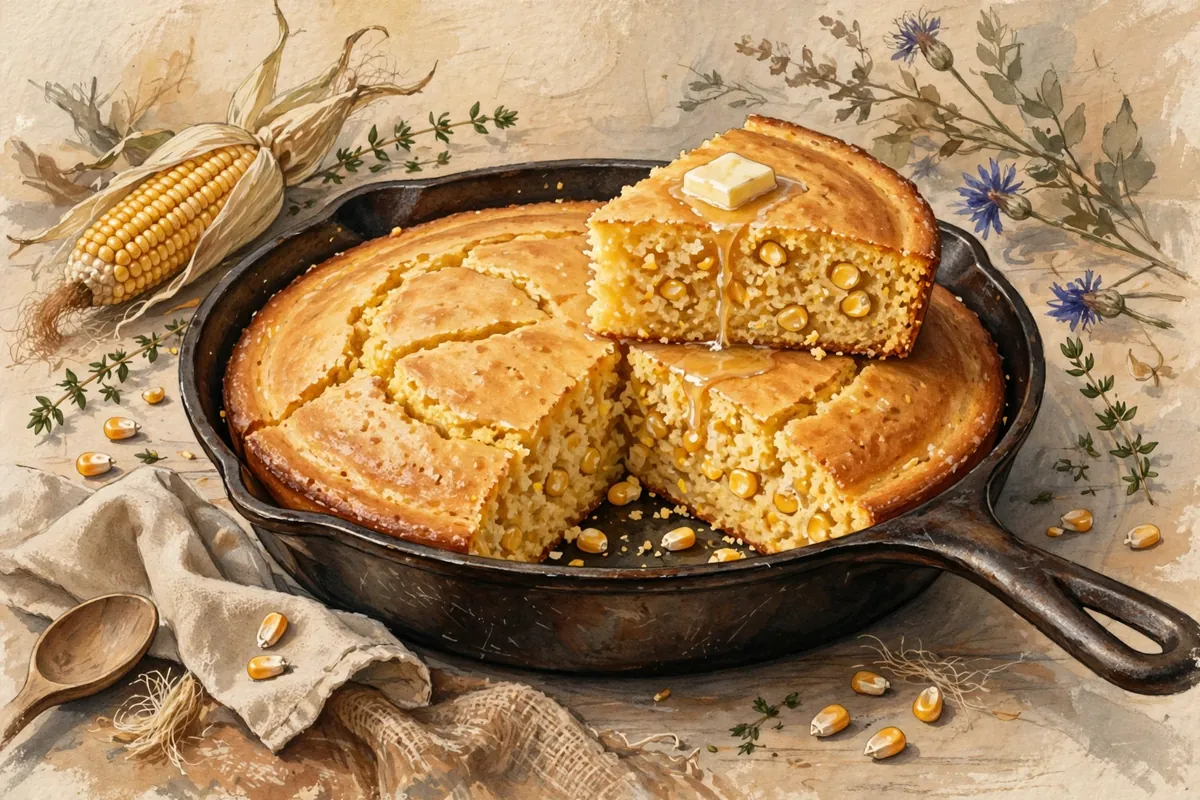
The classic Southern method is skillet cornbread. Bacon drippings, lard or oil are heated in a heavy, well-seasoned cast-iron skillet in the oven. Then a batter of cornmeal, egg and milk is poured right into the sizzling grease and baked into a crumbly bread with a crunchy crust. The result is dense and usually served alongside a meal rather than as a course of its own. In Appalachia, a round of skillet cornbread is still called a pone. The phrase corn pone has even been used as a jab at rural folks. Kennedy's staffers reportedly called Lyndon Johnson Uncle Cornpone behind his back.
The Great Sugar Debate
Here's where things get heated. Southern cornbread has traditionally been made with little or no sugar and little or no flour, often using white cornmeal and buttermilk. Northern cornbread tends to be sweeter and more cake-like, much like a corn muffin. A typical modern Northern recipe uses half wheat flour and half cornmeal.
Sugar and wheat flour were left out of most recipes until the 20th century. When steel roller mills replaced stone mills, the heat from the rollers sapped some of the corn's natural sweetness and flavor. Newer recipes added sugar and flour to make up for it.
A Bread With Many Cousins
Cornbread comes in many forms. In Texas, Mexican influence created a hearty version with corn kernels, jalapeños and shredded cheese. Some Southerners even crumble cornbread into cold milk or buttermilk and eat it like cereal. Southerners traditionally drizzle it with molasses, while Northerners lean toward butter and honey.
The hushpuppy, a fried cousin, traces back to 19th-century Black culinary traditions in the South, notably through Romeo Govan, a South Carolina caterer born into slavery. However you like it, every bite of cornbread carries centuries of history.