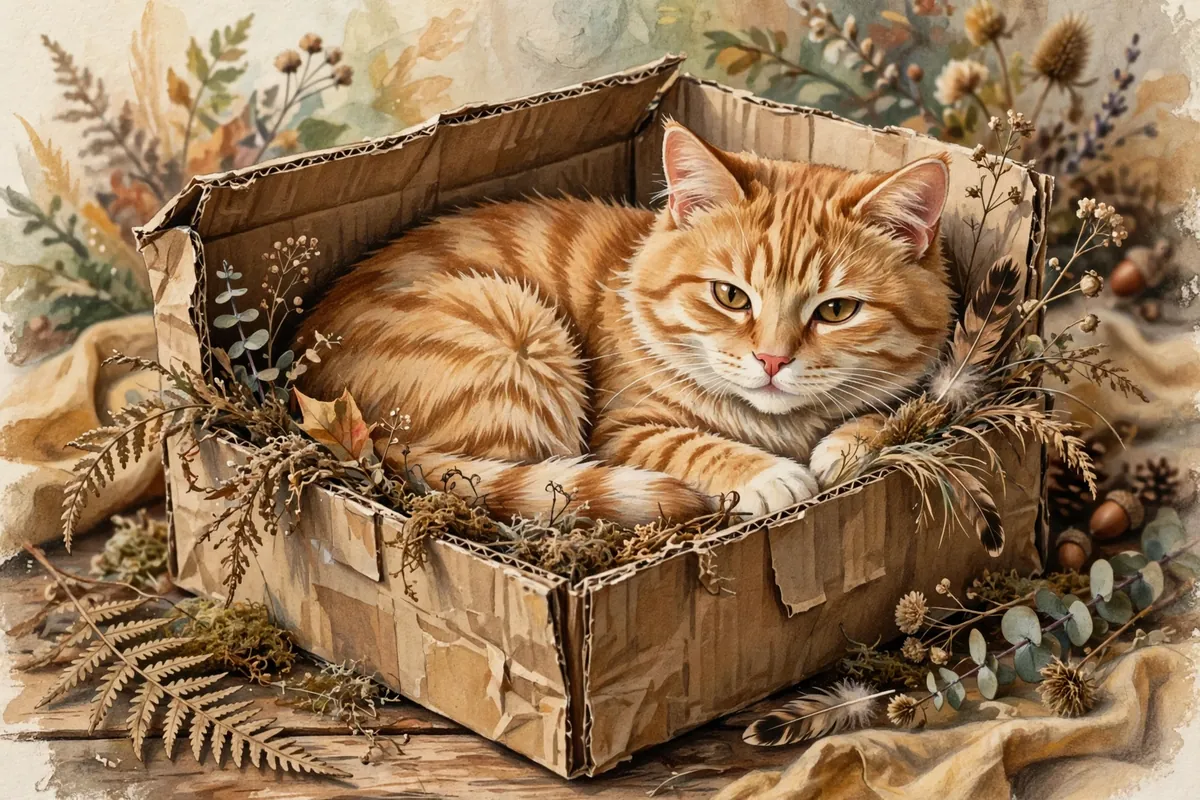
It happens in homes everywhere. A package arrives, you lift out whatever was inside, and before the box even hits the floor, the cat is in it. Never mind the plush bed or the carpeted tower. The empty box wins.
There's no single proven answer, but the leading explanations point to safety and instinct. A box is a small, enclosed hiding spot where a cat can see out without being easily seen. For an animal that is both a hunter and a potential target for bigger animals, that kind of shelter seems to feel deeply comforting.
A Safe Little Hideout
People who care for animals in captivity have known this for a long time. Many animals get stressed by human activity, and most do better when they have a hiding area where they can retreat from view and feel secure. These are often called hide boxes, and they're made from wood, plastic, ceramic, or even cardboard.
The ideal hide box has an interesting rule of thumb. It should be big enough for the animal to fit completely and comfortably, but small enough that it can feel the walls and ceiling close around it. That sounds a lot like the box your cat just claimed.
Cats vary in personality, too. Researchers who sort cats by temperament note that shy, anxious, or tense cats may especially like hiding places and quiet corners of the home. So if your cat is a box fanatic, it may simply be the type that likes a private retreat.
The Perfect Ambush Spot
Cats are predators, and they hunt in two main ways. Sometimes they stalk prey actively. Other times they wait in ambush until a mouse or bird comes close enough to grab.
A box makes a pretty good hunting blind. Peek over the edge of one and you'll often find a cat crouched low, eyes wide, waiting for a toy, a sibling cat, or your ankle to wander past. Walls on three or four sides keep the hunter hidden until the very last second, which is exactly what an ambush predator wants.
A Cozy Place to Nap
Cats sleep a lot. Most sleep between 12 and 16 hours a day, and some can sleep as much as 20. With that much napping to do, it makes sense to pick a spot that feels tucked away and protected.
The phrase cat nap even comes from their habit of dozing off lightly for short stretches. A box offers walls on every side, which may make those light naps feel a bit more relaxed. And when a sleeping cat twitches its paws during short bursts of REM sleep, that suggests it may be dreaming.
Old Instincts in a Modern Home
Our pet cats are thought to descend from the African wildcat. Scientists believe wildcats were drawn to early farming villages by mice, and people tamed them thousands of years ago. The earliest known sign of a tamed wildcat comes from a grave on Cyprus dated to around 7500 BCE.
Thousands of years later, cats still carry many wild instincts. Hunting, hiding, and choosing a sheltered resting spot are all part of being a cat, whether that cat lives on a farm or in a two-bedroom apartment.
Box love doesn't hurt anyone, and it's about the cheapest cat toy there is. So the next time a delivery shows up, maybe hold off on breaking down the box. Somebody in the house probably has plans for it.