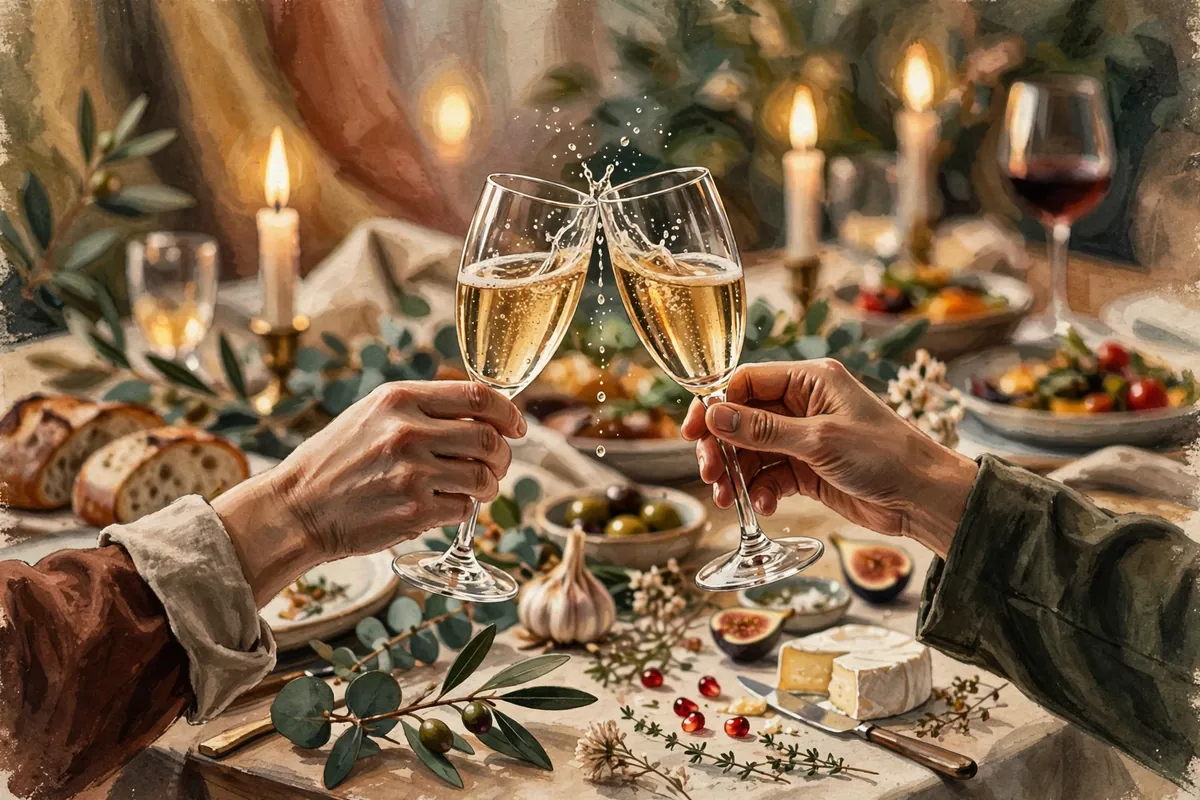
Someone stands up at a wedding, says a few kind words, and the whole room raises their glasses. Then comes the cheerful clink. It's such a natural part of celebrating that we rarely stop to ask why we bump glasses before we drink.
You may have heard the popular answer: in the old days, people clinked hard so a little of each drink would splash into the other, proving nobody had poisoned anyone. It's a great story, but historians consider it apocryphal, meaning there's no real evidence behind it. The honest answer is that nobody knows exactly where the clink came from. What we do know is that toasting itself is very old, and the clink is simply a friendly way of joining in.
Why the Poison Story Doesn't Hold Up
The poison tale shows up in many places, including in Germany, where the clink is often tied to a supposed medieval custom. But even if people believed it, it probably wouldn't have worked. A few drops sloshing between cups is hardly a reliable safety check.
For a long time, it was actually common for everyone at a table to share one or more drinking vessels. If you're all drinking from the same cup, a poison-detecting clink isn't much use.
Where Toasting Comes From
The deeper roots of the toast may be religious. One scholarly reference describes toasting as probably a leftover of ancient sacrificial offerings, when people poured out a sacred liquid like wine for the gods in exchange for a wish or a prayer. Over time, that prayer shrank to simple phrases like long life or to your health.
Seen that way, a toast is a small, everyday ritual of goodwill. Simply raising your glass toward someone, or clinking glasses and then drinking, carries the same message: good wishes to the person being honored.
Why Is It Called a Toast?
Here's the oddest part. The word really does come from bread. According to one account, in the 17th century it was common to flavor drinks with a piece of spiced toast. The word toast came to mean the lady being honored, as if her name added flavor to the drink, much like the spiced bread did.
That's where phrases like the toast of the town come from. The person being celebrated is the toast.
Toasting Manners and Superstitions
Champagne and other sparkling wines are classic toasting drinks, but many etiquette experts say it's perfectly fine to toast with sparkling juice or even water. The one firm rule is that the person giving the toast shouldn't do it with an empty glass.
Weddings have the most detailed rules of all. Traditionally the father of the bride goes first, thanking the guests. The best man follows with a short speech of three to five minutes that mixes jokes at the groom's expense with sincere praise, ending with the toast itself. Toasts can even be an art form. Mark Twain's speech "To the Babies" is a famous example.
Sailors see it differently. In the Royal Navy and the U.S. Navy, among others, there's a superstition that you should never toast with water, or the person honored will be doomed to a watery grave.
Different languages have their own toasting words too. In Spanish, people often say chinchín, which imitates the sound of clinking glasses. So whatever the true origin, the clink has become a sound of celebration all its own.