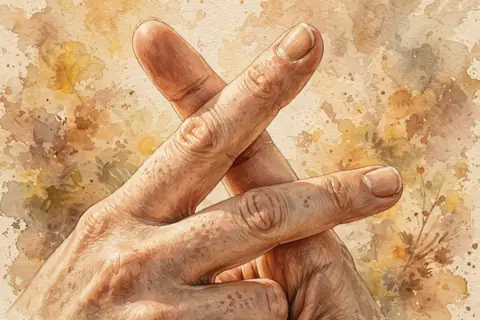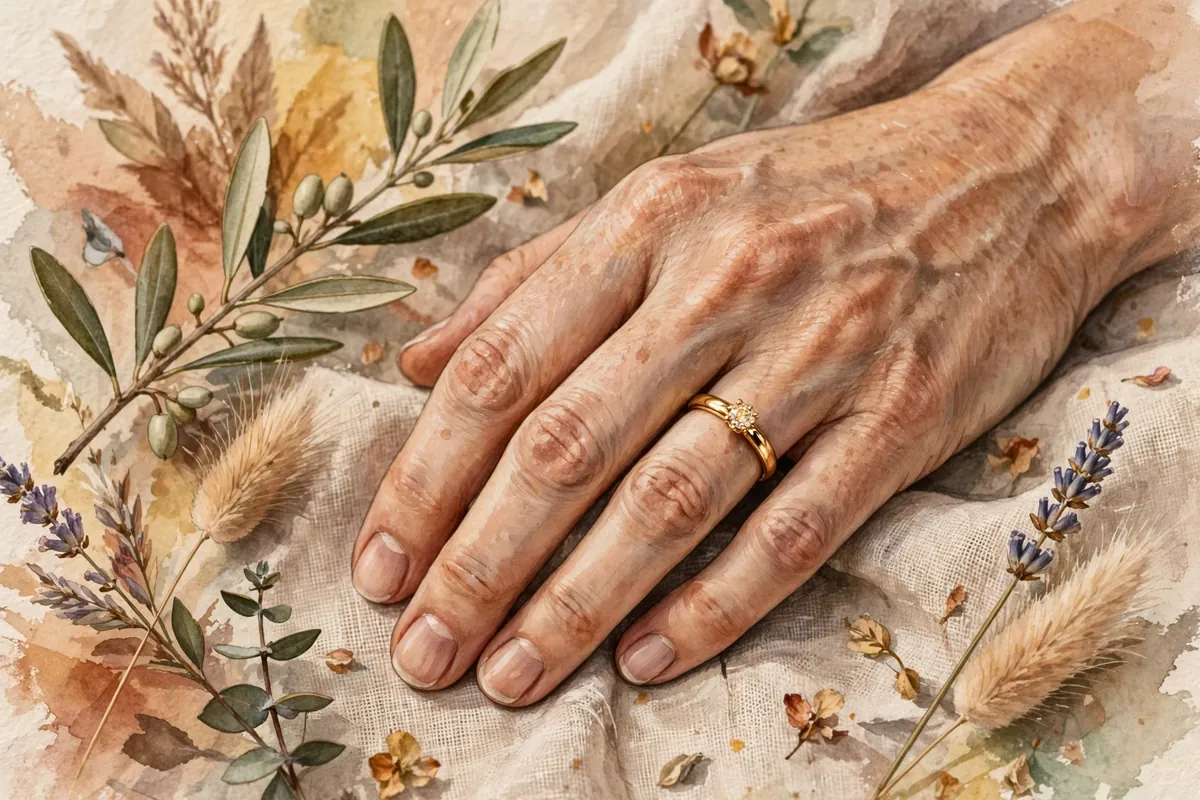
On wedding days across America, couples slip rings onto one particular finger: the fourth finger of the left hand. It's such a strong custom that we simply call it the ring finger. But why that finger, and not the thumb, the pointer, or the pinky?
The tradition is tied to an old belief called the vena amoris, Latin for "vein of love." Before people understood how blood circulates, many believed a special vein ran straight from the fourth finger of the left hand to the heart. Wearing a wedding ring there seemed the perfect symbol of love. In English-speaking churches, the custom was locked in by the 1662 Book of Common Prayer, which said the ring should go on the fourth finger of the woman's left hand.
The Vein of Love
The idea was beautifully romantic. If one finger had a direct line to the heart, it made sense to mark it with a symbol of lifelong devotion. Writers on wedding etiquette at the time agreed it was only fitting that the ring be worn on that finger.
There's just one problem. Once medical science figured out how the circulatory system really works, it became clear that the fourth finger has no special vein running to the heart. The anatomy was wrong, but the tradition stuck.
In fact, nobody knows for certain why the fourth finger was chosen in the first place. One scholar notes that in many languages, the ring finger's name hints at an ancient belief that it was a magical finger.
The Nameless Finger
Around the world, this finger has some curious names. In Chinese, Finnish, Russian, and Sanskrit, it's called the nameless finger. In Japanese, it's the medicine finger, because people used it to mix powdered medicine. Since it was rarely used for anything else, it was considered the cleanest finger.
Its Latin anatomical name is digitus annularis, from the Latin word for ring.
Ancient Roots, Changing Customs
Wedding rings themselves go back to ancient Rome and Greece. They were first linked to the marriage dowry and later became a promise of faithfulness. The modern exchange of rings grew out of European customs in the Middle Ages. During the Renaissance, a popular style was the poesy ring, a silver band engraved with a short poem.
Not everyone uses the left hand. In Germany and Austria, couples wear engagement rings on the left hand, and a wedding ring is placed on the right hand, as in Poland, Russia, and Bulgaria. In the Netherlands, Catholics have traditionally worn the band on the left hand and Protestants on the right. Some cultures use other tokens altogether. In parts of India, Hindu women may wear a toe ring, and in West Bengal married women traditionally wear an iron bangle.
When Husbands Joined In
For a long time, wedding rings were worn mainly by wives. In the United States and Canada, it became customary for both spouses to wear rings only during the 20th century. In Britain, married soldiers began wearing rings during the World Wars as reminders of their wives back home. Today, many couples exchange two rings, a custom known as the double-ring ceremony.
So the next time you glance at a wedding band, remember the romantic idea behind it. The vein of love may be a myth, but the meaning people give that little circle is very real.