First date. Job interview. Walking up to the podium at a wedding. Right when it matters most, a strange fluttery feeling starts up in your middle. It's so familiar that we have a cute name for it, but have you ever wondered what's actually happening down there?
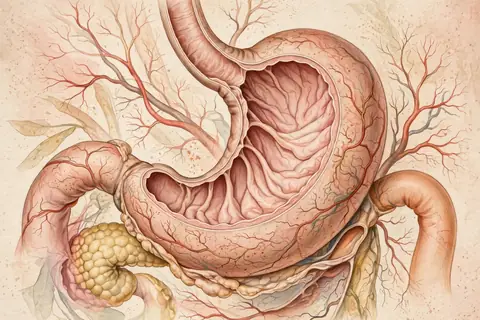
Here's the answer. Butterflies in the stomach come from your body's fight-or-flight response. When your brain senses a stressful or emotional moment, stress hormones like adrenaline send more blood to your muscles and heart and less to your digestive system. The reduced blood flow, plus irregular squeezing of the gut muscles, creates that fluttery feeling.
An Old Alarm System
The fight-or-flight response was first described by the American scientist Walter Bradford Cannon in 1914. His idea was that animals react to threats with a burst of activity from the sympathetic nervous system, getting the body ready to fight or run.
Your adrenal glands release adrenaline and cortisol into the bloodstream. Your heart rate goes up. Blood is redirected toward the muscles and brain to make quick action easier. Digestion isn't a priority when you might need to sprint, so blood vessels around the stomach and intestines tighten.
This is the same reason a nervous person often loses their appetite. With less blood flowing to the digestive system, both hunger and the ability to digest food go down for a while.
Why Love Triggers It Too
Of course, nobody is in danger on a first date. But your body doesn't sort feelings into neat boxes. A big emotional moment, happy or scary, can set off the same hormone release. That's why butterflies are so strongly linked to romance in songs, stories, and everyday speech.
Scientists have also learned that the alarm system does more than fight or flee. People may freeze, go weak in the knees, or even faint. That wider range of reactions is why researchers today often use the plainer name "acute stress response."
You might feel them before meeting someone you have a crush on, before a performance, or before any important step. The feeling usually fades once the moment passes and the calmer side of your nervous system takes over.
Your Gut Has Its Own Nervous System
There's another reason your belly is so quick to react. The digestive tract has its own network of nerves, called the enteric nervous system, which is often nicknamed the "second brain." It runs along the gut all the way from the esophagus to the other end.
That network is surprisingly large. It contains roughly 500 million neurons, about five times as many as the human spinal cord. With that much wiring in your middle, it's no wonder your gut feels it when your emotions spike.
Where the Phrase Came From
The phrase itself is younger than you might guess. It first appeared in a 1908 novel, The House of Prayer, by the American author Florence Converse, where a character felt "as if he had a butterfly in his stomach." It caught on and has been popular for more than a century.
Butterflies can also be a symptom of anxiety. If that nervous, unsettled feeling shows up often or gets in the way of daily life, talk to your doctor.
Most of the time, though, those flutters are simply a sign that something matters to you. Your body is getting ready for a big moment the only way it knows how. Take a breath, smile, and knock on that door.