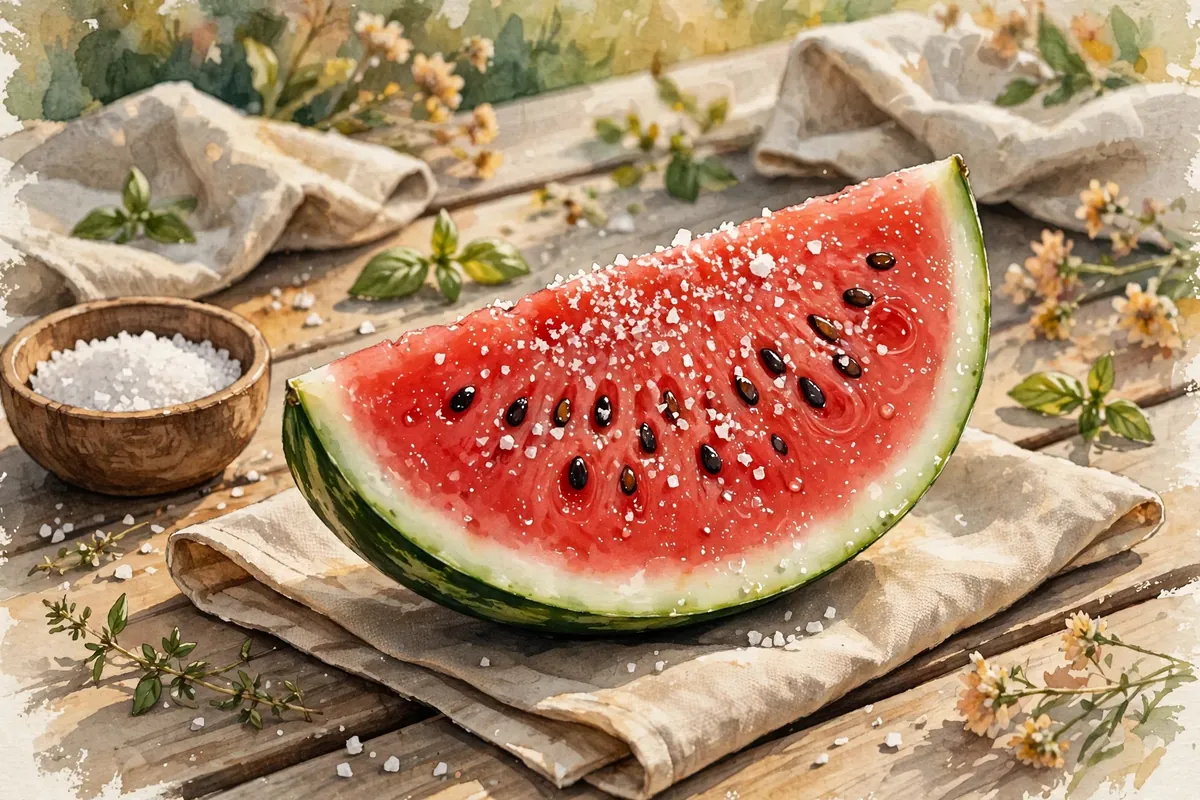
It's a summer tradition at plenty of picnics and porch suppers. Somebody slices a big, cold watermelon, and then reaches for the salt shaker. If you didn't grow up with it, the idea can sound strange. Why would anyone put salt on something so sweet?
Here's the short answer. Salt doesn't just make food salty. It also suppresses bitter tastes, and when bitterness is turned down, the sweetness in food stands out more. So a light sprinkle of salt can make a watermelon taste sweeter and more flavorful, especially a slice that's a little bland. The key is a pinch, not a pile.
How Your Tongue Does the Math
Your taste buds pick up five basic tastes: sweet, sour, salty, bitter, and savory, also known as umami. Each one sends a signal to your brain. Sweetness helps us find energy-rich foods, while bitterness is the body's early warning system for possible poisons.
These tastes don't work in isolation. Salt is a flavor enhancer because it suppresses the bitterness of foods, making them more pleasant and relatively sweeter. That's the same reason cooks add a pinch of salt to cookies, caramel, and cakes. Even a dessert usually tastes better with a little salt in the mix.
Watermelon is mostly water. The fruit is about 91 percent water and about 6 percent sugars. That means its sweetness is fairly gentle and easily drowned out. A small amount of salt can help that sweetness come through.
Watermelons Used to Be Bitter
Here's a fun twist. Wild relatives of the watermelon were often bitter. The modern sweet watermelon was first domesticated in Sudan, in Africa. A melon from Sudan's Kordofan region, which may be the ancestor of today's watermelon, shares an important feature with it: the loss of the gene for bitterness.
Watermelons were being grown in Egypt by 2000 BCE. Interestingly, people first valued them for their water, storing them to eat during dry seasons. Sweet dessert watermelons spread around the Mediterranean during Roman times.
Bitter cousins still exist. A bitter watermelon has spread across dry regions on several continents, and in parts of Western Australia it's considered a pest plant, nicknamed the 'pig melon.'
More Than You Knew About Watermelon
Botanists consider a watermelon a type of berry, with a firm rind and no internal divisions. Its official name for this kind of fruit is a pepo. The plant itself is a sprawling vine that can spread out about seven feet.
The red color comes from carotenoids, including lycopene, the same family of pigments found in tomatoes. And the seeds tell you something: they're black when mature and white when immature. Even the rind is edible after being pickled or cooked.
A 3.5-ounce serving of watermelon has only about 30 calories, which helps explain why it's such a popular summer snack. Today China grows the lion's share, producing about 60 percent of the world's watermelons.
Should You Try It?
If you've never tried it, start small. A few grains of salt on a cold slice is all it takes to notice the difference. If you're watching your salt intake, talk to your doctor, but for most people a light sprinkle is a small, tasty experiment.
So the next time someone passes you the salt with your watermelon, you'll know they're not being strange. They're using a little kitchen science that's as old as cooking itself, and it just might make your summer a little sweeter.