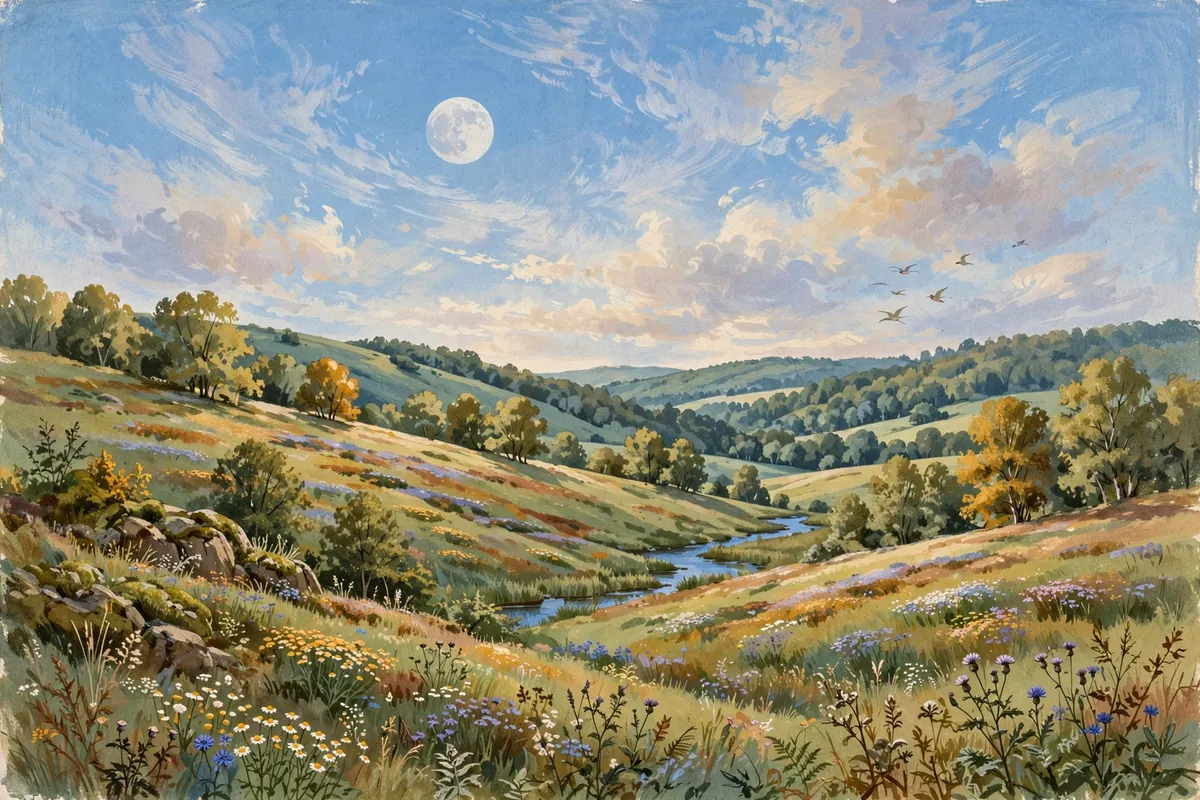
You're out walking the dog on a sunny afternoon, glance up, and there it is: a pale, ghostly Moon floating in the blue sky. It almost looks like it overslept and missed its shift. Isn't the Moon supposed to come out at night?
Here's the short answer. The Moon doesn't belong to the night. It rises and sets on its own schedule, which shifts about 50 minutes later each day as it orbits Earth. For much of the month, that schedule puts it above the horizon while the Sun is up. And it's bright enough to shine through the blue sky.
The Moon Keeps Its Own Clock
The Sun rules our days, and we tend to assume the Moon rules the nights. But the Moon is on a completely different timetable. It circles Earth once every 29.5 days or so, measured from one new moon to the next.
Because the Moon moves eastward across the background of stars faster than the Sun does, it reaches its highest point in the sky about 50 minutes later each day, on average. Moonrise gets later each day too. Over a month, that steady slide means the Moon rises at every hour of the day and night.
The Full Moon Is the Exception
There's one phase that truly is a night creature. Full moons rise around the time of sunset. That's because the full Moon sits on the opposite side of Earth from the Sun, so as the Sun goes down in the west, the Moon comes up in the east.
The new moon is the opposite. It lines up with the Sun in our sky, so it's up during the day, but its lit side faces away from us and it isn't visible to the naked eye. The phases in between, like the half-lit quarter moons, are the ones you're most likely to catch in broad daylight.
Those changing shapes are a clue to what's going on. The phases are really the Moon's own sunrise and sunset, seen from a distance. A waxing crescent is sunrise creeping across the Moon's face, and a waning crescent is sunset. A full lunar day lasts about a month.
Bright Enough to Beat the Blue
So why can we see it against a bright sky, when stars disappear? The sky looks blue because our atmosphere scatters blue sunlight more strongly than other colors. That glow drowns out faint stars.
The Moon isn't faint. It's the brightest object in our night sky, mostly because it looks so big. Surprisingly, its surface is about as reflective as asphalt. It simply catches so much sunlight that it shines right through the daytime blue, looking pale and washed out.
The Harvest Moon Trick
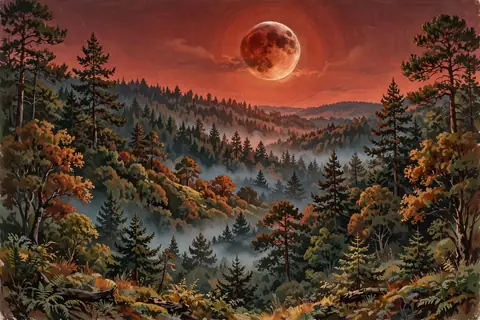
The Moon's shifting schedule has a lovely twist in autumn. Around the time of the fall equinox, in mid-northern latitudes, the Moon's path lies nearly parallel to the horizon. For about a week, the nearly full Moon rises close to sunset night after night.
Before electric lights, that meant extra evening light for farmers bringing in their crops. It's where the Harvest Moon gets its name.
So the next time you spot the Moon over your afternoon coffee, give it a wave. It isn't lost or early. It's simply keeping its own beautiful schedule, one that has nothing to do with our bedtimes.