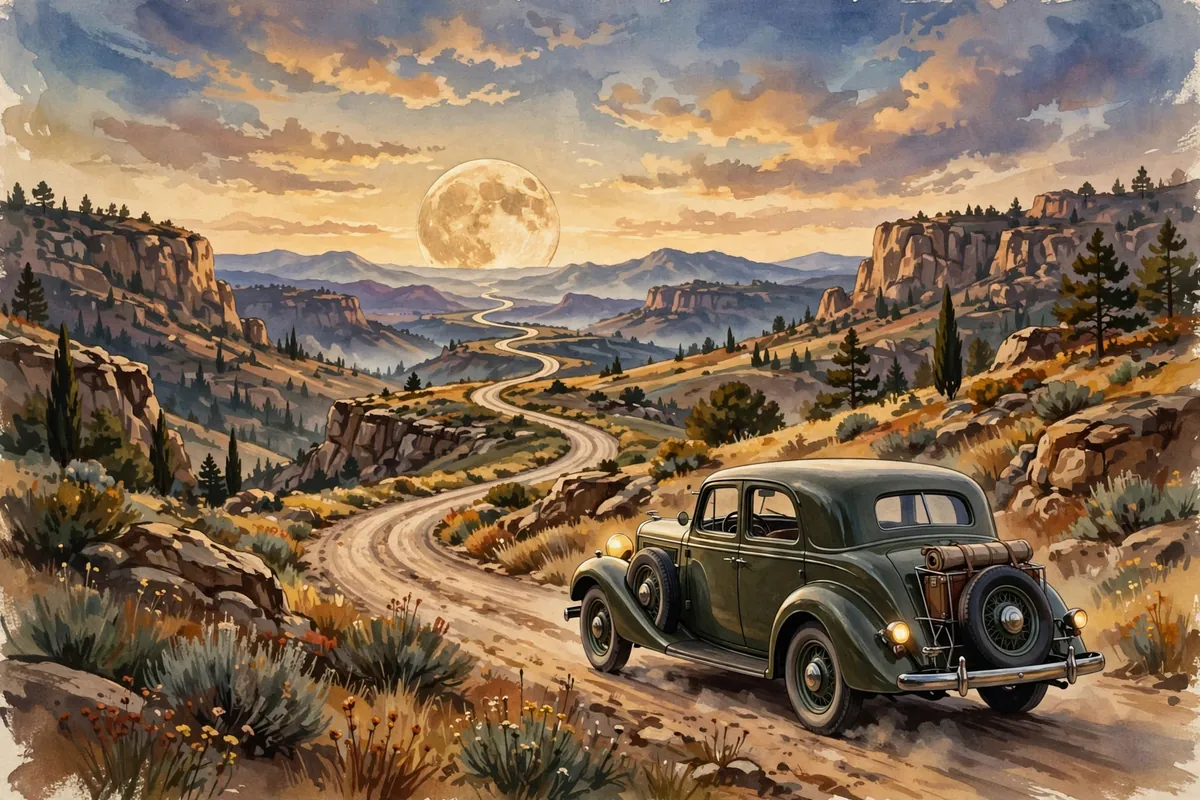
On a clear night, the Moon looks close enough to reach out and touch. Astronauts have made the trip, of course, but what if you could just hop in the family car and drive there? Pretend there's a smooth highway running all the way up, and you never need gas, food, or sleep.
The Moon is, on average, about 239,000 miles from Earth. Driving nonstop at 60 miles per hour, the trip would take about 3,980 hours. That's roughly 166 days, or about five and a half months behind the wheel without a single break.
The Realistic Road Trip
Of course, nobody drives around the clock. Say you drove a solid eight hours a day at 60 mph. You'd cover about 480 miles daily, and it would take close to 500 days to arrive. That's well over a year and four months on the road.
Even flying wouldn't be quick. Covering the same distance on Earth would take a nonstop airplane flight more than two weeks. The distance to the Moon is roughly 30 times Earth's own diameter.
How Apollo Did It in Three Days
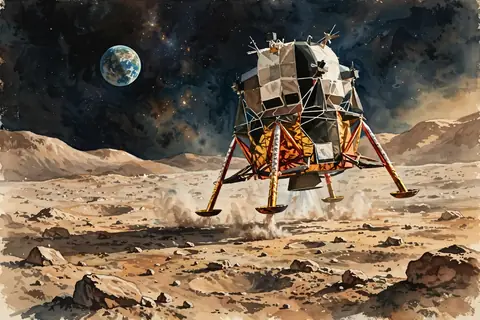
Real spacecraft are much faster than any car. Apollo 11 launched on July 16, 1969, and fired its engine to enter orbit around the Moon on July 19, about three days later. The next day, Neil Armstrong and Buzz Aldrin landed in the Sea of Tranquility. The trip that would take you five and a half months by car took them about half a week.
Light is faster still. A beam of light covers the distance to the Moon in about 1.3 seconds. Scientists actually use that fact: they bounce laser beams off reflectors left on the Moon and time the trip, measuring the distance to within millimeters.
Astronauts Really Did Drive on the Moon
There's a fun twist here. Astronauts did drive cars on the Moon. NASA's Lunar Roving Vehicle was used on Apollo 15, 16, and 17, starting on July 31, 1971. It let astronauts explore much farther than they could on foot in their bulky suits.
The rover wasn't exactly a speed demon. On Apollo 17, Eugene Cernan hit 11.2 miles per hour, an unofficial lunar land-speed record. At that pace, a drive from Earth to the Moon would take about two and a half years without stopping.
It wasn't cheap, either. Boeing built the rovers, and cost overruns pushed the final contract to about $38 million, roughly double the original price. Three of them are still parked on the Moon, right where the astronauts left them.
A Destination That Keeps Moving
The trip length also depends on when you leave. The Moon's orbit isn't a perfect circle, so its distance changes. At its closest it can come within about 221,700 miles, and at its farthest it can be more than 252,000 miles away. Picking the right week could save you about three weeks of driving.
And the drive is slowly getting longer. Laser measurements show the Moon is drifting away from Earth by about 1.5 inches every year. Fossil shells suggest that about 80 million years ago, the Moon was closer and a year had 372 shorter days.
So the next time someone says something is a long drive, you'll have the perfect comeback. At least it's not the Moon. That trip would need about five and a half months, a very patient driver, and one seriously comfortable seat.