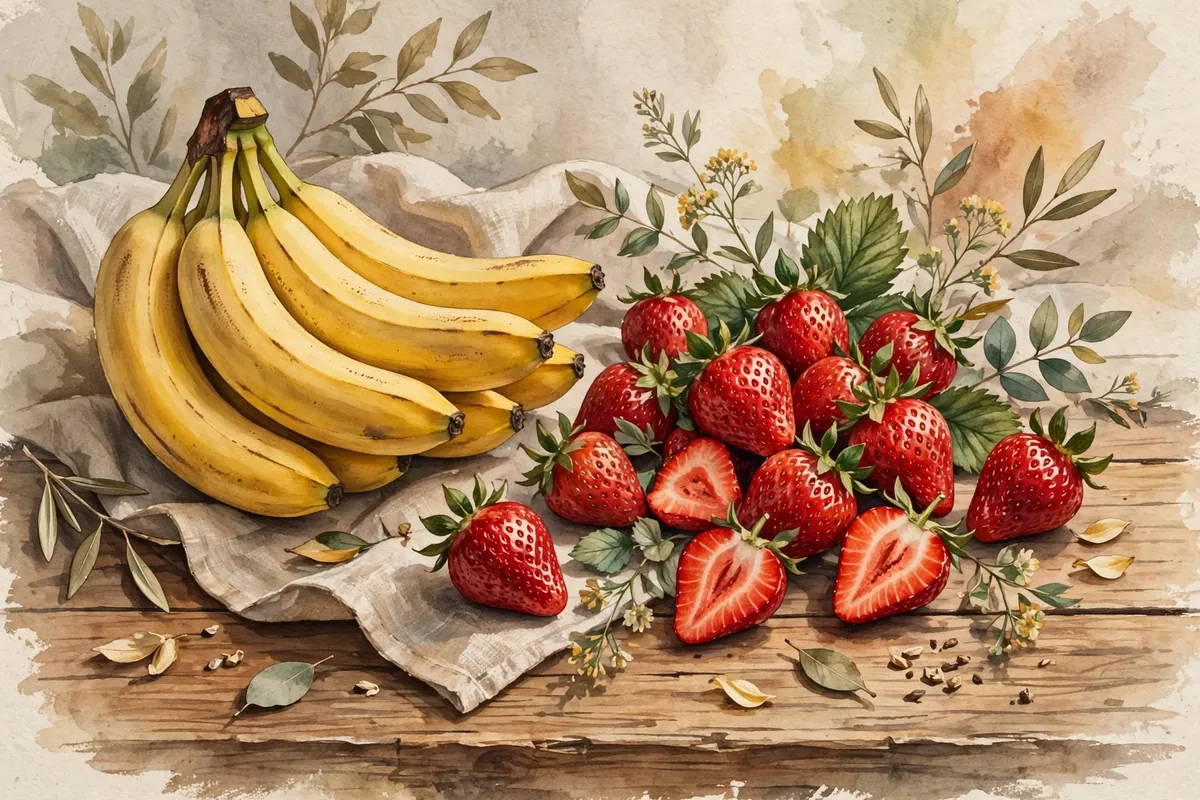
If someone handed you a banana and a strawberry and asked which one is a berry, you'd point at the strawberry without a second thought. It's right there in the name. But a botanist would point the other way.
Here's the short answer: in botany, a berry is a fleshy fruit that grows from a single flower with one ovary, the part of the flower that holds the seeds. A banana fits that description. A strawberry doesn't, because its juicy red flesh doesn't come from the ovary at all. It grows from a different part of the flower.
What Makes a Berry a Berry
In the kitchen, a berry is any small, sweet, juicy fruit. Botanists use a much stricter definition based on how the fruit forms. In a true berry, the whole wall of the flower's ovary ripens into the fleshy part you eat, and the seeds are usually tucked inside.
By that standard, the berry club includes some surprising members. Grapes, currants, and blueberries qualify, but so do tomatoes, eggplants, persimmons, and peppers. Melons, squashes, cucumbers, and even watermelons belong to a special kind of berry called a pepo.
The Banana Qualifies
A banana grows from a single flower with one ovary, and its soft flesh develops from that ovary. Botanists sometimes describe it as a leathery berry. Some classify it as a so-called false berry, because a bit of tissue from other parts of the flower joins in, but either way it's in the berry family.
If bananas are berries, where are the seeds? In the bananas we buy, fertile seeds are usually absent. Wild bananas have them, but the familiar yellow dessert banana was bred to do without. You can still see a hint of its structure. Squeeze an unpeeled banana gently and its flesh can split lengthwise into three sections, one for each part of the original ovary.
The Strawberry Doesn't
Botanically, a strawberry is an aggregate accessory fruit. The sweet red flesh grows from the receptacle, the part of the flower stem that holds the flower's other parts. It isn't made from the ovary at all.
The real fruits are those tiny specks on the outside. What look like seeds are actually achenes, and each one is a separate little fruit with a seed inside. So every strawberry is really a cluster of many tiny fruits riding on a fleshy base. Those little achenes even carry a modest amount of essential unsaturated fatty acids in their oil.
Raspberries and blackberries don't make the cut either. They're aggregate fruits, formed from many ovaries in a single flower that join together as they ripen.
More Banana Surprises
The banana plant isn't technically a tree. It's the largest herbaceous flowering plant in the world. What looks like a trunk is really a false stem made of tightly wrapped leaf stalks, and its leaves can grow astonishingly fast, up to about five feet in a single day.
Bananas also have deep roots in human history. They were first domesticated in Papua New Guinea and Southeast Asia, and evidence suggests banana farming in Papua New Guinea goes back at least 7,000 years.
So the next time you slice a banana over your cereal and add a few strawberries on top, you can impress the breakfast table. One of those fruits is a berry, and it isn't the one with berry in its name.