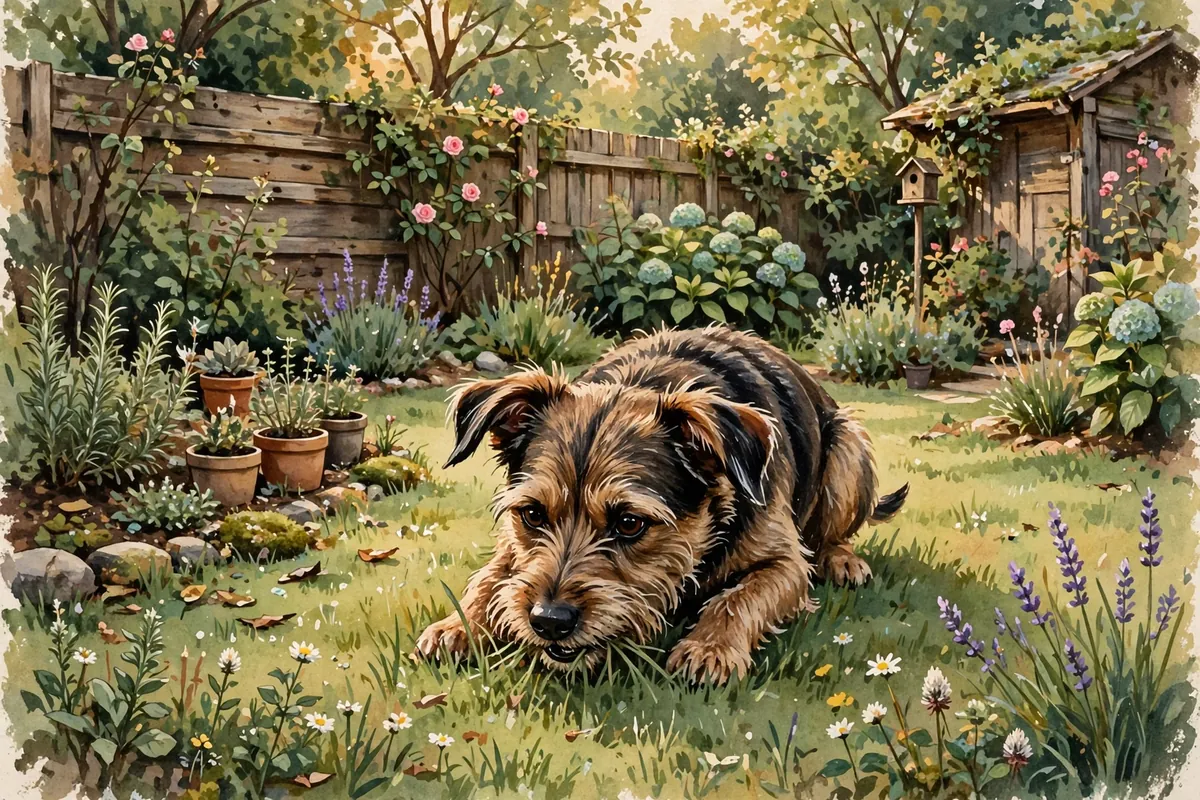
You open the back door, and your dog trots past the toys, past the water bowl, and straight to a patch of grass. Then it starts chewing with real determination. For an animal that lives for bacon and chicken, it's a strange choice of snack.
The honest answer is that nobody knows for certain, but experts have a few leading ideas. Eating grass may help some dogs make themselves throw up, and it may help clear out intestinal parasites. It's also worth knowing that dogs aren't pure meat eaters, and their wild cousins, wolves, eat grass too.
Dogs Aren't Strictly Carnivores
We tend to think of dogs as meat eaters, and their sharp teeth and short digestive tracts do lean that way. But dogs are typically described as omnivores with a carnivorous bias. Living alongside humans in farming communities, they got by on scraps and leftovers.
That history left a mark on their genes. Compared with wolves, dogs from agricultural societies carry extra copies of genes involved in digesting starch. Some breeds even produce the starch-digesting enzyme amylase in their saliva, just as people do.
So a dog chewing on plants isn't breaking some basic law of nature. Its body is built to handle more than just meat.
Theory One: An Upset Stomach
The most famous explanation is that dogs eat grass to make themselves vomit. Scientists who study how animals treat themselves, a field called zoopharmacognosy, use dogs eating grass as a classic example.
The idea is simple. If something disagreeable is sitting in a dog's stomach, a mouthful of rough grass may help bring it back up. Domestic dogs and cats are both known to swallow plant material that seems to trigger vomiting.
Dogs aren't the only animals with this kind of trick. Many animals eat things that aren't really food, such as clay, charcoal, and even toxic plants, apparently to protect themselves from parasites or poisoning. Grass may be the dog's simple, backyard version.
Theory Two: Fighting Parasites
Another idea is that grass helps with unwanted guests in the gut. Grass eaten by dogs may help rid their intestinal tract of parasites that could threaten their health. This would make the habit a sort of natural housekeeping.
Wild wolves offer an intriguing clue. Wolves eat a surprising amount of plant food, including berries, apples, and even melons in some places. They eat grass too. Researchers think it may provide some vitamins, but it's most likely used to induce vomiting and help get rid of intestinal parasites or long guard hairs swallowed from prey.
When Grass Isn't the Whole Story
For most dogs, an occasional nibble of lawn seems to be ordinary dog behavior. But eating things that aren't food can sometimes point to a problem. In dogs and cats, a habit of eating odd things like tile grout, concrete dust, or sand can be a sign of a blood condition called anemia.
If your dog suddenly eats grass constantly, seems unwell, or starts chewing on strange non-food items, it's worth a call to your veterinarian. They can check whether something more is going on.
The rest of the time, a dog munching grass is probably just being a dog. Its ancestors did it, its wild cousins still do it, and it may even know something about its tummy that we don't. Just maybe keep it away from the freshly treated lawn next door.